



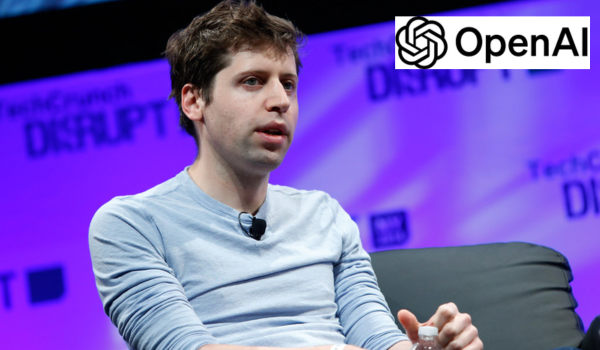
Sam Altman, CEO, OpenAI, created quite the stir when he was unceremoniously ousted. Threats of mass resignation by the employees, Microsoft’s eagerness to have Altman head its in-house AI unit and offer the departing staff of OpenAI competitive packages to join its own team added a twist to the drama. Now, the saga has grabbed headlines with Altman’s reinstatement at OpenAI and appointment of a new board as per conditions set by him initially. Are there lessons to be learnt from this whole episode? Of course! This series of events has been an eye opener, offering valuable insights into leadership behaviour, communication strategy and the dynamics of rapidly-evolving technology companies.
Adil Malia, CEO, The Firm draws our attention to Altman’s “unparalleled position as a ‘cultman’ in the AI space. He highlights that Elon Musk and other investors such as Peter Thiel originally set up OpenAI as a social enterprise. The purpose and nature of the company at inception, in 2015, was clearly to structure it as a non-profit organisation because at that time there were concerns about the potential risks that they perceived AI could pose.

“Talent is a very influential stake-holder in the game and its reactions to the Board’s decisions should always be seriously considered by the Board instead of trying to pussy-foot the same”
Adil Malia, CEO, The Firm
OpenAI’s goal, as stated in its charter, was to develop so-called artificial general intelligence (AGI) in a way such that it was safe and beneficial for humankind. When ChatGPT emerged and Microsoft came to be associated with the company as an investor, along with Altman as the CEO, the company started evaluating its future strategies, but now under a commercial and business lens. The Board thus appeared not only to be confused but also in serious conflict of ‘character, purpose & way-forward strategy’.
As Malia puts it, “The Board members appear to be shifting gears for the future of their enterprise – from non-profit to business without consensus.”
The Board last week fired Altman for not being ‘consistently candid’ in his communications with them, whilst executing his responsibilities. All employees of the company, in unison, resigned along with the CEO. Microsoft, the key investor, agreed to hire not only the CEO but also the 500-odd employees who were willing to follow Altman. The employees refused to re-join OpenAI until the dissenting Board members who fired their popular CEO resigned from the Board.
In Malia’s opinion, “First and foremost, serious conflicts of a divided board need to be resolved maturely in the boardroom, as ‘cowboy’ style resolutions are not designed for corporate boards.” He goes on to suggest, “The Board’s relationship with its key investor partner should be handled positively and more sensitively.”
According to Raj Raghavan, chief people and culture officer, CoreStack, the drama that unfolded at OpenAI serves as a compelling case study, shedding light on critical lessons in corporate governance and human resources management.
“At its core, the situation underscores the indispensable role of effective communication in the delicate tango involving the board and the CEO. The termination and subsequent reinstatement of Altman reveal a significant discord in understanding and alignment of organisational goals, emphasising the necessity for a transparent and open exchange between leadership tiers,” enunciates Raghavan.
Raghavan, drawing on his experience both as a board member and HR leader, highlights the missed chance of inadequate communication. He stresses the importance of deeper connections between executive leaders and board members.
The instability caused by Altman’s termination and subsequent return has created uncertainty among the organisation’s members. Employees may experience confusion about the company’s direction and now may question the steadiness of leadership. This ambiguity can negatively impact morale and productivity.
Unmesh Pawar, CPO, Dentsu, believes, “The key here lies in maintaining alignment, a point of order that underscores the constant need for a coherent leadership vision.”
He adds that in the context of OpenAI’s recent leadership turmoil, it becomes apparent that misalignment, possibly with the objectives of being a non-profit, has led to a significant organisational shake-up. The lesson drawn is the critical importance of clear communication and understanding between leadership tiers and the broader organisational mission.
“The termination and subsequent reinstatement of Altman reveal a significant discord in understanding and alignment of organisational goals, emphasising the necessity for a transparent and open exchange between leadership tiers”
Raj Raghavan, chief people and culture officer, CoreStack

Altman’s abrupt termination had triggered an employee revolt; over 500 of them had expressed their intention to quit unless the existing board members stepped down from their positions and Altman was brought back.
This case underscores the substantial influence that leadership decisions can have on employee morale. The resignation threat appears to signify the employees’ unwavering loyalty to Altman and their pursuit of justice.
While it may not necessarily be solely attributed to an HR mishap, the situation does highlight the pivotal role HR plays in managing such turmoils.
Human resources should ideally act as a bridge between leadership and employees, ensuring clear communication, addressing concerns and implementing strategies to maintain morale. In this case, HR could have played a crucial role in providing avenues for employee feedback, offering support mechanisms and fostering open dialogue to mitigate the consequences of the leadership decision on the workforce. Proactive HR involvement is essential in times of transition and disruption to navigate the challenges and uphold a positive organisational culture.
In light of the ongoing events, it becomes imperative for OpenAI to re-evaluate and strengthen its commitment to diversity and inclusion, ensuring that its leadership team reflects the diverse perspectives within its workforce. This re-examination can contribute to a more resilient and adaptable organisation capable of navigating challenges with a broader range of insights.
In the aftermath of Altman’s reinstatement at OpenAI, HR is presented with the delicate task of reconciling organisational goals with the needs and concerns of the workforce. Striking a harmonious balance requires transparent communication, active listening and a commitment to addressing employee concerns.
The struggle in the top ranks at OpenAI serves as a stark reminder of the critical need for strong and effective leadership, especially during times of uncertainty.
However, Pawar believes that it’s not just about strong leadership but about a robust leadership pipeline and talent bench. “The responsibility falls on the board to ensure continuity and succession planning, underscoring the necessity for organisations to invest in leadership development and cultivate a growth mindset within their leadership teams.”
As the story unfolds, it’s clear that Altman’s return to OpenAI emphasises partnerships, especially with Microsoft.
Pawar adds, “The link between OpenAI and Microsoft, being both investors and collaborators, is crucial in Altman’s return. It shows how working with big players such as Microsoft can impact leadership decisions and the overall dynamics of the organisation. This stresses the complexities that arise from external collaborations and investments.”
A significant lesson Malia derives from this episode is that the Board needs to periodically connect with the employees to gauge their mood and engagement levels. At OpenAI, the key investor (Microsoft) appeared to be more close to the CEO and the employees than the board.
“The link between OpenAI and Microsoft, being both investors and collaborators, is crucial in Altman’s return. It shows how working with big players such as Microsoft can impact leadership decisions and the overall dynamics of the organisation. This stresses the complexities that arise from external collaborations and investments”
Unmesh Pawar, CPO, Dentsu
Yet another lesson according to Malia is that the Board should not consider employees as silent lambs and thus try to push for the execution of decisions in a cavalier fashion. The members should forward-evaluate employee reactions to their decisions. “Talent is a very influential stake-holder in the game and its reactions to the Board’s decisions should always be seriously considered by the Board instead of trying to pussy-foot the same,” asserts Malia.
Most importantly, “The Board, the CEO and the key investing partners need to be reading from the same page. They certainly should not be reading pages from totally different books!” warns Malia.
He goes on to add, “This certainly had shades of the Ratan Tata – late Cyrus Mistry conflict as also the Vishal Sikka-Infosys show-down.”
From an HR standpoint, Raghavan insists that the challenge becomes multifaceted as the workforce faces the repercussions of this uncertain situation. “The threat of 500 employees planning to quit in response to Altman’s termination reflects the magnitude of the impact on employee morale and trust.”
According to him, the HR leader has to acknowledge the complexity of the situation, emphasising the need for strategic alignment between the CEO and leadership team. This involves not only rebuilding trust but also fostering transparent communication channels that engage employees in the decision-making process.
It is the HR that should play a pivotal role in facilitating dialogue between leadership and employees, ensuring that both perspectives are understood and considered. Implementing measures to rebuild trust, such as town-hall meetings, feedback sessions and clear channels for expressing concerns, can contribute to fostering a more harmonious workplace.
