


The language of work is changing.
For decades, organisations focused on employability: whether candidates could do the job when they were hired. In 2026, the defining question is becoming deployability: how quickly people can create value in roles that themselves keep changing.
The shift is subtle in wording but profound in implication. It reflects a reality that many organisations are only beginning to acknowledge. Work has evolved faster than hiring systems, development frameworks and even educational models.
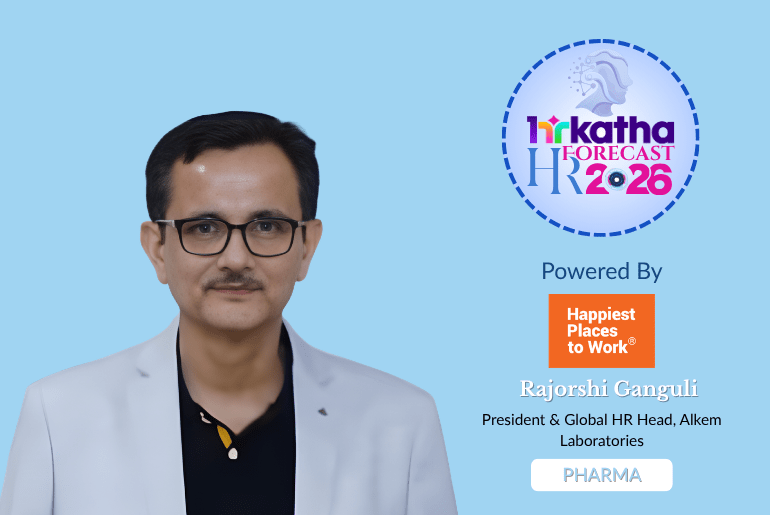
Rajorshi Ganguli, President & Global HR Head at Alkem Laboratories and author of Winning with Gen Z, believes organisations that recognise this shift early will build a lasting advantage.
“Skills-based hiring will prevail not because it is fairer, but because it is far more aligned with how work actually gets done.”
Several signals suggest how this transformation may unfold.
Signal 1: Degrees will be demoted from gatekeepers to inputs; deployability will become the lens
In 2026, degree-based hiring is unlikely to disappear. What will change is the weight organisations assign to academic credentials.
“The more relevant question today is no longer where a candidate studied, but how quickly they can add value in a role that itself keeps changing,” Ganguli notes.
Skills-based hiring has gained traction because work now evolves faster than most education curricula. Roles are increasingly modular, project-based and short-cycled.
In such environments, academic credentials, while remaining essential in regulated professions such as research, medicine, law and chartered accountancy, become only one indicator of future success.
“What sustains performance is demonstrated skill, learning agility and the ability to solve real problems in authentic contexts.”
This shift is being driven less by philosophy than by business necessity: scarce niche skills, pressure to shorten time-to-productivity and the rise of internal talent marketplaces that reward demonstrated capability over pedigree.
Technology, particularly AI-enabled skill mapping and assessment, will accelerate this transition.
Yet cultural barriers remain.
“Many organisations speak about skills-based hiring, but still interview for pedigree. The absence of robust, role-linked skill assessment frameworks further slows progress.”
Forward-looking organisations will not eliminate degrees. They will reposition them as one input within a broader assessment framework.
“The real differentiator will be investment in credible skill validation, on-the-job assessment and post-hire capability building.”
In 2026, organisations that measure deployability, speed to productivity and value creation, will respond faster than those still screening primarily on credentials.
Signal 2: Life-stage-aware design will replace generational stereotyping
A common mistake organisations continue to make is over-indexing on generational labels.
Gen Z wants autonomy. Millennials seek purpose. Gen X values flexibility. Baby Boomers prefer stability.
Reality is rarely that simple.
“Employee expectations are shaped less by generation and more by life stage, career context and personal priorities,” Ganguli observes.
Flexibility, for instance, means experimentation for someone beginning their career, balance for a parent managing multiple responsibilities, and purpose or stability for senior professionals, sometimes even within the same generation.
Progressive organisations are therefore moving away from uniform policies towards choice-based frameworks.
Shared values and common performance expectations remain constant, while employees gain greater flexibility in how they work, develop their careers and access benefits.
“This enables inclusion without chaos.”
Technology will increasingly personalise learning, career pathways and benefits.
But technology alone cannot make these systems work.
The real differentiator will be leadership capability.
“Managers must move beyond policy enforcement to contextual decision-making, balancing fairness with empathy and consistency with individual needs.”
The greatest risk in 2026 will not be flexibility itself, but inconsistent leadership.
“HR’s role is to build leadership maturity, clear decision principles, transparency and trust rather than adding more rules.”
The strongest organisations will be united in purpose, flexible in practice and human in execution, enabling employees across different life stages to thrive without weakening cultural coherence.
Signal 3: Psychological safety will become a leadership capability, not an HR aspiration
Psychological safety is now widely acknowledged as essential for high performance. Acknowledgement, however, is not the same as execution.
In 2026, organisations will increasingly separate into two groups: those that build psychological safety into leadership capability and those that continue operating fear-based cultures while describing themselves as high-performing.
One misconception continues to hold organisations back.
“In reality, it enables high accountability with low fear. Teams perform better when people can challenge ideas, admit mistakes early and speak truth to power.”
Organisations that understand this are already seeing stronger innovation, faster decision-making and lower attrition.
The real obstacle is leadership insecurity.
“Psychological safety erodes when leaders interpret questions as defiance or dissent as disrespect. Engagement surveys and well-crafted values statements do little if everyday leadership behaviour contradicts them.”
Safety is built through everyday interactions: how leaders respond to difficult conversations, how mistakes are handled and whose voices are genuinely heard.
Real progress will come from embedding psychological safety into leadership expectations through manager capability building, regular feedback rhythms and performance reviews that assess not only what leaders achieve, but how they achieve it.
“Fear-based cultures will persist where short-term targets dominate and leadership behaviour goes unchecked. But organisations focused on long-term performance will recognise that psychological safety is not a soft aspiration; it is a strategic enabler.”
The strongest leaders will be those who can hold tension: welcoming challenge without surrendering authority and encouraging candour without lowering standards.
“Psychological safety will be seen not as an HR initiative, but as a core leadership skill that directly impacts business outcomes.”
In 2026, organisations where psychological safety becomes a leadership expectation will consistently outperform those where it remains a cultural aspiration.
The capability shift
These signals, deployability replacing employability, life-stage-aware design replacing generational assumptions, and psychological safety becoming a leadership capability, point towards a larger transformation.
The competitive advantage is shifting away from policy design and towards execution capability.
“In 2026, forward-looking organisations will demote degrees from gatekeepers to inputs. The real differentiator will be investment in credible skill validation.”
“The strongest organisations will be united in purpose, flexible in practice and human in execution.”
“Psychological safety is not a soft aspiration; it is a strategic enabler.”
These are not policy changes.
They are capability investments that determine how quickly organisations adapt, how effectively they retain talent and how confidently they innovate.
Three Strategic Imperatives
Measure Deployability, Not Employability:
Shift hiring from credentials towards speed to productivity and learning agility, investing in robust skill validation and on-the-job assessment.Design for Life Stage, Not Generation:
Build choice-based frameworks with strong cultural anchors, enabling flexibility through leadership capability rather than additional rules.Embed Psychological Safety into Leadership:
Make psychological safety part of manager development, leadership expectations and performance evaluation, treating it as a business capability rather than an HR initiative.
The Leadership Test
The real question for 2026 is no longer whether organisations have progressive hiring philosophies, flexible HR policies or well-articulated cultural values.
Most already do.
What will separate organisations is whether their leaders have the capability to bring those ideas to life consistently.
Can hiring managers recognise deployability instead of defaulting to pedigree?
Can leaders adapt to different life stages without creating inconsistency or perceptions of unfairness?
Can they encourage challenge, admit mistakes and build trust without compromising accountability?
These questions cannot be answered through policy documents alone. They are answered through leadership behaviour, day after day.
The organisations that pull ahead will be those where capability is assessed through evidence rather than credentials, managers understand people through context rather than stereotypes, and psychological safety is experienced through everyday leadership rather than annual engagement surveys.
Because in 2026, employees will increasingly distinguish between organisations that talk about change and those whose leaders make that change visible every day.
And that distinction will determine not only who joins them, but who chooses to stay.
1 Comment
Radhika Sharma,
Good share.
We must prioritize skills-based hiring over rigid degree or certification requirements. While we respect academic credentials, a candidate’s actual abilities must come first. Furthermore, we need to actively cultivate and promote psychological safety within our teams.