


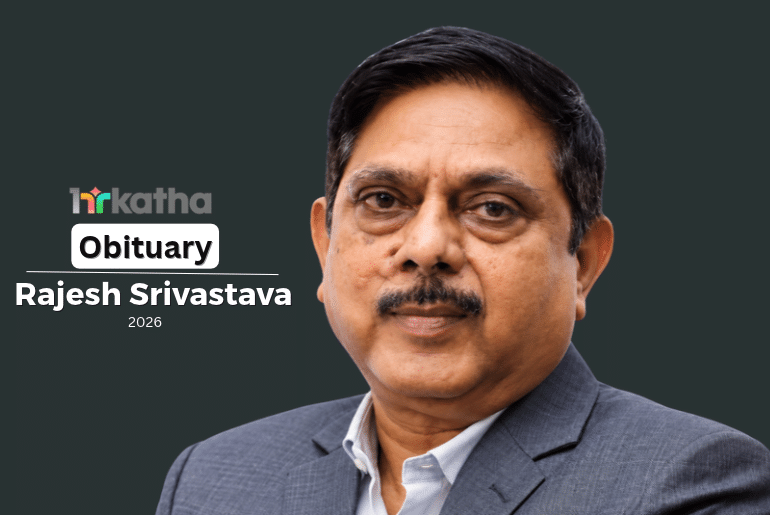
Rajesh Srivastava liked to describe himself as a “lifelong learner”. It was a modest description for someone who had spent nearly three decades helping organisations decide how other people should work, grow and develop. But perhaps it also explained something about his approach to human resources. For Srivastava, learning was not simply something employees were expected to do. It was something an organisation had to make possible.
Srivastava, who had been serving as chief human resources officer at Ion Exchange since April 2025, has passed away. His career had taken him through some of India’s established industrial and consumer businesses, from the Aditya Birla Group to Capital Foods, Welspun India and, finally, Ion Exchange.
He began in 1999 as an HR officer with the Aditya Birla Group, at a time when human resources in many Indian companies was still finding its place beyond personnel administration. His early work included group-wide initiatives in job analysis and evaluation, the painstaking business of determining what jobs involved, how they related to one another and how they ought to be valued.
He went on to become part of the founding team of Birla Sun Life Insurance, an experience that introduced him to the challenges of building an organisation rather than merely managing an established one. Senior HR roles followed at Birla Sun Life Asset Management and UltraTech Cement, where he eventually served as joint executive president and HR business partner across multiple divisions.
There was a recurring pattern to his career. Srivastava was drawn to roles in which the people function itself needed to be built, strengthened or adapted to a changing business.
At Capital Foods, which he joined in 2019, he built the HR function from the ground up and worked on strengthening the company’s employer brand. In 2022, he moved to Welspun India as president and chief human resources officer, spending more than two years with the textile manufacturer before taking up his final assignment at Ion Exchange.
There, his work included implementing an HR management system, establishing the Ion Exchange Academy and advancing the company’s efforts to create a common organisational identity through its “One ION” culture. The academy was perhaps an especially fitting undertaking for a leader who had continued to identify himself with learning long after reaching the top of his profession.
HR careers are often measured by the seniority of the positions held or the scale of the workforces managed. Srivastava’s career also tells a story of institutions built, systems established and organisations helped through different stages of growth. Much of that work happens quietly, away from the attention usually given to business strategy and financial performance.
His death brings that career to an unexpected close. For colleagues and peers who knew him, the loss is personal as well as professional. For the wider HR community, he leaves behind the example of a leader who, even after nearly three decades in the profession, still chose to call himself a learner.
