Close Menu
    Facebook X (Twitter) Instagram
    • Our Story
    • Partner with us
    • Reach Us
    • Career
    Subscribe Newsletter
    HR KathaHR Katha
    • Exclusive
      • Exclusive Features
      • Perspectives
      • Friday Features
      • herSTORY
      • Rising Stars
      • Case-In-Point
      • Point Of View
      • Research
      • HR Pops
      • Dialogue
      • Movement
      • Profile
      • Beyond Work
      • By Invitation
    • Brief News
      • Global HR News
      • Compensation & Benefits
      • Diversity
      • Events
      • Gen Y
      • Hiring & Firing
      • HR & Labour Laws
      • Learning & Development
      • Merger & Acquisition
      • Performance Management & Productivity
      • Talent Management
      • Tools & Technology
      • Work-Life Balance
    • Special
      • Editorial
      • HR Forecast 2026
      • Cover Story
      • HR Forecast 2024
      • HR Forecast 2023
      • HR Forecast 2022
      • HR Forecast 2021
      • HR Forecast 2020
      • HR Forecast 2019
      • New Age Learning
      • Coaching and Training
      • Learn-Engage-Transform
    • Studio
      • The CHRO Playbook
      • Quick HR Insights
      • The Corner Office
    • Reports
      • Whitepaper
        • HR Forecast 2024 e-mag
        • Future-proofing Manufacturing Through Digital Transformation
        • Employee Healthcare & Wellness Benefits: A Guide for Indian MSMEs
        • Build a Future Ready Organisation For The Road Ahead
        • Employee Experience Strategy
        • HRKatha 2019 Forecast
        • Decoding and Driving Employee Engagement
        • One Platform, Infinite Possibilities
      • Survey Reports
        • Happiness at Work
        • Upskilling for Jobs of the Future
        • The Labour Code 2020
    • Forums
      • HRKatha Inner Circle
      • HRKatha Futurecast
      • Leadership Summit 2025
      • Rising Star Leadership Awards
      • HRKatha Futurecast 2025
      • Automation.NXT
      • The Great HR Debate
    WhatsApp LinkedIn X (Twitter) Facebook Instagram
    HR KathaHR Katha
    Home»HR Tools»Five things to keep in mind while choosing a chatbot partner
    HR Tools

    Five things to keep in mind while choosing a chatbot partner

    mmBy Arindam Goswami | HRKathaSeptember 24, 2019Updated:September 24, 20194 Mins Read17940 Views
    Share LinkedIn Twitter Facebook WhatsApp
    Share
    LinkedIn Twitter Facebook WhatsApp

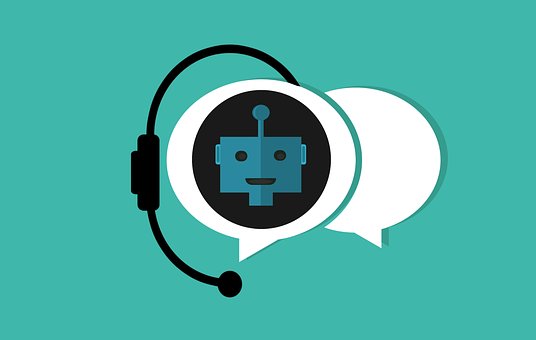
    Chatbots are the latest fad and companies providing chatbot services are flooding the market. Organisations depend on chatbots for everything, from recruitment to taking care of their employees. These AI-driven bots are in the infancy stage and have a long way to go to be near perfect. With so many different options available in the market, HR has to make sure that it ticks all the boxes while selecting a chatbot partner.

    Productivity

    The first thing that HR leaders look for while selecting a chatbot partner is how it can improve productivity within the organisation. The aim is to maximise productivity within the organisation by making do with less or the same amount of resources, human or others, from within the organisation. A chatbot can have a big impact in an area that will benefit most from cutting costs. For instance, chatbots used in the customer service department will drive productivity with minimum resources.

    Employee experience

    The second objective is to deliver employee experience. With chatbots, managers hope to create a delight factor across every area of an employee’s journey in the organisation. Doing this creates good experiences and moments of truth for the workers. And it is not just employee experience but candidate experience as well. Aspiring workers value timely responses and confirmations of their applications when submitted online. Chatbots should facilitate consistent communication, which makes the company more attractive to the candidate.

    Suruchi Maitra

    “Chatbots should be able to understand the Indian accents. The lingual challenge very much exists when talking to a bot”

    Customisation

    The third area is customisation and personalisation. Amit Das, director-HR and CHRO, Bennett Coleman and Co., emphasises on the need for chatbots to provide customisation options according to the types of employees in the organisation. “Nowadays, with the new generation being added to the ranks, we need a customised approach for every segment of the workforce,” says Das.

    This is one area that chatbots have delivered in to quite an extent. The type of customisation and hyper-personalisation needed today and being delivered would not be possible with AI-driven assistants. A chatbot keeps collecting data as and when the employee interacts with it, and based on that data, it is able to provide a lot of insight to the managers. This guides them in terms of the steps that should be taken to engage the employees and keep them happy.

    Amit Das

    “Nowadays, with the new generation being added to the ranks, we need a customised approach in chatbots for every segment of the workforce”


    Language

    The fourth is how well the bot can handle the language hurdles. This is especially relevant in a country, such as India. Companies recruit from every corner of the subcontinent and with so many different languages, the accents are bound to be different as well. This is a challenge for bots that interact using a verbal means of communication. The CHRO of Lenskart, Suruchi Maitra, admits that the language barrier is difficult to overcome. “Chatbots should be able to understand the Indian accents. The lingual challenge very much exists when talking to a bot,” says Maitra.

    It is not just about accents but how a language is used. Candidates’ use of abbreviations and colloquial words and phrases may be incoherent to a bot and may prevent it from responding accurately.

    Efficiency and user-friendliness

    And finally, it matters how good the bot itself is. AI bots use data to learn and improve their performance and interact more humanely. A bot needs to be able to get past the early problems of interpreting emotions and recognising disengagement quickly. It has to be easy to use and interact with. It should look friendly and respond in a human-like fashion. The response time should be quick and the answers need to relate to the questions asked.

    It is true that AI-driven bots have a long way to go in terms of performing at the optimum level. Bots have not learnt to respond to complex emotions and interpret contextual messages from employees. They have difficulty processing complex human emotions along with translating languages and understanding colloquial information. As of now, bots are only assisting HR to make informed decisions. But pretty soon they will be able to make complex decisions by themselves. However, for all its progress, AI is not there yet. For now, companies have to keep in mind these fundamental factors while choosing a chatbot partner.

    AI-driven Chatbots human interaction
    Share. LinkedIn Twitter Facebook WhatsApp
    mm
    Arindam Goswami | HRKatha

    Fresh into the HR beat, Arindam began his writing career by volunteering as a student writer during his college days. A fan of almost all kinds of sweets, he enjoys light music. He hails from Assam and holds chai as the best beverage.

    Leave A Reply Cancel Reply

    Related Posts

    AI-driven hiring in India adds 51,000 more jobs than it displaces: Report

    August 10, 2026

    Burger King tests AI to support drive-through staff

    March 2, 2026

    Apple quietly expands internal AI use as Siri overhaul takes shape

    January 27, 2026

    Did Zomato’s ZAAP force 500 employees to resign? Is Nugget taking over?

    April 2, 2025
    zoha
    Editorial

    The rift between the corner office and the floor below

    A general manager at a large Indian steel conglomerate recently described an exchange with his…

    Can India become a skills-first economy while remaining a collar-conscious society?

    Consider two employees beginning their careers. One joins a technology company as a junior analyst.…

    EDITOR'S PICKS

    HR Perspectives by Arindam Chakraborty: “Succession planning must begin two to three levels below the target role”

    October 28, 2026

    26% frontline employees report negative transformation experiences, nearly 3x the senior management rate

    October 28, 2026

    Microaffirmations: The small gestures that build big trust

    October 27, 2026

    For TELUS Digital, the diversity question is no longer how many but where

    October 27, 2026
    Latest Post

    Vastu Housing Finance appoints Hamsaz Vasunia Wadhwani as CHRO

    Movement October 28, 2026

    Vastu Housing Finance has appointed Hamsaz Vasunia Wadhwani as its new chief human resources officer…

    Bajaj Finserv elevates Amit Sharma as senior head-HR, L&D and admin

    Movement October 28, 2026

    Bajaj Finserv has elevated Amit Sharma to senior head–HR, learning and development (L&D) and administration,…

    HR Perspectives by Arindam Chakraborty: “Succession planning must begin two to three levels below the target role”

    Perspectives October 28, 2026

    A manufacturing plant can expand its capacity faster than an organisation can develop the people…

    26% frontline employees report negative transformation experiences, nearly 3x the senior management rate

    Research October 28, 2026

    Transformation looks different depending on where one sits in the organisational hierarchy. From the boardroom,…

    Asia's No.1 HR Platform

    Facebook X (Twitter) Instagram LinkedIn WhatsApp Bluesky
    • Our Story
    • Partner with us
    • Career
    • Reach Us
    • Exclusive Features
    • Cover Story
    • Editorial
    • Dive into the Future of Work: Download HRForecast 2024 Now!
    © 2026 HRKatha.com
    • Disclaimer
    • Refunds & Cancellation Policy
    • Terms of Service

    Type above and press Enter to search. Press Esc to cancel.