


HR has spent the last few years participating in AI conversations.
By 2026, it will be expected to lead them.
Today, 92 per cent of HR leaders report some participation in AI implementation. But only 21 per cent are closely involved in AI strategy decisions.
This gap reflects a deeper challenge—not of access, but of credibility.
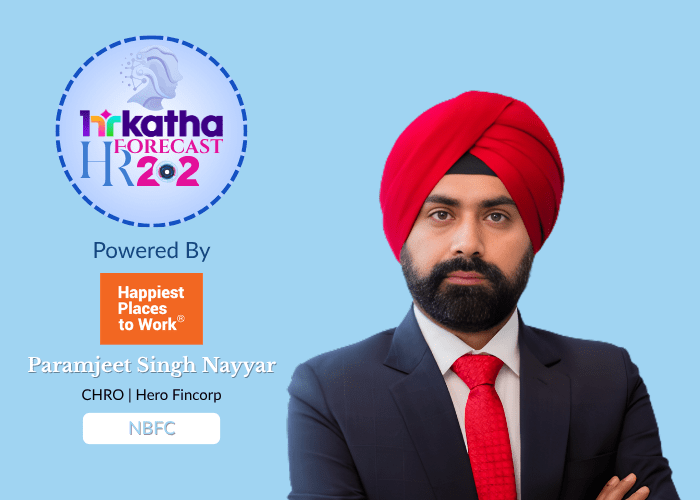
Paramjit Singh Nayyar, CHRO at Hero FinCorp, believes the next phase of HR’s evolution will depend on how quickly it transitions from technology adopter to strategic partner.
“By 2026, HR must move from being a technology adopter to a strategic AI partner,” he says.
Several signals suggest how this transition may unfold.
Signal 1: HR will build AI credibility through business impact—not just capability
The barrier to HR’s strategic role in AI is not participation. It is perceived value.
To bridge the gap, HR must go beyond tool adoption and build fluency in AI—understanding not just how systems work, but how they impact business outcomes.
This includes predictive workforce analytics, AI-driven talent forecasting and automation in compliance processes.
“The gap closes when HR aligns AI initiatives with organisational priorities—like compliance automation and fraud detection,” Nayyar notes.
The shift requires three capabilities: AI literacy, understanding ethical AI practices, and the ability to demonstrate tangible business impact.
When HR leads initiatives that directly affect organisational performance—fraud detection, compliance automation, talent forecasting—it positions itself as a trusted advisor in transformation, not just a technology implementer.
“The future belongs to HR teams that combine human insight with data-driven decision-making.”
Signal 2: HR leaders will step into broader business roles
HR’s evolution from an administrative function to a strategic partner is no longer new. The next step is ownership beyond people management.
“In 2026, HR leaders who master digital transformation, workforce analytics and organisational design will be well-positioned to take on COO or even CEO roles,” Nayyar observes.
This transition will be driven by HR’s expanding influence over culture, talent strategy and innovation—areas increasingly central to business performance.
“By owning culture, talent strategy and innovation, HR can prove that people strategy equals business strategy.”
As HR begins to shape growth, productivity and revenue outcomes directly, its role moves closer to core business leadership.
“I expect to see more CHROs leading cross-functional initiatives, driving growth and influencing revenue outcomes—making HR a true business powerhouse.”
Signal 3: Data governance will become a defining HR responsibility
As HR systems expand, so does the sensitivity of the data they manage.
From financial identifiers like PAN and Aadhaar to health records and insurance data, HR today sits at the centre of some of the organisation’s most critical data assets.
“By 2026, organisations will need to overhaul governance frameworks with encryption, consent-based sharing and zero-trust security models,” Nayyar says.
The risks are significant: insider threats, cyberattacks and regulatory non-compliance.
In regulated sectors, especially financial services under frameworks of the Reserve Bank of India, expectations around data protection are tightening.
“With RBI tightening norms, NBFCs must prioritise and invest in HR tech stacks to embed encryption, consent-based data sharing and zero-trust frameworks.”
This positions HR not just as a custodian of employee data, but as a key driver of trust, compliance and ethical AI adoption.
“HR must champion ethical AI and robust data protection standards, ensuring trust and compliance while balancing personalisation with privacy.”
Signal 4: Sustainable performance will challenge the ‘always-on’ culture
Post-pandemic burnout has forced organisations to confront the cost of relentless productivity.
While the “always-on” culture persists in pockets, a shift is underway.
Progressive organisations are embedding wellness KPIs into performance reviews, adopting AI-driven workload analytics and normalising flexible work norms.
“Those who fail to prioritise sustainable performance risk attrition and disengagement,” Nayyar warns.
The implication is clear: well-being is no longer a support function. It is a performance driver.
“The winners will integrate mental health support, encourage regular breaks and create a culture where well-being is seen as a driver of productivity—not just as an afterthought.”
Signal 5: Pay transparency will move from pressure to practice
Global trends and generational expectations are pushing organisations towards greater openness in compensation.
“By 2026, Indian organisations will face mounting pressure to publish salary ranges, conduct equity audits and address pay gaps,” Nayyar notes.
Early adopters will gain trust and employer brand advantage. Laggards risk reputational damage.
“Resistance will remain in legacy setups. Fintechs and new-age firms will lead with transparent dashboards linking pay to skills and performance, making pay equity a competitive differentiator in talent markets.”
India’s progress on pay equity signals a broader cultural shift. The country has achieved near-equal pay for men and women—a remarkable leap from the 27 per cent gender pay gap reported in 2023.
“It’s not just a statistic; it’s a cultural transformation that proves equality is possible when organisations prioritise transparency and equity.”
This positions transparency not just as a compliance requirement, but as a competitive differentiator in talent markets.
The AI-to-ownership shift
These signals—AI credibility through business impact, expanded business roles, data governance ownership, sustainable performance and pay transparency—point to a deeper transition.
HR is moving from enabling business strategy to shaping it.
The function that once managed processes is now expected to drive transformation—through data, technology and human insight.
“The future belongs to HR teams that combine human insight with data-driven decision-making,” Nayyar says.
Three Strategic Imperatives
Build AI Credibility: Move beyond adoption to impact—develop AI literacy, align initiatives with business priorities and demonstrate measurable outcomes through predictive analytics and automation.
Own Data Responsibility: Strengthen governance frameworks with encryption, consent-based sharing and zero-trust models to build trust and ensure compliance in regulated environments.
Expand Business Influence: Position HR as a growth driver by leading cross-functional initiatives, linking people strategy to revenue and operational outcomes.
The Leadership Test
The question is no longer whether HR will be involved in AI.
It is whether HR will lead it.
By 2026, the divide will not be between organisations using AI and those that are not.
It will be between HR functions that shape AI strategy—and those that implement it.
Because the future of HR will not be defined by the tools it adopts.
But by the business outcomes it drives.