
Close Menu
    Facebook X (Twitter) Instagram
    • Our Story
    • Partner with us
    • Reach Us
    • Career
    Subscribe Newsletter
    HR KathaHR Katha
    • Exclusive
      • Exclusive Features
      • Perspectives
      • Friday Features
      • herSTORY
      • Rising Stars
      • Case-In-Point
      • Point Of View
      • Research
      • HR Pops
      • Dialogue
      • Movement
      • Profile
      • Beyond Work
      • By Invitation
    • Brief News
      • Global HR News
      • Compensation & Benefits
      • Diversity
      • Events
      • Gen Y
      • Hiring & Firing
      • HR & Labour Laws
      • Learning & Development
      • Merger & Acquisition
      • Performance Management & Productivity
      • Talent Management
      • Tools & Technology
      • Work-Life Balance
    • Special
      • Editorial
      • HR Forecast 2026
      • Cover Story
      • HR Forecast 2024
      • HR Forecast 2023
      • HR Forecast 2022
      • HR Forecast 2021
      • HR Forecast 2020
      • HR Forecast 2019
      • New Age Learning
      • Coaching and Training
      • Learn-Engage-Transform
    • Studio
      • The CHRO Playbook
      • Quick HR Insights
      • The Corner Office
    • Reports
      • Whitepaper
        • HR Forecast 2024 e-mag
        • Future-proofing Manufacturing Through Digital Transformation
        • Employee Healthcare & Wellness Benefits: A Guide for Indian MSMEs
        • Build a Future Ready Organisation For The Road Ahead
        • Employee Experience Strategy
        • HRKatha 2019 Forecast
        • Decoding and Driving Employee Engagement
        • One Platform, Infinite Possibilities
      • Survey Reports
        • Happiness at Work
        • Upskilling for Jobs of the Future
        • The Labour Code 2020
    • Forums
      • HRKatha Inner Circle
      • HRKatha Futurecast
      • Leadership Summit 2025
      • Rising Star Leadership Awards
      • HRKatha Futurecast 2025
      • Automation.NXT
      • The Great HR Debate
    WhatsApp LinkedIn X (Twitter) Facebook Instagram
    HR KathaHR Katha
    Home»Exclusive Features»HR Forecast 2026»HRForecast 2026: Skills will challenge degrees—but systems will decide who wins – Amit Das, Director–HR, BCCL (Times Group)
    HR Forecast 2026

    HRForecast 2026: Skills will challenge degrees—but systems will decide who wins – Amit Das, Director–HR, BCCL (Times Group)

    mmBy Radhika Sharma | HRKathaMarch 24, 20264 Mins Read14262 Views
    Share LinkedIn Twitter Facebook WhatsApp
    Share
    LinkedIn Twitter Facebook WhatsApp

    For years, organisations have spoken about skills-based hiring.

    2026 could be the year it is finally put to the test.

    Despite growing acceptance of skills-first thinking, most organisations remain structurally tied to credentials. Degrees dominate job descriptions. Compensation follows grades. And when hiring decisions become critical, pedigree often overrides potential.

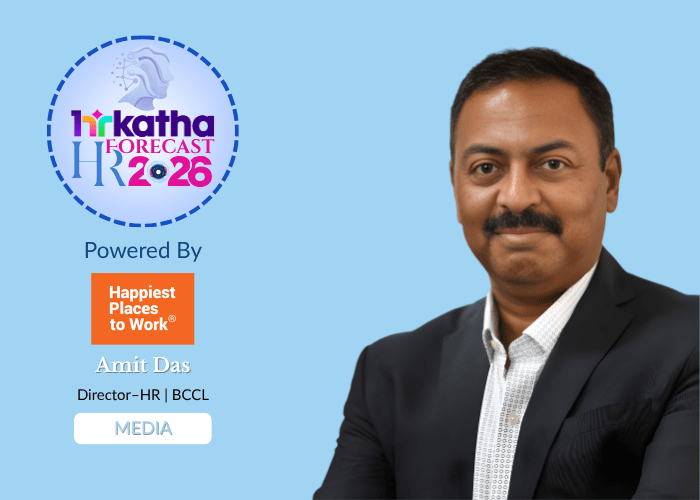
    Amit Das, director–HR, BCCL (Times of India Group), believes 2026 can be the tipping point—but only if organisations confront uncomfortable truths about how they hire, reward and grow talent.

    “Skills-based hiring has gained momentum—but let’s be honest, most companies have updated their career pages, not their systems,” he observes.


    Signal 1: Four converging forces will make skills-based hiring operationally necessary

    According to Das, four forces are converging to push organisations beyond credential-led hiring.

    First, AI-powered capability mapping is making skills visible and measurable.

    “Organisations can finally see skills with granularity—not as buzzwords but as observable, measurable behaviours.”

    Second, internal talent marketplaces are building organisational confidence.

    “When a software tester becomes a data analyst, or a customer support associate moves into UX because of demonstrated skills, leaders start believing in the model.”

    Third, business pressure for agility is mounting.

    “In an economy where roles evolve faster than degrees, capability building beats credential chasing.”

    Organisations can no longer afford to wait for formal education to catch up with business needs.

    Fourth, equity and access are becoming strategic priorities.

    “Skills-first hiring expands the talent pool, reduces bias and aligns with the social responsibility that many boards now prioritise.”

    Together, these forces are making skills-based hiring not just philosophically appealing, but operationally necessary.


    Signal 2: Structural barriers will determine whether intent becomes reality

    But these enabling forces are colliding with deeply embedded obstacles.

    Das is direct about what stands in the way:

    “Legacy mindsets. Operational inertia. Broken job architectures. Risk-averse managers. Grade-linked benefits. Unreliable assessments. A culture that trusts a certificate more than performance evidence.”

    Even when organisations endorse skills-based hiring in principle, their systems remain designed for credentials.

    Job descriptions demand degrees out of habit, not necessity.

    Compensation bands stay anchored in grades, not capability.

    Hiring managers say “skills matter” but default to pedigree when roles become critical.

    This creates practical barriers.

    Job architectures built around roles make it difficult to hire for capabilities that don’t fit predetermined boxes.

    Compensation tied to qualifications creates disincentives for skills-based hiring.

    Risk-averse managers revert to pedigree in high-stakes decisions, particularly for senior or client-facing roles.

    At its core, the barrier is trust—whether organisations value demonstrated performance as much as formal certification.


    The system challenge

    2026 may mark the shift from degrees to skills—but not because organisations suddenly become progressive.

    “It will happen because businesses can no longer afford the inefficiency of credential-driven hiring,” Das argues.
    The real challenge is not adopting skills-based hiring in principle.

    It is redesigning the systems that underpin talent decisions.

    “The question isn’t if we shift,” Das emphasises. “It’s whether organisations can redesign themselves fast enough to sustain it.”

    This means rewriting job descriptions to reflect capabilities, rebuilding compensation around contribution rather than grades, and redesigning career pathways to reward skill acquisition.

    Each of these changes touches legacy systems—and deeply embedded cultural norms.


    Three Strategic Imperatives

    Rewire Hiring Systems: Redesign job architectures and selection processes around skills—validating capabilities through real-world tasks, not credentials.

    Build Skills Visibility: Invest in AI-enabled capability mapping to make skills measurable and link them directly to performance and progression.

    Enable Talent Mobility: Create internal marketplaces that allow employees to move across roles based on demonstrated capability, not predefined career tracks.


    The Execution Test

    The question is no longer whether skills will overtake degrees.

    It is whether organisations can move fast enough to build the structures required to sustain that shift.

    2026 will test which force proves stronger—the mounting pressure to change, or the structural resistance to it.

    Because skills-based hiring is not a policy shift.

    It is a systems transformation.

    And the organisations that succeed will not be those with the best intentions – but those that redesign their systems to make it work.


    AI in HR Employee Experience Future of work Hiring Trends HR leadership HRForecast 2026 Inclusion and Diversity internal mobility LEAD Organisational design skills economy skills-based hiring talent & strategy Talent Management workforce transformation
    Share. LinkedIn Twitter Facebook WhatsApp
    mm
    Radhika Sharma | HRKatha

    Radhika is a commerce graduate with a curious mind and an adaptable spirit. A quick learner by nature, she thrives on exploring new ideas and embracing challenges. When she’s not chasing the latest news or trends, you’ll likely find her lost in a book or discovering a new favourite at her go-to Asian eatery. She also have a soft spot for Asian dramas—they’re her perfect escape after a busy day.

    Leave A Reply Cancel Reply

    Related Posts

    When employees can see the life their work changes, purpose becomes real

    October 5, 2026

    TVS ILP wants to move employee wellbeing beyond occasional interventions

    October 5, 2026

    The two-job job is becoming the new normal

    October 4, 2026

    From power stations to corporate HR: Panigrahi becomes ED – HR at NTPC

    October 2, 2026
    zoha
    Editorial

    The two-job job is becoming the new normal

    A colleague leaves. The position is not immediately filled. The work, however, does not wait…

    GCCs are not shrinking, the jobs that made them are

    The numbers that describe India’s GCC story in 2026 are impressive. More than 2,100 centres.…

    EDITOR'S PICKS

    The two-job job is becoming the new normal

    October 4, 2026

    Case-in-Point: The employee who doesn’t want to become a manager

    October 1, 2026

    herSTORY: Sonal Jain, Global Chief HR & Transformation Officer, EPL

    October 1, 2026

    HR Perspectives by Sharad K. Sharma: “We focus on making people decisions with clarity and fairness”

    September 30, 2026
    Latest Post

    When employees can see the life their work changes, purpose becomes real

    HRKatha Inner Circle October 5, 2026

    Purpose is easy to put into a statement. It is harder to make employees feel…

    TVS ILP wants to move employee wellbeing beyond occasional interventions

    Employee Benefits & Welfare October 5, 2026

    Employee wellbeing programmes often arrive as a collection of interventions: a health camp here, a…

    Canada expands low-wage foreign worker access for multi-site employers

    Brief News October 5, 2026

    Canada has eased rules governing the hiring of low-wage temporary foreign workers, allowing employers with…

    University of Utah plans to cut up to 15% of non-faculty workforce

    Global HR News October 5, 2026

    The University of Utah plans to eliminate or reduce between 5 and 15 per cent…

    Asia's No.1 HR Platform

    Facebook X (Twitter) Instagram LinkedIn WhatsApp Bluesky
    • Our Story
    • Partner with us
    • Career
    • Reach Us
    • Exclusive Features
    • Cover Story
    • Editorial
    • Dive into the Future of Work: Download HRForecast 2024 Now!
    © 2026 HRKatha.com
    • Disclaimer
    • Refunds & Cancellation Policy
    • Terms of Service

    Type above and press Enter to search. Press Esc to cancel.