


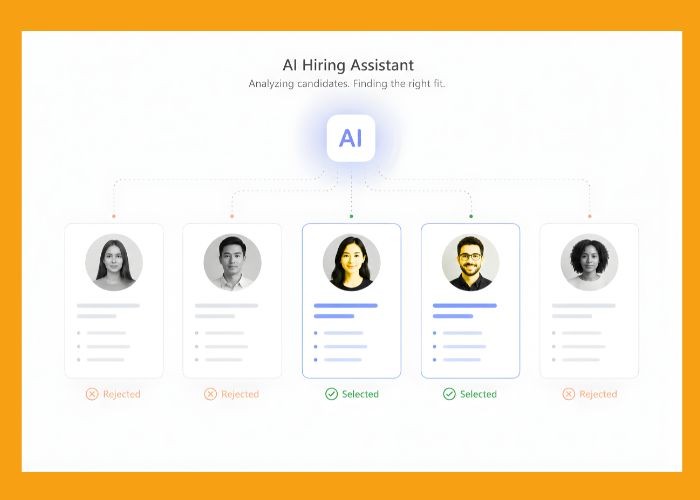
A new Stanford University study has revealed widespread racial bias in AI-powered hiring tools used by most large companies. The research examined 4 million job applications across 156 employers in 11 industries and found that automated screening systems disproportionately rejected Black and Asian candidates.
The study showed that 26 per cent of Black applicants and 15 per cent of Asian applicants applied to jobs where the AI system discriminated against their group. If these candidates had been recommended at the same rate as white applicants, 40,000 more applications would have advanced to the next stage. This level of disparity meets the Equal Employment Opportunity Commission’s definition of adverse impact, meaning one group is recommended at less than 80 per cent of the rate of the most-favoured group.
Researchers highlighted that bias occurs even when race is not explicitly included in applications. Instead, AI models rely on indirect signals, or “proxies,” such as performance in online games or other variables that unintentionally reflect demographic differences. The study focused on Pymetrics, a popular tool that screens candidates through game-based assessments, but noted that other platforms like HireVue are also widely used, including by Fortune 100 companies and major US federal agencies.
The findings warn of an “algorithmic monoculture” where many employers rely on the same or similar AI systems. This means candidates rejected by one company may face identical rejection elsewhere, reducing their chances of fair evaluation.
Clearly, there is an urgent need to audit AI hiring tools for bias, ensure transparency in recruitment processes, and protect equal opportunity. Without intervention, these systems risk locking qualified minority candidates out of jobs across entire industries.
