



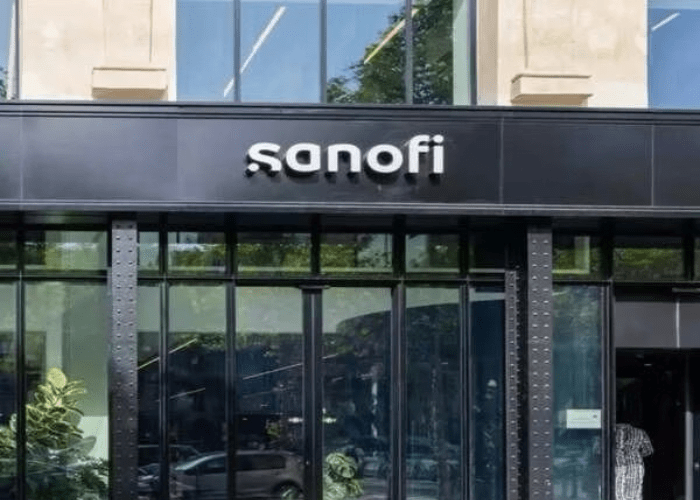
In 2019, Mrinal Duggal faced a challenge that would test any executive: building Sanofi’s global capability centre in Hyderabad from nothing. Not just another regional outpost, but the pharmaceutical giant’s primary hub for worldwide operations—in a city already crawling with multinational competitors desperate for the same talent.
Five years later, her operation houses 3,000 employees across functions spanning drug discovery, commercial operations, and patient services. The transformation represents more than corporate expansion; it’s a case study in how established companies can compete for talent in India’s most contested markets.

“Unlike other GCCs, we’re not considered internal service providers. We’re integrated enablers.”
Mrinal Duggal, head – Sanofi’s global services, Hyderabad hub

The Hyderabad problem
Hyderabad’s appeal to global companies created its own complications. The city hosts numerous capability centres, making talent acquisition intensely competitive. For pharmaceutical companies, the challenge is particularly acute—they need both medical professionals with advanced degrees and business specialists from IT and financial services.
“The competition is intense, but the ecosystem has also matured over the years,” Duggal, head of Sanofi’s global services, Hyderabad hub, acknowledges. The company claims to have found an edge through what it calls a “hospitality-inspired environment,” though such corporate speak masks a more strategic approach to differentiation.
Unlike many rivals that position their Indian operations as cost centres, Sanofi framed its Hyderabad hub differently. “We’re not considered internal service providers,” Duggal insists. “We’re integrated enablers.” The distinction matters when recruiting professionals who increasingly seek meaningful work alongside competitive compensation.
The heritage advantage
Sanofi’s pitch to potential employees rests heavily on its Indian history. The company has operated in the country for seven decades, running charitable programmes and conducting clinical trials that give India earlier access to new treatments. Its Goa manufacturing facility serves more than 60 countries.
“When we established our global GCC hub in Hyderabad, it was a natural extension of this commitment,” Duggal explains. Whether candidates find this compelling remains difficult to verify, but the company’s longevity in India does distinguish it from purely extractive operations.
The hub’s global remit also provides recruitment advantages. Whilst competitors manage regional operations, Hyderabad serves as Sanofi’s worldwide centre, with other locations functioning as satellites. “We offer customisable career journeys and rich learning experiences shaped by exposure to global projects,” Duggal claims.
Crisis and adaptation
Duggal’s expansion plans faced an immediate test when COVID-19 struck in 2020. “The initial years required considerable patience and perseverance since we were held back by the pandemic,” she recalls. The crisis could have derailed a nascent operation competing against established rivals.
Instead, the company adapted by broadening its recruitment strategy. Rather than focusing solely on Hyderabad’s talent pool, Sanofi began attracting professionals from across India, including smaller cities. “We attract talent from Tier II and III cities,” Duggal notes, though she doesn’t provide specifics about retention rates for employees relocating from smaller markets.
The approach reflects broader changes in India’s labour market, where remote work capabilities have reduced geographic constraints on hiring. Companies willing to accommodate distributed teams can access wider talent pools, though managing such arrangements requires different skills.
The culture question
Sanofi’s workplace philosophy centres on what Duggal calls creating “a home away from home.” The company has invested in infrastructure and amenities designed to support employee wellbeing, though such perks have become common among multinational employers in Indian metros.
More substantively, the company claims to offer genuine career development through exposure to global operations. “We enable new drug launches and provide lifecycle maintenance, directly impacting the patient experience,” Duggal explains. If accurate, such work would provide more meaningful professional development than routine back-office functions.
The company also emphasises purpose-driven work. “The most compelling reason to join Sanofi is our purpose—we chase the miracles of science to improve people’s lives,” Duggal says. Whether employees find this motivating depends partly on how closely their daily responsibilities align with such grand missions.
Measuring success
Evaluating Sanofi’s approach is not straightforward. The company cites strong employee satisfaction and effective recruitment but offers few specific metrics. Duggal concedes there are limitations, noting, “We do lose some people.” The attrition rate currently stands at about 8.5 per cent.
The rapid growth from 50 to 3,000 employees suggests the operation has attracted talent successfully. However, scaling quickly in competitive markets can sometimes prioritise quantity over quality, potentially creating integration challenges as teams expand.
Duggal’s background in large-scale transformation programmes may have proved crucial. “It wasn’t daunting, honestly,” she reflects, though she credits supportive teams and family for navigating the challenges.
Broader questions
Sanofi’s Hyderabad experiment raises larger questions about how multinational companies should approach India’s evolving talent market. The traditional model—establishing cost centres focused on operational efficiency—faces increasing pressure as Indian professionals demand more substantial roles.
The pharmaceutical sector’s specific requirements complicate matters further. Unlike generic IT services, drug development requires deep regulatory knowledge and scientific expertise, making talent both scarcer and more valuable.
Whether Sanofi’s approach can be replicated across industries remains unclear. The company’s decades-long Indian presence and meaningful local operations provide advantages that purely digital enterprises might struggle to match.
The test ahead
As India’s capability centre ecosystem matures, companies face pressure to demonstrate genuine value creation rather than mere cost arbitrage. Sanofi’s bet on positioning its Hyderabad hub as a global centre of excellence reflects this shift, though proving such claims requires sustained performance over time.
Duggal’s success in building a large, apparently stable operation offers one template for competing in India’s talent markets. Whether this approach delivers lasting competitive advantages—for both Sanofi and its employees—will determine if other multinationals follow suit.
1 Comment
Excellent Article and brings out challenges and opportunities from all angles.