

Close Menu
    Facebook X (Twitter) Instagram
    • Our Story
    • Partner with us
    • Reach Us
    • Career
    Subscribe Newsletter
    HR KathaHR Katha
    • Exclusive
      • Exclusive Features
      • Perspectives
      • Friday Features
      • herSTORY
      • Rising Stars
      • Case-In-Point
      • Point Of View
      • Research
      • HR Pops
      • Dialogue
      • Movement
      • Profile
      • Beyond Work
      • By Invitation
    • Brief News
      • Global HR News
      • Compensation & Benefits
      • Diversity
      • Events
      • Gen Y
      • Hiring & Firing
      • HR & Labour Laws
      • Learning & Development
      • Merger & Acquisition
      • Performance Management & Productivity
      • Talent Management
      • Tools & Technology
      • Work-Life Balance
    • Special
      • Editorial
      • HR Forecast 2026
      • Cover Story
      • HR Forecast 2024
      • HR Forecast 2023
      • HR Forecast 2022
      • HR Forecast 2021
      • HR Forecast 2020
      • HR Forecast 2019
      • New Age Learning
      • Coaching and Training
      • Learn-Engage-Transform
    • Studio
      • The CHRO Playbook
      • Quick HR Insights
      • The Corner Office
    • Reports
      • Whitepaper
        • HR Forecast 2024 e-mag
        • Future-proofing Manufacturing Through Digital Transformation
        • Employee Healthcare & Wellness Benefits: A Guide for Indian MSMEs
        • Build a Future Ready Organisation For The Road Ahead
        • Employee Experience Strategy
        • HRKatha 2019 Forecast
        • Decoding and Driving Employee Engagement
        • One Platform, Infinite Possibilities
      • Survey Reports
        • Happiness at Work
        • Upskilling for Jobs of the Future
        • The Labour Code 2020
    • Forums
      • HRKatha Inner Circle
      • HRKatha Futurecast
      • Leadership Summit 2025
      • Rising Star Leadership Awards
      • HRKatha Futurecast 2025
      • Automation.NXT
      • The Great HR Debate
    WhatsApp LinkedIn X (Twitter) Facebook Instagram
    HR KathaHR Katha
    Home»Brief News»Do boards help shape organisational culture? 78% board members say ‘Yes’
    Brief News

    Do boards help shape organisational culture? 78% board members say ‘Yes’

    Unfortunately, 67% of respondents report that culture is never, or only occasionally, discussed at board meetings according to a report
    mmBy Liji Narayan | HRKathaJuly 18, 20254 Mins Read11838 Views
    Share LinkedIn Twitter Facebook WhatsApp
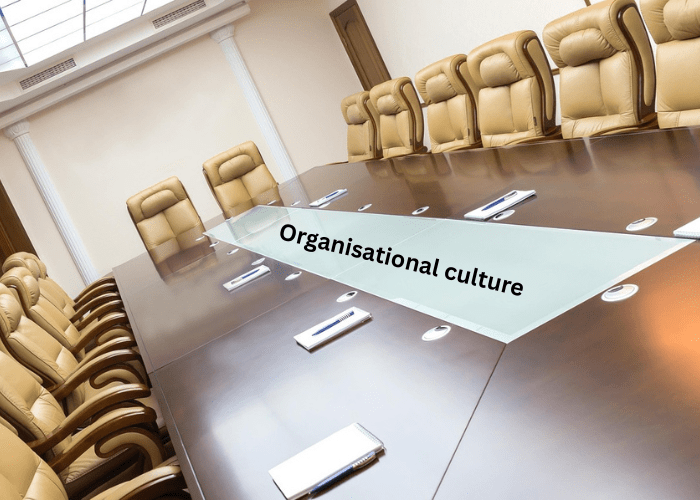
    Do boards shape organisational culture?
    Share
    LinkedIn Twitter Facebook WhatsApp

    That culture forms the core of good governance is a known fact. For only then can vision and values be shaped, strategies executed and reputation built with stakeholders. Does that mean the boards of companies play a strategic role in shaping organisational culture? Does culture find a place in the list of governance responsibilities of company boards? Culturelytics and the Institute of Directors (IOD) decided to find out.

    To understand the developing attitudes of board members about organisational culture and how it fits into their governance responsibilities, a survey was conducted. Executive and non-executive directors serving on public and private-company boards across sectors were part of the same.

    The findings were interesting: A whopping 92 per cent board members believe that a board’s governance responsibilities should include ensuring that organisational culture aligns with company purpose. A significant 78 per cent of board member respondents agree or strongly agree that the board plays an active role in shaping the culture of their organisation. Where is the problem you may ask? Well, the problem is that, in reality, a good 67 per cent of respondents report that culture is never, or only occasionally, discussed at board meetings. Only about 30 per cent respondents stated that the board of directors and its chair were responsible for shaping culture in their organisation. A measly three per cent respondents admitted to culture being among the top 5 items of the board meeting agendas. About 50 per cent respondents said the agenda items at meetings only comprised operational topics that required approval, including organisational performance, strategic planning, financial reports and projections that
    were important to major business decisions. Culture is missing from the agenda.

    Clearly, while most respondents of the survey were of the opinion that culture should be aligned with the purpose of the organisation, and that the same should be the responsibility of the board, they also admitted that they are not presently playing an active role in shaping organisational culture. That means, while the intent is there, no action has been taken to address the same.

    Why is culture important for achieving business outcomes? For one, the respondents felt that a positive organisational culture contributes to performance, particularly amidst change. It is essential for the culture of an organisation to be adaptive and responsive, and without such a culture there cannot be success. Additionally, the emotional environment of an organisation is important for productivity and good performance. This is determined by long-term culture, which only the board can drive and instil.

    Culture, according to many respondents is what shapes a company’s reputation and affects every aspect of the business, as well as its stakeholders. Culture also forms the foundation of a company’s long-term sustainability goals and vision.

    Culture suffers when the board and executive leaders fail to align the organisation’s purpose with its culture.

    This brings forth another important question. Do boards have the right tools to assess culture performance? Over 87 per cent of the respondents agree there is a need to comprehensively measure the culture of their organisation, while over 65 per cent recommend embracing AI platforms to help measure and manage organisational culture. Almost 87 per cent of respondents believe that their organisation’s culture is aligned with its mission, vision and goals, while only 35 per cent actively benchmark their culture practices against global best practices. Almost 63 per cent of respondents felt a need for a dedicated management team to implement and monitor culture in their organisation.

    When culture is so crucial to the fulfillment of business objectives and is such an integral part of good governance, it is but understood that the boards will have to play a fundamental role in ensuring the establishment and maintenance of the right culture in the organisation. The boards will have to co-create culture and also supervise and support the same.

    With growing competition, and the increasing number of mergers and acquisitions today, cultural compatibility is a must. When business transformations fail, most of the time the reason is cultural incompatibility. Therefore, it is high time boards addressed culture through their agenda and committee structure.

    agenda of board meetings board board meetings board member board of company boards of companies boards shape culture Culture culture and good governance Culturelytics Employee employer governance HR Human Resources IOD long-term sustainability goals Organisational Culture Workforce
    Share. LinkedIn Twitter Facebook WhatsApp
    mm
    Liji Narayan | HRKatha

    HRKatha prides itself in being a good journalistic product and Liji deserves all the credit for it. Thanks to her, our readers get clean copies to read every morning while our writers are kept on their toes.

    1 Comment

    1. G K MANJUNATH on July 31, 2025 9:38 pm

      At the outset, my heartfelt congratulations to Liji Narayan for her on the heart burning topic. The Board and top Management has to imbibe culture amongst the shop floor to achieve the company’s mission. The culture is guiding lamp to move forward. It is aptly said “When culture is so crucial to the fulfillment of business objectives and is such an integral part of good governance, it is but understood that the boards will have to play a fundamental role”
      Why many companies are failing and struggling, it is lacking culture at all level in the companies. The top management should lead from the front and be a model to downwards.

      The article is eye opener for all the boards.

      Read more at: https://www.hrkatha.com/research/do-boards-help-shape-organisational-culture-78-board-members-say-yes/

      Reply
    Leave A Reply Cancel Reply

    Related Posts

    Tata Steel elevates Mukesh Agarwal to chief L&D and chief wellness officer

    November 23, 2026

    EPFO’s new retirement plan: More choice, less pressure

    November 22, 2026

    Can Nvidia remain Nvidia without Jensen Huang?

    November 22, 2026

    P&G plans to cut manufacturing and logistics workforce by up to 30% by 2030

    November 20, 2026
    zoha
    Editorial

    Can Nvidia remain Nvidia without Jensen Huang?

    Jensen Huang co-founded Nvidia in 1993. For thirty-three years, he was its chief executive and,…

    Companies owe their people more than what is legal

    When Canva announced a restructuring affecting 1,271 employees, or 22 per cent of its workforce,…

    EDITOR'S PICKS

    Can Nvidia remain Nvidia without Jensen Huang?

    November 22, 2026

    The career mistakes that don’t look like mistakes

    November 20, 2026

    herSTORY: Surbhi Gupta, Chief Talent Officer, South Asia, Publicis Groupe

    November 19, 2026

    Case-in-Point: When a client wants an employee off the account

    November 19, 2026
    Latest Post

    Tata Steel elevates Mukesh Agarwal to chief L&D and chief wellness officer

    Movement November 23, 2026

    Tata Steel has promoted Mukesh Agarwal to chief learning and development and chief wellness officer.…

    EPFO’s new retirement plan: More choice, less pressure

    Compensation & Benefits November 22, 2026

    The Employees’ Provident Fund Organisation (EPFO) is considering a major change in the way employees…

    Can Nvidia remain Nvidia without Jensen Huang?

    Editorial November 22, 2026

    Jensen Huang co-founded Nvidia in 1993. For thirty-three years, he was its chief executive and,…

    P&G plans to cut manufacturing and logistics workforce by up to 30% by 2030

    Brief News November 20, 2026

    Procter & Gamble (P&G) plans to reduce its manufacturing and logistics workforce by 20 to…

    Asia's No.1 HR Platform

    Facebook X (Twitter) Instagram LinkedIn WhatsApp Bluesky
    • Our Story
    • Partner with us
    • Career
    • Reach Us
    • Exclusive Features
    • Cover Story
    • Editorial
    • Dive into the Future of Work: Download HRForecast 2024 Now!
    © 2026 HRKatha.com
    • Disclaimer
    • Refunds & Cancellation Policy
    • Terms of Service

    Type above and press Enter to search. Press Esc to cancel.