


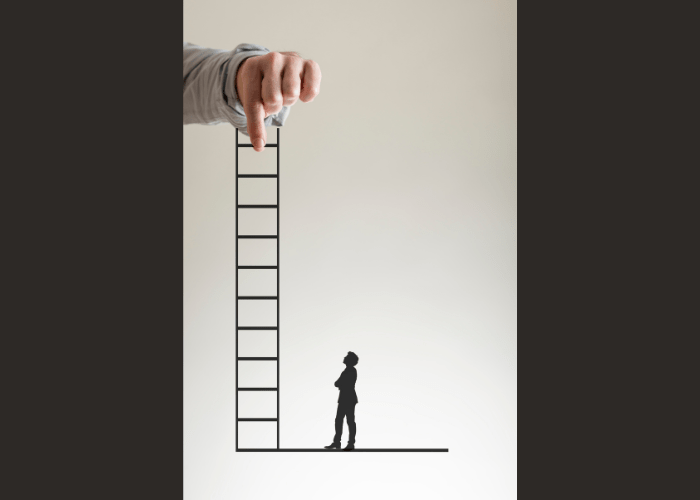
Gen Z is staging a quiet rebellion in corporate corridors. A recent British study reveals that 52 per cent of professionals born between the mid-1990s and early 2010s actively avoid middle-management positions, with 69 per cent prioritising personal growth and autonomy over traditional career advancement. Far from a fleeting trend, this shift reflects a fundamental rethinking of workplace hierarchy, leadership, and success.
The traditional middle manager—caught between executing top-down directives and managing teams—has long been corporate life’s equivalent of a Victorian butler: essential yet perpetually squeezed. Now, with over two-thirds of Gen Z citing high stress and meagre rewards, these roles are becoming increasingly undesirable.
“Gen Z wants to redefine what it means to be a leader,” says Varadarajan S (Raja), senior HR leader and former CHRO, Vistara Airlines. Unlike their predecessors, who dutifully climbed the corporate ladder, this generation seeks roles offering direct impact and personal growth—free from the burdens of administrative drudgery.
“The time has come to redefine what leadership means—and how it is shared.”
Ramesh Shankar, senior HR leader

This trend, termed ‘conscious unbossing’, presents a thorny challenge for organisations. Middle-management positions, once seen as a vital stepping stone to senior leadership, now symbolise everything Gen Z rejects: high stress, minimal recognition, and the sacrifice of personal life for corporate advancement.
“They’re opting for roles that focus on personal expertise and provide control over their lives, rather than climbing a corporate ladder fraught with stress,” Raja explains.
Ramesh Shankar, a senior HR leader, draws a sports analogy to illustrate the predicament. “A captain evolves strategies and ensures collaboration within the team. Similarly, middle managers are responsible for execution and cohesion.” Yet unlike star players who receive accolades for their performance, middle managers often toil in obscurity, bearing outsized responsibilities with insufficient rewards.
The implications of this generational shift are profound. Organisations face a looming succession crisis as their leadership pipeline threatens to run dry. Some companies are already adapting. American Express, for instance, has slashed its organisational layers from 28 to six, creating a more agile workforce. “This transformation demonstrates how flattening hierarchies can preserve stability while fostering innovation,” Raja observes.
“They’re opting for roles that focus on personal expertise and provide control over their lives, rather than climbing a corporate ladder fraught with stress.”
Varadarajan S (Raja), senior HR leader & former CHRO, Vistara Airlines

But structural changes alone aren’t enough. Companies must fundamentally reimagine leadership development. Raja suggests leveraging technology: “Tools like AI can identify and nurture talent, allowing companies to build resilience while reducing dependence on hierarchical structures.”
Progressive organisations are exploring multiple solutions. Some implement rotational programmes, letting employees test leadership waters temporarily. Others are creating ‘networked organisations’ that prioritise collaboration over rigid hierarchies. “Flatter structures empower employees to lead through expertise while contributing meaningfully to organisational goals,” Raja explains.
These adaptations reflect a broader truth: leadership itself needs redefinition. The future may lie in decentralised models where leadership is shared across teams rather than concentrated in traditional management layers. This approach aligns with Gen Z’s preference for meaningful contribution and work-life balance while ensuring organisational effectiveness.
“You can’t run an organisation without leaders, just like a team game needs a captain,” Shankar notes. But perhaps the solution lies in transforming leadership from a burden into an opportunity. This could mean reducing administrative duties, offering more strategic roles, and aligning compensation with responsibilities.
The perks that resonate with Gen Z—flexible working, wellness initiatives, growth opportunities—must become integral to leadership positions, not just entry-level roles. McKinsey’s research supports this approach, showing that organisations fostering employee empowerment achieve better outcomes.
The conscious unbossing movement signals more than generational preference—it’s forcing a fundamental rethink of workplace dynamics. Companies must now balance developing individual expertise with leadership readiness, all while addressing legitimate concerns about stress and meaningful contribution.
As organisations navigate this shift, the traditional corporate ladder is giving way to something more fluid and collaborative. Those who adapt won’t just secure their leadership pipeline—they’ll unlock new possibilities for growth, innovation, and employee satisfaction in an era where leadership itself is being redefined.
The future belongs to organisations that can transform leadership from a hierarchical position to a collaborative function, from a stress-laden obligation to an opportunity for meaningful impact. As Shankar aptly concludes, “The time has come to redefine what leadership means—and how it is shared.”
This generational rejection of middle management isn’t just a challenge—it’s an opportunity to create more resilient, adaptive, and human-centric organisations. The question isn’t whether to adapt, but how quickly and how fundamentally organisations are willing to change their leadership paradigms to meet the future of work.
1 Comment
Sure. Alas! Zen Z are in the midst of on their family growth and their development otherwise on materialistic aspects of creating own house, child’s education and hence they are not asking about the corporate mindset and hence all the items mentioned will find a backseat and continue to struggle in the same scenario. Only a very small percentage may heed to such things who give more importance to their personal development in corporate hierarchy versus the day to day millennia.