



The hiring conversation has shifted dramatically over the past few years. Once, technical expertise was the gold standard, proof that a candidate could step in and deliver from day one. Today, that assumption is being challenged. AI is transforming jobs, industries are evolving at breakneck speed and the skills employees possess today may become outdated much sooner than expected.
As organisations navigate this changing landscape, adaptability has emerged as one of the most sought-after qualities. Recruiters increasingly value curiosity, learning agility and the willingness to embrace change. Yet the question remains: can the ability to learn outweigh the ability to perform immediately? In roles where precision, compliance or safety are non-negotiable, can organisations afford to prioritise potential over proven expertise?
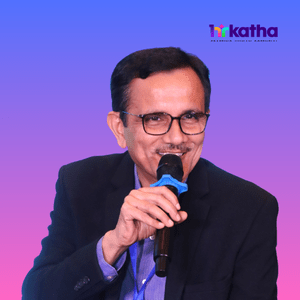
Rajorshi Ganguli, President & Global Head – HR, Alkem Laboratories
Yes, but technical competence must come first.
If forced to choose just one capability that will define long-term success in the future of work, it would be adaptability. But the answer isn’t a straightforward yes or no; it depends entirely on the role, the business context and the pace at which change is taking place.
There are many positions where technical expertise is absolutely essential from day one. Industries dealing with quality, safety or regulatory compliance cannot afford a prolonged learning curve. Employees in such roles need strong technical competence before they even begin.
However, once that minimum threshold of expertise is established, adaptability becomes the real differentiator.
The workplace is changing faster than ever before. Technologies are advancing rapidly, business priorities continue to evolve and the relevance of existing skills keeps shrinking. Learning agility, curiosity and the ability to unlearn and relearn are stronger indicators of future success than technical expertise alone. Employees who keep learning stay relevant far longer than those who rely only on existing expertise.
The hiring philosophy should therefore be simple: find people who can perform effectively today, but more importantly, individuals who possess the mindset to evolve alongside the organisation. Ultimately, technical expertise is the entry ticket, while adaptability determines how successfully individuals grow throughout their careers.
Takeaway: Technical expertise gets people started; adaptability determines how far they go.
Jaidip Chatterjee, Group Chief Human Resources Officer, Reliance Group
It’s the wrong question; the right answer depends on the role and the risk involved.
Asking whether organisations should prioritise adaptability or technical expertise is asking the wrong question. The real answer depends entirely on the role, the industry and the level of risk involved.

My experience across solar manufacturing, battery manufacturing, roads and metro businesses has reinforced one lesson: every business has a different tolerance for risk.
Applying the same hiring philosophy everywhere simply doesn’t work.
A significant portion of hiring today is for capabilities that barely existed in India five years ago. Gigafactory-scale battery manufacturing, integrated solar module production and large-scale greenfield execution are relatively new domains. In such cases, adaptability takes priority. People who learn quickly, work comfortably through ambiguity and can evolve alongside changing technologies and regulations often perform exceptionally well.
At the same time, adaptability has clear limits. Certain positions simply cannot accommodate a steep learning curve. A metro project requires leaders with deep tunnelling expertise. Battery plants require engineers who understand cell chemistry and thermal safety. When commissioning a live plant or executing critical infrastructure, mistakes directly affect safety, project timelines and capital investment. That instinct cannot be replicated through short-term training.
Hiring decisions therefore vary by role. For emerging technology functions, adaptability is prioritised because the playbook itself is still evolving. For execution-intensive or safety-critical roles, demonstrated technical expertise becomes non-negotiable.
There is also a third factor that often gets overlooked: culture and site fit. Technical capability may help someone secure the role, but success ultimately depends on whether they align with the organisation’s safety culture, execution discipline and ways of working.
Takeaway: Hiring decisions should reflect the role, the risk and the business context, not a universal philosophy.
Rajesh Rai, Senior Vice President & Head – HR, APAC, GlobalLogic, Hitachi
Technical expertise remains the baseline and a non-negotiable foundation, especially in an era where technology and business landscapes are evolving at an unprecedented pace. Organisations still need people with the functional knowledge to perform effectively from day one. However, once that threshold is met, adaptability becomes the true differentiator.

Adaptability is at the heart of a growth mindset, which is increasingly essential in today’s workplace. The ability to learn, unlearn and relearn, embrace change, solve complex problems, innovate, and continuously evolve allows individuals to maximise the value of their technical skills. Equally important is the willingness to experiment, fail fast, learn faster, and navigate ambiguity with resilience and curiosity—qualities that help employees stay relevant as roles and industries continue to transform.
Rather than viewing technical expertise and adaptability as competing priorities, organisations should recognise that they complement one another. Deep technical capability provides the foundation, while learning agility and adaptability ensure that knowledge remains relevant in the face of constant change. The organisations best equipped for the future will be those that hire people who combine strong technical competence with the mindset and agility to grow, evolve and create lasting impact.
Takeaway: Technical expertise is the baseline; adaptability is the differentiator.