


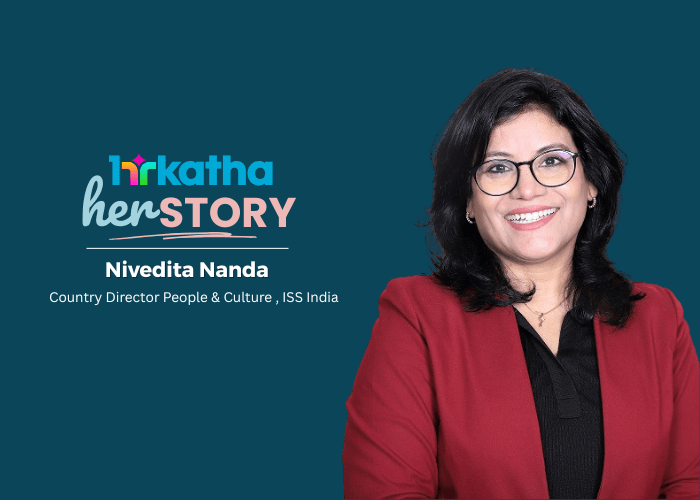
The pilot officer who embraced HR
Having joined the Indian Air Force at a very young age, Nivedita Nanda realised that in the Defence services, there’s technically no HR department—every officer is, in some way, an HR manager. They are constantly guiding, motivating, and taking care of their people.
Her defining moment came when she saw the impact of a simple conversation—how genuinely listening to someone helped unlock their confidence and performance. She realised that HR isn’t about policies or processes but about people and potential. That’s when she knew HR was where she truly belonged.
Today, as country director people and culture at ISS India, Nanda leads with a philosophy forged in the Armed Forces: respect comes from consistency and courage, not popularity.
The power of slowing down
Nanda has come to accept that every experience teaches something, and one shouldn’t rush the journey. Being from a small town, her younger self had always dreamt big. Her drive to achieve, to move fast, shaped her early years. Back then she truly believed that speed was everything—that the faster she moved, the more successful she’d be.
Over time she learnt that speed wasn’t important but what a person learnt at every step of the journey was. Slowing down actually helps one move forward in a more meaningful way.
Looking back now, she wishes she had taken her time and advises youngsters to do so and learn deeply in the process.
“Slowing down actually helps one move forward in a more meaningful way.”
When empathy met scepticism
One barrier that surprised her as a woman in HR leadership was how often empathy was misinterpreted as weakness. Early on, she noticed that whenever she led with compassion, listening deeply and prioritising employee wellbeing, some colleagues assumed she’d avoid tough decisions.
This always surprised her because empathy had always been a strength. She turned that perception into an opportunity by reframing empathy as a strategic leadership tool. She made it a point to pair empathy with data-driven decisions and accountability—showing that it was possible to be both compassionate and results-oriented.
Over time, this approach built trust across departments and helped reshape how leadership ‘strength’ was defined in her organisation. It also inspired her to mentor other emerging women leaders to embrace authenticity as an asset, not a liability.
Quick Fire Round
What’s the best career advice you’ve ever received?
Never forget where you started, and always stay grounded.
One thing you wish people understood about being a woman in HR leadership?
Being a woman in HR leadership means leading with both strength and empathy, and knowing that kindness is power.
Morning ritual that sets you up for success?
My mornings start with a chat with my son. It keeps me grounded, gives me purpose, and helps me see the world through the eyes of Gen Z.
If not HR, what career path would you have pursued?
Entrepreneurship—because clearly, I enjoy solving problems which no one else wants to touch.
What energises you most about your work?
My team and the constant problem-solving energise me. Each day brings a new challenge and opportunity to grow together.
Respect over popularity
Whilst at first Nanda wanted to be liked, over time she realised that respect lasts longer. “The key is intent,” she points out. “If your decisions come from fairness, empathy, and purpose, people may not always agree in the moment, but they’ll respect you in the long run.”
In the Air Force, respect came from consistency and courage, not popularity. She carries that with her even today.
Her leadership style is primarily collaborative and empowering. She believes in setting a clear vision, then giving her team the autonomy and support they need to deliver their best work. True leadership, in her opinion, is less about control and more about trust and enabling others to succeed.
“I’d rather be respected for doing what’s right than liked for doing what’s easy.”
Strategic HR in practice
Strategic HR for Nanda means being a true business partner—not just managing people processes, but shaping decisions that drive organisational performance. It’s about aligning talent, culture, and capability building directly with the company’s long-term goals.
She recalls how in her previous organisation, they noticed that high-potential employees were leaving within two years due to limited career pathways. Instead of treating it as a retention issue alone, Nanda partnered with department heads to design a succession and development framework tied to growth strategy. They built clear career maps, launched leadership coaching, and tracked progress quarterly.
Within a year, internal promotion rates increased by 30 per cent, and turnover amongst key talent dropped significantly. That’s strategic HR in action—using workforce insights to anticipate needs rather than react to them.
The next frontier
Women today in HR are truly shaping the business agenda, enjoying greater visibility, voice, and confidence. However, Nanda feels they still need to push harder—move beyond HR into broader business leadership roles, boardrooms, and P&L responsibilities. Real inclusion happens when gender is no longer a qualifier, just capability and contribution.
Her biggest inspiration? Her father. She grew up seeing how he cared for not just his family but everyone around him, offering support and guidance without expecting recognition. He taught her that success isn’t measured by personal achievements but by contribution to others. That caring for others is the foundation of real success.
It’s a lesson she carries into every conversation, every decision, every day—whether in the cockpit of leadership or the quiet moments that truly define HR.