



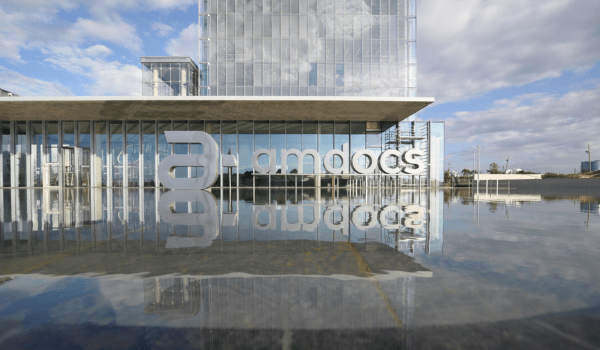
Whilst many organisations experiment with generative artificial intelligence (AI), Amdocs, a multinational telecommunications technology company, has already transformed its talent acquisition strategy with the technology. Moving beyond mere automation, Amdocs has reimagined recruitment as a strategic function that anticipates future needs rather than simply filling current vacancies. Amdocs is crafting a distinctive approach that redefines how human intelligence and machine learning can collaborate.
“The future of hiring isn’t about automation for efficiency’s sake—it’s about crafting a thoughtful, human-centred journey, empowered by intelligent tools,” says Shyamakant Mishra, global head of talent acquisition, Amdocs.

The traditional recruitment model—a reactive scramble to fill vacancies with suitable candidates—is being reimagined from the ground up. “The most significant shift we’ve seen with generative AI is the move from reactive, role-based hiring to a more proactive, skills-first approach,” Mishra explains. Rather than waiting for positions to open before seeking matches, Amdocs now deploys AI to forecast future talent needs and identify adjacent skills that may serve the business in years to come.
“The future of hiring isn’t about automation for efficiency’s sake—it’s about crafting a thoughtful, human-centred journey, empowered by intelligent tools.”
Shyamakant Mishra, global head of talent acquisition, Amdocs
This strategic pivot builds organisational agility, not merely headcount. By constructing skill ontologies and predictive hiring models, the company can anticipate which capabilities will become critical tomorrow, not just today. Such foresight enables Amdocs to navigate market shifts and evolving business needs, particularly in rapidly changing technological roles.
The skills-based approach is foundational to this transformation. AI’s analysis of vast pools of internal and external data allows Amdocs to build a workforce that is future-ready. It represents an anticipatory rather than reactionary model—one that positions talent acquisition as a driver of growth rather than a mere service function.
Equally striking is how Amdocs employs generative AI to deliver personalised candidate experiences at scale. Intelligent chatbots powered by natural language processing guide applicants through the hiring process, answering queries, scheduling interviews and providing tailored job recommendations based on individual profiles and preferences.
This approach reduces drop-offs and frustration, resulting in higher application completion rates and improved engagement. “Generative AI is turning the hiring experience into a human-like conversation—seamless, responsive and intuitive. Talent teams can now focus on building relationships, nurturing communities and driving inclusion with precision,” Mishra notes. Far from becoming obsolete, recruiters are being elevated to strategic advisors.
At the core of Amdocs’s AI-driven transformation is Career Hub—an internal talent marketplace that recommends roles and learning paths tailored to each employee. More than a mechanism for internal mobility, it empowers staff to shape their own career trajectories. “Career Hub has been a game changer, allowing us to fill 46 per cent of roles internally in 2023. It is not just cost-effective—it’s culture-deepening,” Mishra reveals.
By enabling employees to discover opportunities within the organisation that match their evolving skillsets, Career Hub directly enhances satisfaction, reduces attrition and future-proofs the workforce from within.
At Amdocs, AI implementation is rigorously measured, not blindly adopted. Time-to-hire has decreased by 20 per cent, while internal mobility has risen significantly. However, as Mishra points out, the real impact lies in recruiter efficiency and enhanced candidate quality. “With AI managing the heavy lifting, recruiters are now more engaged in high-impact tasks, such as candidate experience and workforce planning,” he adds.
Hiring managers benefit from faster access to pre-qualified candidates and actionable insights. The collaborative dynamic between AI tools and human judgment has strengthened decision-making rather than diminished it.
Adopting AI at scale presents challenges. Mishra candidly acknowledges that data quality initially posed a significant obstacle. To address this, Amdocs invested in encouraging employees to regularly update and validate their profiles, ensuring that AI systems trained on rich, current and representative data.
“The key was a strong IT-HR partnership,” reflects Mishra. By integrating AI into a best-of-breed architecture, Amdocs ensured both interoperability and data integrity, allowing AI to function as a trusted co-pilot rather than an opaque black box.
In an era where algorithmic bias can proliferate unchecked, Amdocs has prioritised fairness and transparency. This involves continuous auditing of data, clear communication with candidates about how their information is used, and rigorous training for recruiters on the ethical implications of AI outputs.
AI doesn’t replace empathy—it amplifies it. By ensuring that human judgment remains central to decision-making, Amdocs has built a hiring framework that is both efficient and equitable.
The internal response has been overwhelmingly positive, according to Mishra. Recruiters now dedicate less time to routine administrative work and more to meaningful conversations with candidates and hiring managers. The outcome: better cultural alignment, stronger talent pipelines and faster recruitment cycles.
Crucially, this shift hasn’t diminished the human element—it has enhanced it. With AI as their strategic partner, recruiters and hiring managers now collaborate more effectively than ever before.
The future of talent acquisition, in Mishra’s view, lies in agentic AI—digital assistants that operate with contextual intelligence. “Imagine a career agent that recommends learning paths, or an onboarding assistant that delivers just-in-time training,” he suggests. Amdocs is already laying the groundwork: developing robust skills-based ecosystems, aligning AI adoption with business requirements, and embedding ethical design principles throughout every layer of its systems.
This vision isn’t about replacing people with algorithms—it’s about preparing both human capital and technological infrastructure for a more dynamic, responsive future. In a landscape crowded with tools that promise speed and scale, Amdocs distinguishes itself through a focus on intentional innovation that augments rather than diminishes the human dimension of talent acquisition.