



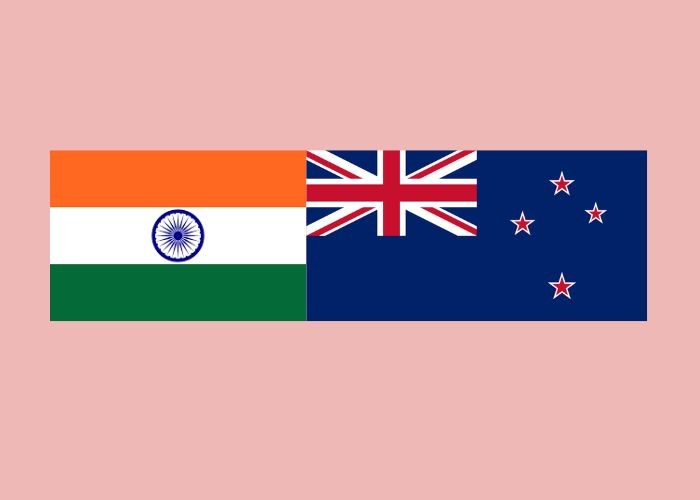
India and New Zealand have signed a major Free Trade Agreement (FTA), marking India’s first women-led negotiation deal. The agreement, concluded in just nine months, is expected to come into force later this year after ratification by New Zealand’s Parliament. It was signed in New Delhi by India’s Commerce Minister Piyush Goyal and New Zealand’s Trade Minister Todd McClay, under the leadership of Prime Minister Narendra Modi and New Zealand’s Prime Minister Chris Luxon.
The FTA grants full duty-free access for Indian exports to New Zealand, opening new opportunities for micro, small and medium enterprises (MSMEs), farmers, professionals, and youth. It is also expected to attract $20 billion in investment into India, strengthening cooperation in trade, services, innovation, agriculture, education, and mobility. This investment is projected to create jobs across multiple sectors, including IT, engineering, healthcare, construction, and education.

The agreement includes a special focus on workforce mobility. For the first time, New Zealand has signed an annex on student mobility and post-study work visas, allowing Indian students to work up to 20 hours per week while studying and to access extended post-study work opportunities. Additionally, 5,000 visas will be available for skilled Indian professionals to work in New Zealand for up to three years in areas such as AYUSH, yoga, culinary arts, music, IT and healthcare. A working holiday programme will also allow 1,000 young Indians each year to live and work in New Zealand for 12 months.
Importantly, India safeguarded sensitive sectors by excluding dairy products and certain agricultural items from the agreement. This ensures protection for domestic producers while still expanding export opportunities.
Simply put, the FTA is expected to boost trade, investment, and employment, creating pathways for skilled talent and strengthening India–New Zealand ties. It sets a new benchmark for inclusive and job-focused global cooperation.