



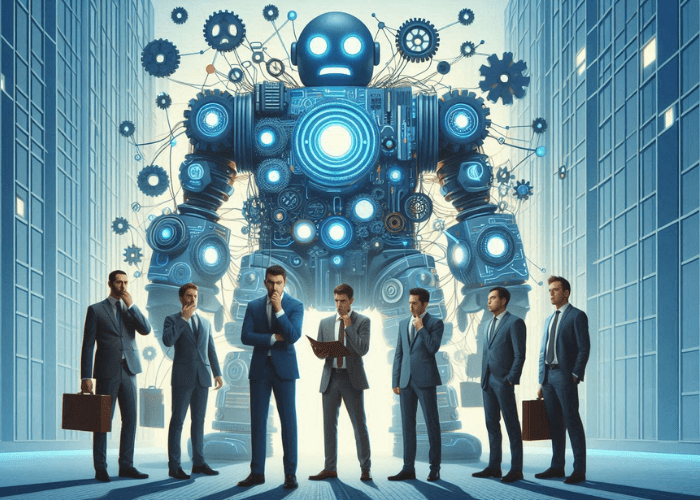
The middle manager, once a cornerstone of organisational structure, is under increasing scrutiny in the age of artificial intelligence (AI). As technology advances, questions about the role and relevance of middle management have become pressing.
Traditionally, middle managers acted as conduits for information, flowing from senior leadership to operational levels. However, the advent of AI and advanced data analytics is disrupting this hierarchical model. Senior leaders now have direct access to real-time data, bypassing middle managers. This shift, coupled with the ‘know-it-all’ syndrome afflicting some middle managers, has led to a reevaluation of their role.

“Traditionally, information would flow from the top down, passing through various hierarchical levels before reaching the operational level. However, with the advent of AI and advanced data analytics, there is a growing tendency for information to bypass middle managers,” emphasises Emmanuel David, independent director, board member.
Middle managers often find their decision-making autonomy curtailed by organisational policies and a lack of trust from senior leadership. “Middle managers have limited autonomy in decision-making,” says P Dwarakanath, senior HR leader. “This lack of autonomy can lead to a sense of powerlessness and frustration.”
“Traditionally, information would flow from the top down, passing through various hierarchical levels before reaching the operational level. However, with the advent of AI and advanced data analytics, there is a growing tendency for information to bypass middle managers.”
Emmanuel David, independent director, board member
In an AI-driven environment, where data-driven insights can be generated rapidly, the role of middle managers in the decision-making process is further questioned. “Artificial intelligence systems can analyse vast amounts of data and make recommendations, reducing the need for human intervention at the middle-management level,” notes David.
Converting experience into actionable insights is crucial for middle managers. Yet, the ability of AI to analyse vast amounts of data and generate insights rapidly challenges their value proposition. “Those merely performing their job without adding value through innovative ideas and strategic insights contribute to the perception of middle managers as redundant,” cautions David.
While AI offers unprecedented efficiency, it cannot fully replace the human touch. Middle managers bring a nuanced understanding of team dynamics, employee engagement, and organisational culture that AI cannot replicate. Their ability to mentor junior staff and bridge the gap between operations and senior leadership remains invaluable.
“Middle managers have limited autonomy in decision-making. This lack of autonomy can lead to a sense of powerlessness and frustration.”
P Dwarakanath, senior HR leader
The future of middle management lies in adaptation. By embracing AI as a tool and focusing on developing skills in areas where humans excel, such as emotional intelligence, strategic thinking, and relationship building, middle managers can remain relevant and indispensable.
However, the challenge lies in striking a balance between leveraging AI and maintaining human connection. Middle managers must resist the temptation to become mere data interpreters. Their role should evolve to become that of strategic thinkers, capable of translating data into actionable insights and driving organizational performance.
The transition to a more strategic role requires upskilling and reskilling. Middle managers must invest in developing their analytical, communication, and leadership skills. Additionally, they need to be comfortable with ambiguity and uncertainty, as the business landscape continues to evolve rapidly.
Ultimately, the success of middle managers will depend on their ability to demonstrate their value to the organisation. By becoming strategic partners who can leverage technology to drive business growth, middle managers can secure their place in the future of work.
To achieve this, organisations must foster a culture of continuous learning and development for middle managers. This includes providing access to training programmes, mentorship opportunities, and exposure to new technologies. Additionally, organisations should redefine performance metrics for middle managers to focus on outcomes rather than outputs.
Furthermore, organisations need to empower middle managers by granting them more autonomy and decision-making authority. This can be achieved through initiatives such as decentralised decision-making, cross-functional collaboration, and employee empowerment programmes.
By investing in their middle managers and fostering a culture of innovation and adaptability, organisations can ensure that this critical layer of leadership remains a valuable asset in the age of AI.
The middle manager role is evolving, and those who embrace the challenge and adapt to the changing landscape will thrive.
3 Comments
Collective wisdom of a group of people cannot be replaced by AI.
In a country like ours we can ill afford to replace humans with AI. I fear disastrous consequences.
Well written.. my Two cents on middle managers
1. Strategic Thinking and Data Analysis:Middle managers should be trained to strategically think and apprise top leadership with ground-level data. This involves not just interpreting data but also translating it into actionable insights that align with the organisation’s goals.
2. Aligning Team Members to Policies:Ensuring that middle managers are skilled in aligning their team members with top management policies is essential. This requires strong communication and leadership skills, which can be developed through targeted training and mentorship programs.
Nice sighting and observations about the perceived plight of middle managers. In my humble opinion, Coaching by a professionally certified Coach can enable Middle Managers to stay relevant – I share this from personal experience as a coach who has enabled the lives of hundreds of clients across the globe to become self-aware, and stay relevant; thereby thriving despite the rapidly changing landscape.