
Close Menu
    Facebook X (Twitter) Instagram
    • Our Story
    • Partner with us
    • Reach Us
    • Career
    Subscribe Newsletter
    HR KathaHR Katha
    • Exclusive
      • Exclusive Features
      • Perspectives
      • Friday Features
      • herSTORY
      • Rising Stars
      • Case-In-Point
      • Point Of View
      • Research
      • HR Pops
      • Dialogue
      • Movement
      • Profile
      • Beyond Work
      • By Invitation
    • News
      • Global HR News
      • Compensation & Benefits
      • Diversity
      • Events
      • Gen Y
      • Hiring & Firing
      • HR & Labour Laws
      • Learning & Development
      • Merger & Acquisition
      • Performance Management & Productivity
      • Talent Management
      • Tools & Technology
      • Work-Life Balance
    • Special
      • HR Forecast 2026
      • Cover Story
      • Editorial
      • HR Forecast 2024
      • HR Forecast 2023
      • HR Forecast 2022
      • HR Forecast 2021
      • HR Forecast 2020
      • HR Forecast 2019
      • New Age Learning
      • Coaching and Training
      • Learn-Engage-Transform
    • Magazine
    • Reports
      • Whitepaper
        • HR Forecast 2024 e-mag
        • Future-proofing Manufacturing Through Digital Transformation
        • Employee Healthcare & Wellness Benefits: A Guide for Indian MSMEs
        • Build a Future Ready Organisation For The Road Ahead
        • Employee Experience Strategy
        • HRKatha 2019 Forecast
        • Decoding and Driving Employee Engagement
        • One Platform, Infinite Possibilities
      • Survey Reports
        • Happiness at Work
        • Upskilling for Jobs of the Future
        • The Labour Code 2020
    • Conferences
      • Leadership Summit 2025
      • Rising Star Leadership Awards
      • HRKatha Futurecast
      • Automation.NXT
      • The Great HR Debate
    WhatsApp LinkedIn X (Twitter) Facebook Instagram
    HR KathaHR Katha
    Home»HR Connect»As AI transforms work, happiness quietly becomes a business metric
    HR Connect

    As AI transforms work, happiness quietly becomes a business metric

    Artificial intelligence combined with human intelligence (HI) equals ROI.
    HRK News BureauBy HRK News BureauFebruary 6, 2026Updated:February 6, 20263 Mins Read48507 Views
    Share LinkedIn Twitter Facebook WhatsApp
    Happiest Places to Work
    Share
    LinkedIn Twitter Facebook WhatsApp

    As artificial intelligence (AI) reshapes how work gets done, a quieter but more consequential shift is underway in how work itself is judged. The next phase of competitiveness may depend less on who adopts technology fastest and more on who understands how to combine it with human intelligence in a way that delivers lasting value.

    That idea is increasingly captured in a formulation gaining currency among global HR leaders. Artificial intelligence combined with human intelligence (HI) equals ROI. As Tony C Taylor, president and CEO of SHRM, has noted, technology can amplify speed and scale, but it is human intelligence, judgment, empathy, creativity and trust that ultimately determine whether those gains translate into sustainable returns. Without the human layer, even the most advanced systems struggle to create enduring impact.

    This shift is perhaps most visible in how happiness at work is now being interpreted. For years, happiness was treated as a nice to have. A progressive add on. Something peripheral to the serious business of performance. That framing no longer holds. For many employees today, happiness has become a filtering mechanism.

    Before accepting roles, people are quietly asking themselves difficult questions. Will I feel safe speaking up here? Will expectations be clear or constantly shifting? Will my effort be acknowledged or taken for granted? Will this environment allow me to be a functional human being outside work? These unspoken evaluations increasingly influence offer acceptance engagement levels and early exits. In many interviews today, it is almost as if the candidate has more questions than the interviewer.

    Importantly, happiness in this context does not imply constant positivity or the absence of pressure. It refers to the presence of meaning, fairness, autonomy and emotional balance. It is about feeling aligned rather than worn down by work. When work consistently feels misaligned, disengagement begins long before resignation letters are written.

    This matters even more in an AI-driven workplace. As machines take over transactional and analytical tasks, the human side of work becomes more central not less. Employees are expected to collaborate with algorithms, adapt continuously, and apply judgment in complex ambiguous situations. That requires trust clarity and psychological safety. Organisations that focus only on deploying technology without attending to the human experience risk layering sophisticated systems onto disengaged teams. The result is not higher productivity but friction burnout and diminishing returns.

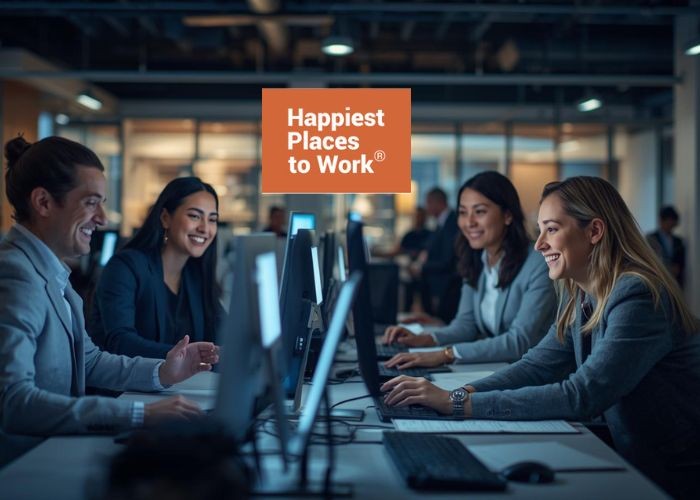
    The implications for organisations are significant. Employer branding can no longer rely solely on storytelling. It must reflect lived reality. Employees have become the most credible narrators of organisational culture whether companies intend them to be or not. Some organisations are beginning to use structured employee feedback frameworks to test whether their cultural claims align with everyday experience. Platforms such as Happiest Places to Work® offer employees a credible space to share feedback while giving leadership deeper insight into the emotional and cultural drivers of performance. The value lies not in recognition for its own sake but in understanding what is actually happening inside the organisation.

    The companies most likely to stand out in the coming years will not be those offering the most benefits but those intentionally designing emotionally intelligent workplaces. Places where performance and well-being reinforce rather than compete with each other. Organisations that recognise this shift early will not only reduce attrition but also build cultures that remain resilient over time.

    In the end, people remain a company’s most strategic advantage. As access to technology becomes more uniform, the real difference will come down to a simple truth. Organisations with happy talent will outperform those with unhappy talent, regardless of how advanced their systems may be.

    AI AI transforms work artificial intelligence business metric constant positivity Employee employee feedback employer Happiest Places Happiest Places to Work happiness Happy Employees HI HR human intelligence Human Resources recognition strategic advantage Workforce
    Share. LinkedIn Twitter Facebook WhatsApp
    HRK News Bureau

    Leave A Reply Cancel Reply

    Related Posts

    Marvell to invest $250 million in India, plans to double workforce

    July 30, 2026

    Arsh Rachit joins Kapiva as CHRO

    July 30, 2026

    36,000 telecom jobs created under PLI scheme

    July 30, 2026

    KPMG Australia reviews workforce structure amid potential job cuts

    July 30, 2026
    zoha
    Editorial

    What Jantar Mantar told us about the generation now entering India’s workplaces

    A senior television journalist, who now runs his own YouTube channel, was speaking to a…

    India’s IT services industry built the talent. Its biggest clients are now hiring it directly through GCCs

    Something significant is happening to India’s technology workforce in 2026. Most people are describing the…

    EDITOR'S PICKS

    HR leadership lessons from the military

    July 30, 2026

    herSTORY: Beena Dixit, Country Head, People & Organisation, Siemens Energy India

    July 30, 2026

    Case-in-Point: The internal informant

    July 30, 2026

    HR Perspectives by Paramjit Singh Nayyar: “The board cares about business metrics, not HR metrics”

    July 29, 2026
    Latest Post

    Marvell to invest $250 million in India, plans to double workforce

    News July 30, 2026

    US-based semiconductor company Marvell Technology will invest $250 million in India over the next three…

    Arsh Rachit joins Kapiva as CHRO

    Movement July 30, 2026

    Ayurvedic wellness brand Kapiva has appointed Arsh Rachit as its new chief human resources officer.…

    36,000 telecom jobs created under PLI scheme

    News July 30, 2026

    India has taken a major step to strengthen its telecom-manufacturing ecosystem with the launch of…

    KPMG Australia reviews workforce structure amid potential job cuts

    News July 30, 2026

    KPMG Australia has said no decision has been made on possible workforce reductions after reports…

    Asia's No.1 HR Platform

    Facebook X (Twitter) Instagram LinkedIn WhatsApp Bluesky
    • Our Story
    • Partner with us
    • Career
    • Reach Us
    • Exclusive Features
    • Cover Story
    • Editorial
    • Dive into the Future of Work: Download HRForecast 2024 Now!
    © 2026 HRKatha.com
    • Disclaimer
    • Refunds & Cancellation Policy
    • Terms of Service

    Type above and press Enter to search. Press Esc to cancel.