


Hiring in 2026 reflects a deeper recalibration.
Educational qualifications still signal learning depth. But as roles evolve rapidly, employability is increasingly being determined by demonstrated capability.
The shift is not about replacing credentials with competencies. It is about integrating both more intelligently.
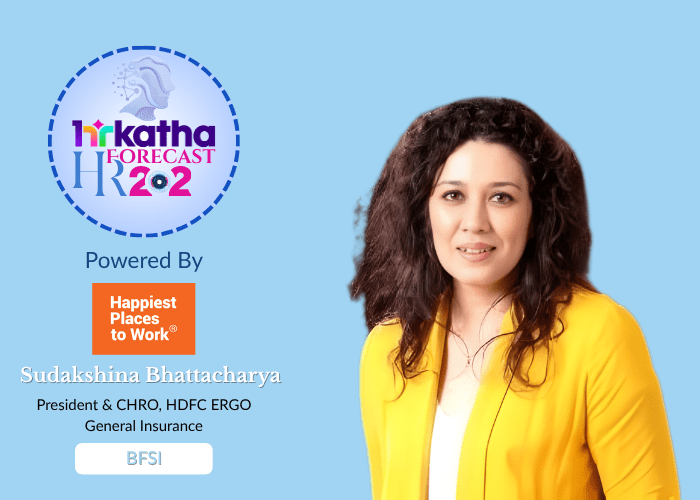
Sudakshina Bhattacharya, President & Chief Human Resources Officer at HDFC ERGO General Insurance, believes the defining change will be in how organisations assess, develop and sustain capability.
“In 2026, hiring decisions will increasingly centre on proof of capability, with education enriching context.”
Several signals suggest how this transition may unfold.
Signal 1: Capability frameworks will enable structured assessment at scale
The biggest challenge with skills-based hiring has always been consistency. How do organisations assess applied capability reliably across thousands of candidates?
Progress is emerging through structured capability frameworks, scenario-based evaluations and AI-enabled hiring platforms that assess demonstrated skill with greater consistency.
“Organisations are adopting structured capability frameworks, scenario-based evaluations and AI-enabled hiring platforms to assess applied competence with consistency.”
This shift is also being accelerated by deeper collaboration between academia and industry. Curriculum design, assessments and certifications are increasingly being aligned with real-world role requirements, narrowing the gap between education and work readiness.
At HDFC ERGO, this thinking extends beyond organisational boundaries.
Through Career Setu under Vidyaavriksh, a job-fair collaboration, the organisation enabled more than 5,000 individuals from communities to access gainful employment across the larger ecosystem.
“This reinforces the belief that employability is a shared responsibility.”
When organisations can assess capability consistently at scale, reliance on credentials as hiring shortcuts naturally reduces.
Education will continue to matter. But employability will increasingly depend on what people can actually demonstrate in real-world situations.
Signal 2: Cohort-based design will replace one-size-fits-all policies
With five generations now working together, uniform HR policies are becoming increasingly disconnected from how employees actually live and work.
The answer is not unlimited flexibility. It is more thoughtful cohort-based design.
“Organisations design experiences by cohort rather than age, with early-career talent, frontline teams and experienced specialists accessing growth in ways aligned to role realities. This allows individuality without cultural dilution.”
The approach maintains common cultural anchors while adapting engagement models to different workforce segments.
A multi-generational workforce brings continuity, renewal and diversity of perspective. Balance comes from shared intent combined with adaptable employee experiences.
Frontline sales leadership and career acceleration initiatives play a critical role by surfacing potential early and enabling progression regardless of location or tenure.
Growth becomes more structured and less dependent on visibility, geography or tenure.
This creates shared cultural direction without forcing identical employee experiences.
By 2026, organisations with mature cohort-based systems will retain talent more effectively than those still operating through rigid one-size-fits-all frameworks.
Signal 3: Sustainable performance will be built into work design, not added as initiative
Post-pandemic burnout forced organisations to acknowledge that relentless productivity has limits.
But awareness alone does not solve the problem. What is changing now is how work itself is being designed.
“Work intensity in 2026 calls for a new performance architecture. Sustainable output strengthens when organisations treat energy, focus and recovery as design parameters.”
AI is increasingly functioning as a listening officer.
Continuous sentiment sensing helps identify patterns in workload, emotional strain and engagement shifts across teams, enabling more timely and targeted interventions.
Wellbeing is evolving through cohort-specific interventions shaped by role pressure, operating rhythm and career stage.
“This moves support from generic offerings to purposeful action.”
The shift is from wellbeing programmes layered on top of existing work structures to sustainable performance embedded within how work actually functions.
“Performance becomes sustainable when care is built into how work functions.”
In 2026, organisations that redesign work for sustainability will outperform those merely adding wellbeing initiatives onto unsustainable workloads.
Signal 4: Psychological safety will be built through behavioural capability, not culture statements
Psychological safety is widely recognised as foundational to high performance. Yet fear-driven cultures persist despite repeated statements about openness and trust.
The shift in 2026 will be towards behavioural capability rather than cultural aspiration.
“Psychological safety advances through behavioural capability. Leaders build fluency in inviting challenge, responding constructively and translating dissent into progress.”
This requires deliberate leadership development. Leaders need to learn how to invite disagreement without defensiveness, respond to dissent constructively and convert challenge into organisational learning.
Listening systems reinforce this culture. Structured voice mechanisms and AI-supported insight help identify patterns across teams, allowing leadership action to be rooted in evidence rather than assumption.
Inclusion also becomes visible through everyday behaviour. At HDFC ERGO, enabling Indian Sign Language proficiency across the workforce embedded respect into daily interaction, strengthening participation and confidence for employees with hearing impairment.
“Trust grows when employees see that speaking up leads to visible action.”
The principle is simple: psychological safety is not created through declarations about openness. It is built when employees consistently experience constructive response and meaningful action after speaking up.
In 2026, organisations where leaders possess the behavioural capability to invite and respond to challenge will demonstrate measurably stronger cultures of trust and engagement.
The Systems Shift
These signals – structured capability assessment, cohort-based design, sustainable work architecture and behavioural psychological safety – point to a broader transition.
Organisations are moving away from broad philosophy towards operational precision.
Hiring is becoming more capability-led and evidence-based. Employee experience is becoming more cohort-sensitive rather than uniformly designed. Wellbeing is shifting from standalone initiatives to embedded work design. And psychological safety is increasingly being treated as a leadership capability rather than a culture slogan.
“In 2026, hiring decisions will increasingly centre on proof of capability, with education enriching context.”
The underlying shift is clear: organisations are being forced to operationalise values that were once treated largely as aspiration.
Capability now needs measurable assessment frameworks. Flexibility requires structured workforce design. Sustainable performance depends on redesigning how work happens. And trust can no longer rely on messaging alone – it must be reinforced through observable managerial behaviour and visible organisational response.
These are not cosmetic HR changes. They represent a deeper move from generic people practices towards precision systems designed around how employees actually work, learn, perform and engage.
By 2026, the organisations that succeed will not necessarily be those with the most ambitious culture statements.
They will be the ones whose systems consistently translate intent into employee experience.
Three Strategic Imperatives
Build Structured Capability Assessment: Move beyond credential proxies by building frameworks that assess applied competence consistently, while collaborating with academia to narrow the gap between learning and work readiness.
Design by Cohort, Not Age: Create adaptable engagement models aligned to role realities, enabling individuality while maintaining cultural coherence through shared intent.
Develop Behavioural Leadership Capability: Build leaders’ capability to invite challenge, respond constructively and translate dissent into progress, making psychological safety operational rather than aspirational.
The Precision Test
The question for 2026 is no longer whether organisations believe in capability, wellbeing or inclusion.
Most already do.
The real differentiator will be whether they can operationalise those beliefs through systems that employees experience consistently in everyday work.
Because broad philosophies are losing credibility.
Employees are becoming less persuaded by statements about culture, flexibility or psychological safety unless those ideas are reflected in how hiring decisions are made, how work is designed, how managers behave and how growth opportunities are distributed.
Capability cannot remain an abstract hiring philosophy. Organisations will need structured systems that evaluate what people can actually do, not just where they studied or which credentials they hold.
Similarly, employee experience cannot be built around generic policies intended to serve everyone in the same way. Workforce expectations are becoming too diverse, role realities too varied and career journeys too fragmented for one-size-fits-all approaches to remain effective.
The same applies to wellbeing.
The organisations that outperform in 2026 will not necessarily be those offering the highest number of wellness initiatives. They will be the ones redesigning work itself around sustainable performance, treating energy, focus and recovery as operational priorities rather than personal responsibilities.
And psychological safety will increasingly depend less on culture statements and more on leadership behaviour.
Employees trust organisations when speaking up leads to visible response, constructive dialogue and meaningful action. Trust deepens when leaders demonstrate the capability to invite challenge without defensiveness and convert disagreement into progress.
What employees are ultimately evaluating is consistency between intent and experience.
Do hiring systems genuinely recognise capability?
Do growth systems create equitable opportunity?
Does flexibility exist beyond policy documents?
Do leaders respond constructively when challenged?
By 2026, organisations that answer these questions operationally rather than rhetorically will build stronger trust, retention and long-term performance.
Because employees are no longer judging organisations by aspiration alone.
They are judging them by precision.