

Close Menu
    Facebook X (Twitter) Instagram
    • Our Story
    • Partner with us
    • Reach Us
    • Career
    Subscribe Newsletter
    HR KathaHR Katha
    • Exclusive
      • Exclusive Features
      • Perspectives
      • Friday Features
      • herSTORY
      • Case-In-Point
      • Point Of View
      • Research
      • HR Pops
      • Dialogue
      • Movement
      • Profile
      • Beyond Work
      • Rising Star
      • By Invitation
    • News
      • Global HR News
      • Compensation & Benefits
      • Diversity
      • Events
      • Gen Y
      • Hiring & Firing
      • HR & Labour Laws
      • Learning & Development
      • Merger & Acquisition
      • Performance Management & Productivity
      • Talent Management
      • Tools & Technology
      • Work-Life Balance
    • Special
      • HR Forecast 2026
      • Cover Story
      • Editorial
      • HR Forecast 2024
      • HR Forecast 2023
      • HR Forecast 2022
      • HR Forecast 2021
      • HR Forecast 2020
      • HR Forecast 2019
      • New Age Learning
      • Coaching and Training
      • Learn-Engage-Transform
    • Magazine
    • Reports
      • Whitepaper
        • HR Forecast 2024 e-mag
        • Future-proofing Manufacturing Through Digital Transformation
        • Employee Healthcare & Wellness Benefits: A Guide for Indian MSMEs
        • Build a Future Ready Organisation For The Road Ahead
        • Employee Experience Strategy
        • HRKatha 2019 Forecast
        • Decoding and Driving Employee Engagement
        • One Platform, Infinite Possibilities
      • Survey Reports
        • Happiness at Work
        • Upskilling for Jobs of the Future
        • The Labour Code 2020
    • Conferences
      • Leadership Summit 2025
      • Rising Star Leadership Awards
      • HRKatha Futurecast
      • Automation.NXT
      • The Great HR Debate
    • HR Jobs
    WhatsApp LinkedIn X (Twitter) Facebook Instagram
    HR KathaHR Katha
    zoha
    Home»Exclusive Features»HR Pops»Geo-fluid models of work: When talent flows like water across borders
    HR Pops

    Geo-fluid models of work: When talent flows like water across borders

    How globalisation, digital tools and the pandemic created a workforce unbound by geography—and why HR must now manage employees who live everywhere and nowhere at once
    mmBy Liji Narayan | HRKathaJanuary 20, 20264 Mins Read11745 Views
    Share LinkedIn Twitter Facebook WhatsApp
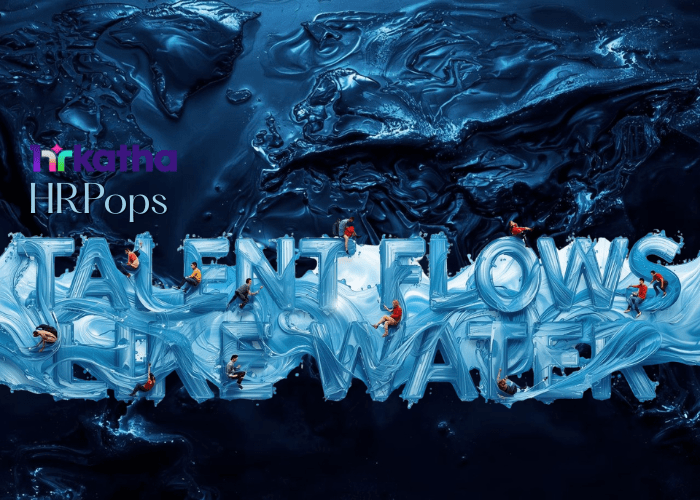
    Geo-fluidity & geo-fluid work models
    Share
    LinkedIn Twitter Facebook WhatsApp

    What are geo-fluid models of work?

    Geo-fluid work models allow employees to work seamlessly across locations, roles and time zones without being tied to a fixed geographic location. Unlike remote work, where employees are typically bound to one specific region or home base, geo-fluidity means continuous movement—employees can shift from one city to another, switch countries, or even traverse continents whilst remaining connected to their organisation.

    These models are not hindered by geographical boundaries. Employees are deployed wherever their talent is required, irrespective of where they are physically located. They rely on technology—cloud systems, HRIS platforms, AI tools—to ensure work continues seamlessly. All they need to do is familiarise themselves with local culture and regulations, then adapt.

    zoha

    History

    In the early 2000s, globalisation led multinational companies to manage employees working across borders, but within strict assignments and instructions. Movement was controlled, structured, and temporary—an expatriate assignment, not a fluid state.

    Then digital communication enabled remote work. Employees could work from home bases without sitting in conventional offices during working hours. When the pandemic struck, organisations embraced remote and hybrid models, allowing employees to work from anywhere—at least in theory.

    More recently, terms such as “fluid HRM” have emerged, focusing on how traditional human resource systems struggled with distributed and fragmented work. Geo-fluidity became shorthand for the continuous movement and flexibility of talent across geographies, beyond static remote or hybrid categories.

    What began as occasional expatriate assignments has evolved into a workforce that exists in perpetual motion—digital nomads, global contractors, employees who live in Lisbon, work for a firm in Singapore, and report to a manager in Toronto.

    Why is it relevant for HR?

    Geo-fluid work models are more relevant to HR today than ever before. It is HR that must design skill-based architectures that permit global workforce members to contribute from—and to—various geographies.

    The benefits are clear. Geo-fluidity facilitates access to a diverse pool of talent spread across the globe, ending over-reliance on local markets. It allows employees much-needed flexibility and autonomy, making organisations more attractive to top talent who value mobility and independence.

    zoha

    But the challenges are formidable. Proximity bias remains a persistent issue—employees who are physically closer to leadership often receive preferential treatment, better opportunities, and more recognition. It is up to the HR to actively combat this to ensure fairness.

    Labour laws, tax rules, visa requirements, and employment regulations change from one location to another. It becomes critical for HR to work with legal authorities to design frameworks that allow employee mobility whilst remaining compliant with local laws. This is not simple—an employee working in three countries over six months may trigger tax liabilities, social-security complications, and conflicting employment protections.

    Tracking employees across geographies is tough. Advanced HRIS and people analytics help, but they require significant investment and sophistication. Artificial intelligence  tools for scheduling and collaboration are helpful when employees work across time zones and on multiple projects, but they cannot solve every coordination challenge.

    It is the duty of HR to ensure inclusive practices so that diverse cultures and perspectives are integrated. With such a widely-distributed workforce, psychological safety becomes even more important—employees must feel valued and heard, regardless of location.

    The darker side: exploitation and invisibility

    Here’s the uncomfortable reality: geo-fluidity can mask exploitation. When employees are constantly moving, accountability becomes murky. Who is responsible for their wellbeing? Which labour laws apply? If an employee works remotely from a country with weak worker protections, does the employer have a duty of care?

    There’s also the risk of invisibility. Geo-fluid employees may feel disconnected, unseen and excluded from organisational culture. Without physical presence, they miss informal networks, mentorship opportunities, and the social capital that drives career progression. They become ghosts in the system—productive, but absent.

    HR must guard against these risks. Geo-fluidity should empower employees, not exploit them. It should expand opportunity, not create a two-tier workforce of visible insiders and invisible outsiders.

    Managing the flow

    For HR, geo-fluid work models represent both opportunity and responsibility. Done well, they unlock global talent, foster inclusion, and offer employees unprecedented autonomy. Done poorly, they create legal nightmares, erode culture and perpetuate inequality.

    The challenge is to manage talent that flows like water—adapting to opportunity, crossing borders, resisting containment. HR must build systems flexible enough to support this fluidity whilst maintaining fairness, compliance and connection.

    In a geo-fluid world, the question is no longer “where do you work?” but “how do we work together, wherever we are?” And HR must provide the answer.

    across continents across countries across geographies across locations autonomy Employee employer expat expatriate assignments Flexibility fluid HRM geo-fluid Geo-fluid models geo-fluidity geographical boundaries HR HR Pops Human Resources hybrid no boundaries pandemic remote seamless work seamlessly Workforce workforce in motion
    Share. LinkedIn Twitter Facebook WhatsApp
    mm
    Liji Narayan | HRKatha

    HRKatha prides itself in being a good journalistic product and Liji deserves all the credit for it. Thanks to her, our readers get clean copies to read every morning while our writers are kept on their toes.

    Leave A Reply Cancel Reply

    Related Posts

    Former Amazon employee sues company, alleges retaliation after discrimination complaint

    June 26, 2026

    Cisco to lay off 471 employees across California offices

    June 26, 2026

    GM expands use of collaborative robots as workforce cuts spark automation debate

    June 26, 2026

    Godrej Capital strengthens LGBTQIA+ hiring through BeYou internship programme

    June 26, 2026
    Editorial

    The two cultures inside the same multinational

    Someone I know works with one of the world’s largest technology and consulting firms. Based…

    Why HR becomes conservative when hiring HR

    Hire for potential, not just pedigree. Look beyond industry boundaries. Avoid groupthink. Value transferable capability.…

    EDITOR'S PICKS

    The workplace tradition that should never disappear

    June 26, 2026

    Case-in-Point: Anonymous complaint vs managerial reputation

    June 25, 2026

    herSTORY: Sonia Kulkarni, CHRO-India & South Asia, Ingram Micro

    June 25, 2026

    HR Perspectives by Sushil Baveja: “Learning cultures fail when learning is seen as separate from work”

    June 24, 2026
    Latest Post

    Former Amazon employee sues company, alleges retaliation after discrimination complaint

    News June 26, 2026

    A former Amazon employee has filed a lawsuit in a US federal court, alleging that…

    Cisco to lay off 471 employees across California offices

    News June 26, 2026

    Cisco Systems is set to eliminate 471 jobs across three California locations, according to fresh…

    GM expands use of collaborative robots as workforce cuts spark automation debate

    News June 26, 2026

    General Motors (GM) has expanded the use of collaborative robots, or cobots, at its Factory…

    Godrej Capital strengthens LGBTQIA+ hiring through BeYou internship programme

    News June 26, 2026

    Godrej Capital has expanded its efforts to build an inclusive talent pipeline with BeYou, its…

    Asia's No.1 HR Platform

    Facebook X (Twitter) Instagram LinkedIn WhatsApp Bluesky
    • Our Story
    • Partner with us
    • Career
    • Reach Us
    • Exclusive Features
    • Cover Story
    • Editorial
    • Dive into the Future of Work: Download HRForecast 2024 Now!
    © 2026 HRKatha.com
    • Disclaimer
    • Refunds & Cancellation Policy
    • Terms of Service

    Type above and press Enter to search. Press Esc to cancel.