

Close Menu
    Facebook X (Twitter) Instagram
    • Our Story
    • Partner with us
    • Reach Us
    • Career
    Subscribe Newsletter
    HR KathaHR Katha
    • Exclusive
      • Exclusive Features
      • Perspectives
      • Friday Features
      • herSTORY
      • Rising Stars
      • Case-In-Point
      • Point Of View
      • Research
      • HR Pops
      • Dialogue
      • Movement
      • Profile
      • Beyond Work
      • By Invitation
    • News
      • Global HR News
      • Compensation & Benefits
      • Diversity
      • Events
      • Gen Y
      • Hiring & Firing
      • HR & Labour Laws
      • Learning & Development
      • Merger & Acquisition
      • Performance Management & Productivity
      • Talent Management
      • Tools & Technology
      • Work-Life Balance
    • Special
      • HR Forecast 2026
      • Cover Story
      • Editorial
      • HR Forecast 2024
      • HR Forecast 2023
      • HR Forecast 2022
      • HR Forecast 2021
      • HR Forecast 2020
      • HR Forecast 2019
      • New Age Learning
      • Coaching and Training
      • Learn-Engage-Transform
    • Magazine
    • Reports
      • Whitepaper
        • HR Forecast 2024 e-mag
        • Future-proofing Manufacturing Through Digital Transformation
        • Employee Healthcare & Wellness Benefits: A Guide for Indian MSMEs
        • Build a Future Ready Organisation For The Road Ahead
        • Employee Experience Strategy
        • HRKatha 2019 Forecast
        • Decoding and Driving Employee Engagement
        • One Platform, Infinite Possibilities
      • Survey Reports
        • Happiness at Work
        • Upskilling for Jobs of the Future
        • The Labour Code 2020
    • Conferences
      • Leadership Summit 2025
      • Rising Star Leadership Awards
      • HRKatha Futurecast
      • Automation.NXT
      • The Great HR Debate
    WhatsApp LinkedIn X (Twitter) Facebook Instagram
    HR KathaHR Katha
    Home»Exclusive Features»Point Of View»POV: Are leadership competency frameworks becoming too generic?
    Point Of View

    POV: Are leadership competency frameworks becoming too generic?

    As organisations increasingly adopt similar leadership models built around qualities such as resilience, empathy and agility, an important question is emerging. Do these frameworks genuinely develop better leaders, or have they simply become a common language that every organisation now speaks?
    mmBy Liji Narayan | HRKathaJuly 13, 2026Updated:July 13, 20264 Mins Read8985 Views
    Share LinkedIn Twitter Facebook WhatsApp
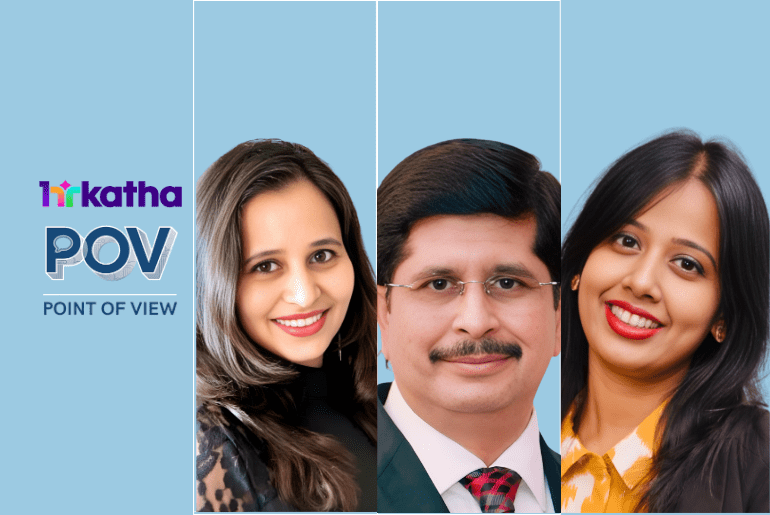
    Preeti Ahuja_Shourya Chakravarty_Priyanka Mohanty_POV
    Share
    LinkedIn Twitter Facebook WhatsApp

    Walk into most large organisations today and you’ll find a leadership competency framework on the wall. Resilience. Empathy. Agility. Collaboration. The words are familiar, often remarkably similar across industries and sectors. Critics argue that when everyone is using the same framework, the result is a common language rather than genuinely differentiated leadership.

    But is standardisation the real problem? Or does the challenge lie in how organisations bring these frameworks to life? Three HR leaders share their perspectives.


    Preeti Ahuja, Global CHRO, Husk Power

    Yes, they can become generic unless leaders bring them to life.

    The world is moving faster and becoming more complex than ever before. No one leader has all the answers. And even if they did, by the time they persuaded others to change, the environment itself would have changed again.

    This means leaders need the humility to admit they do not have all the answers and the courage to learn from others. Building a culture of collaboration and innovation energises employees, encourages fresh thinking and helps organisations remain relevant. When leaders invite different perspectives and allow people to learn from mistakes, they create the conditions for continuous improvement.

    Leaders who acknowledge their own limitations build transparency, trust and stronger connections with their teams. Employees who feel heard and valued are more likely to contribute discretionary effort and remain committed to the organisation.

    Resilience has also become a leadership necessity. Building resilient organisations requires leaders who are adaptable themselves. That journey begins with empathy. Empathy is not separate from business performance; it strengthens resilience, improves retention, fuels innovation and enables sustainable growth. Leaders who invest in empathy are positioning their organisations not only to navigate disruption but also to shape what comes next.

    Takeaway: Leadership frameworks create value only when leaders practise humility, empathy and continuous learning in their everyday decisions.


    Priyanka Mohanty, VP – HR & global head – talent management, Startek

    No. The issue isn’t standardisation; it’s how organisations use the framework.

    Leadership competency frameworks have evolved considerably over the years. While many competencies appear common across organisations, they reflect capabilities that have become essential for leading in an increasingly complex and fast-changing business environment.

    There is some merit to concerns about standardisation. However, the real value of a competency framework lies not in the competencies themselves, but in how they are interpreted, contextualised and brought to life within an organisation.

    Competencies provide a common language that creates consistency in leadership expectations, assessment and development. A leader operating in North America, managing teams across Asia Pacific or driving transformation in Latin America may demonstrate the same competency in very different ways. Leadership frameworks are designed to create consistency, not conformity.

    The real risk arises when organisations treat competencies as checklists rather than behavioural indicators. Leadership itself is developed through experience, stretch assignments, coaching, feedback and reflection. Competency frameworks provide the foundation, but leadership ultimately takes shape through action.

    Takeaway: Competency frameworks provide the language of leadership, but organisations create meaning through behaviour, coaching and experience.


    Shourya Chakravarty, CHRO, Aptech

    Not if they’re built around the organisation’s own ethos.

    Leadership competency frameworks do not become generic when they are rooted in an organisation’s values, mission and culture.

    At Aptech, our leadership competencies are built around our organisational ethos, which we define as SCUVA: Scalability, Complexity, Uncertainty, Volatility and Ambiguity. Each dimension represents a specific leadership behaviour. Scalability encourages leaders to think differently, evolve and deliver. Complexity demands that they redesign processes and products. Uncertainty requires rapid action and mobilisation. Volatility calls for the ability to anticipate and adapt to change. Ambiguity encourages leaders to embrace grey areas rather than avoid them.

    This philosophy is embedded in our competency dictionary, which helps guide performance and behaviours towards organisational goals.

    Competency frameworks create a common language by defining expected behaviours. They help align organisational effort towards desired outcomes. However, they do not develop leaders on their own. Leadership develops only when those competencies are demonstrated consistently through real work, real decisions and measurable outcomes.

    Takeaway: Leadership frameworks become meaningful when they reflect an organisation’s values and translate into everyday behaviours and business results.

    Aptech competency frameworks Employee employer Global CHRO HR HRKatha POV Human Resources Husk Power LEAD leadership competency framewor Point of View POV POV: Are leadership competency frameworks becoming too generic? Preeti Ahuja Priyanka Mohanty Resilience. Empathy. Agility. Collaboration. Shourya Chakravarty Startek VP-HR & Global Head-Talent Management Workforce
    Share. LinkedIn Twitter Facebook WhatsApp
    mm
    Liji Narayan | HRKatha

    HRKatha prides itself in being a good journalistic product and Liji deserves all the credit for it. Thanks to her, our readers get clean copies to read every morning while our writers are kept on their toes.

    Leave A Reply Cancel Reply

    Related Posts

    Richa Malik joins Hero MotoCorp as head HR – corporate & enabling functions

    September 4, 2026

    Amazon India creates over 1.6 lakh seasonal work opportunities ahead of festive season

    September 4, 2026

    Volkswagen plans another 50,000 job cuts globally

    September 4, 2026

    Nearly 1 in 4 CHROs expect AI to cut workforce by up to 20%: Study

    September 4, 2026
    zoha
    Editorial

    Employees are redesigning work before their companies do

    Nobody announced that work would change this way. There was no strategy document, pilot programme…

    “My door is always open” is an expensive sentence in leadership

    Walk into almost any organisation and you will hear some version of it. In town…

    EDITOR'S PICKS

    The career lessons hiding in unfamiliar territory

    September 4, 2026

    Case-in-Point: The pregnancy disclosure dilemma

    September 3, 2026

    herSTORY: Sejal Haribhakti Mody, CHRO, Akasa Air

    September 3, 2026

    59% of employees are financially stressed. Most HR dashboards cannot see it

    September 2, 2026
    Latest Post

    Dhananjay Singh, DG, NHRDN, moves on; Nidhi Vashishtha appointed executive director, NHRDN

    Movement September 4, 2026

    The National HRD Network (NHRDN) has announced that Dhananjay Singh, director general, NHRDN has moved…

    Richa Malik joins Hero MotoCorp as head HR – corporate & enabling functions

    Movement September 4, 2026

    Hero MotoCorp has announced the appointment of Richa Malik as head HR – corporate &…

    Amazon India creates over 1.6 lakh seasonal work opportunities ahead of festive season

    News September 4, 2026

    Amazon India has created more than 1.6 lakh seasonal work opportunities across its operations network…

    Volkswagen plans another 50,000 job cuts globally

    News September 4, 2026

    Volkswagen Group is planning to eliminate another 50,000 jobs globally as part of a major…

    Asia's No.1 HR Platform

    Facebook X (Twitter) Instagram LinkedIn WhatsApp Bluesky
    • Our Story
    • Partner with us
    • Career
    • Reach Us
    • Exclusive Features
    • Cover Story
    • Editorial
    • Dive into the Future of Work: Download HRForecast 2024 Now!
    © 2026 HRKatha.com
    • Disclaimer
    • Refunds & Cancellation Policy
    • Terms of Service

    Type above and press Enter to search. Press Esc to cancel.