


In the hospitality industry, long hours have long been considered part of the job description. Hotels peak precisely when most workers would prefer to be elsewhere: weekends, holidays and festive seasons. Staff routinely extend beyond their shifts, driven by a culture that equates presence with dedication. Amid this entrenched tradition, Marriott International is attempting something radical: enforcing a strict policy that employees work only their rostered hours—typically eight to nine per day—then promptly leave.
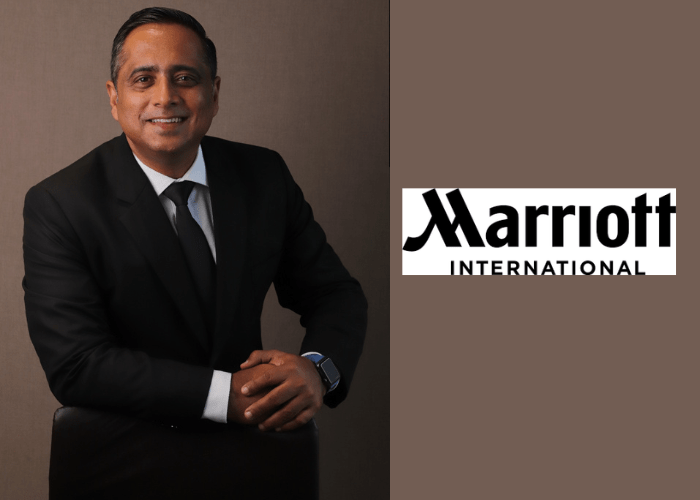
The initiative, dubbed “Life on Time”, might seem unremarkable in most sectors. In hospitality, it borders on revolutionary. “The Life on Time initiative is a natural extension of our philosophy of meeting people fairly,” says Vinay Jaswal, vice president, HR Ops (South Asia) & HR tech & analytics (APEC), Marriot International. “It provides associates with the flexibility and support they need to manage their personal and professional life effectively.”
This policy reform is grounded in data. Marriott’s 2023 Micro-Pay Survey revealed that 52 per cent of employees in India would sacrifice compensation for greater happiness. Globally, nearly 600 million working professionals report struggling with work-life balance. The challenge was particularly acute within Marriott’s own operations: analysis showed associates routinely stayed 30-40 minutes beyond scheduled shifts each day.
“The Life on Time initiative is a natural extension of our philosophy of meeting people fairly. It provides associates with the flexibility and support they need to manage their personal and professional life effectively.”
Vinay Jaswal, vice president, HR Ops (South Asia) & HR tech & analytics (APEC), Marriot International
“In our sector, efficiency was often measured by the number of work hours spent on the shop floor,” explains Jaswal. “We wanted to break that paradigm.” At its core, Life on Time challenges the prevailing wisdom that longer hours equate to higher productivity or commitment. Instead, it posits that well-rested employees deliver superior service.
Implementing such a policy required both technological innovation and cultural transformation. Marriott deployed an application that allows associates to log their hours against shift rosters. The system incorporates AI-driven alerts that notify managers, department heads and HR when employees exceed prescribed hours. “The app is smart enough to track an associate’s working pattern and notify stakeholders accordingly,” notes Jaswal. “If someone is consistently exceeding their hours, the system helps managers identify whether it’s due to genuine business needs or inefficient work allocation.”
Beyond technology, the hotel chain had to navigate generational divides in work philosophy. “Gen Z is clear about maintaining work-life balance,” Jaswal observes. “But Gen X believes in traditional work ethics—where completing a task, regardless of the hours it takes, is a priority. Our challenge was to redefine productivity without making the senior leadership feel that efficiency is being compromised.”
To bridge this gap, Marriott introduced accountability measures, gamification and rewards. “We built an environment where work efficiency—not work hours—was rewarded,” says Jaswal. The firm developed a Real-time Business Intelligence tool, enabling general managers to monitor working hours continuously. This instrument helps identify whether extended hours stem from scheduling errors, workload imbalances or operational inefficiencies.
Senior leadership’s involvement proved crucial. Rather than relegating Life on Time to an HR initiative, executives positioned it as a business strategy. Regular town halls, quarterly reviews and a structured rewards framework maintained focus on the programme. “Leadership accountability was built into it,” Jaswal emphasises. “Regular town halls, reward mechanisms and quarterly reviews ensured that adoption wasn’t just encouraged but actively monitored and recognised.”
The results have been telling. Since implementation, Marriott International has recorded a four-percentage-point reduction in employee turnover—from 32 per cent in 2023 to 28 per cent in 2024. Employee-engagement scores remain in the mid-90s percentile. Perhaps most significantly, excess time beyond scheduled hours has fallen from 30-40 minutes daily to approximately 10 minutes.
“One of the biggest indicators of its success is our guest satisfaction scores,” Jaswal notes. “Happy and well-rested associates provide better service, and our customer feedback reflects that.” Additionally, nearly 98 per cent of additional hours are now properly recorded and compensated as overtime, ensuring compliance with statutory obligations.
What makes Marriott’s approach particularly noteworthy is that it challenges an industry-wide assumption: that hospitality inherently demands self-sacrifice from workers. By demonstrating that shorter, more focused shifts need not compromise service quality, the company offers a potential blueprint for the sector.
The initiative also speaks to broader labour-market trends. As younger generations enter the workforce with different expectations about work-life balance, companies that adapt may gain competitive advantage in recruitment and retention. Marriott International seems to have recognised that in a service industry, the wellbeing of service providers directly impacts the customer experience.
“This is not just an HR initiative,” Jaswal concludes. “It’s a business strategy aimed at building a sustainable and happy workforce. We hope the industry follows suit and recognises that productivity isn’t about long hours—it’s about smart, focused and balanced work.”
As the hotel chain approaches its centenary, its experiment suggests that even in 24/7 operations, creating boundaries between work and personal time yields dividends. Other hospitality groups will be watching closely to see whether Marriott’s time management innovation becomes an industry standard or remains an outlier in a sector known for demanding more than the clock allows.