



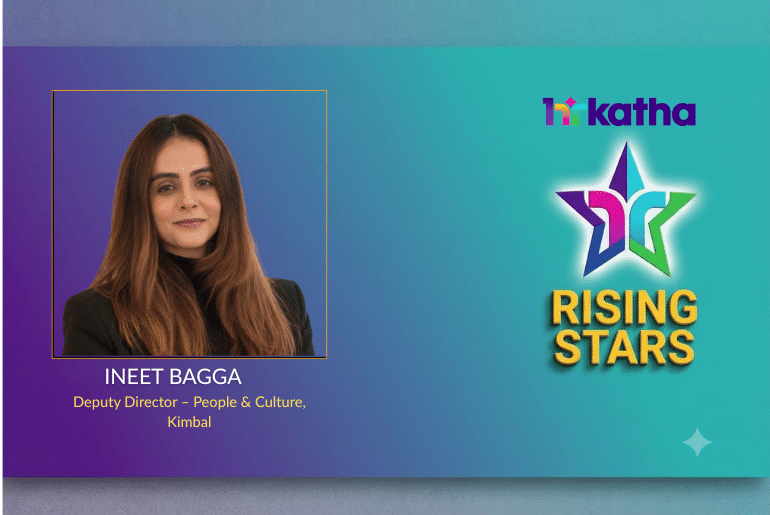
Ineet Bagga believes organisations need to become better at letting go of practices that no longer serve them. But she is equally conscious that what appears necessary from a business perspective can be deeply unsettling for the people expected to live through it.
That tension has shaped much of her thinking about HR.
Having worked in more traditional organisational environments, Bagga subsequently became involved in building a culture inspired by Netflix’s No Rules Rules philosophy, with its emphasis on freedom, responsibility and trust.
The experience required more than changing policies. It meant questioning assumptions about authority, accountability and how employees should be expected to work.
For Bagga, the lesson was that organisational agility is not simply the ability to introduce change quickly. It is the capacity to help people adapt without treating the disruption they experience as an incidental cost of progress.
Unlearning as the job
Moving from a conventional organisational environment to one influenced by No Rules Rules required Bagga to reconsider some familiar assumptions about how workplaces should operate.
Traditional structures often rely on clearly defined processes, approval mechanisms and managerial oversight. A culture built around greater freedom and accountability asks employees and managers to exercise more judgement themselves.
That transition can be difficult, particularly when people arrive with different experiences of authority and decision-making.
For Bagga, the challenge was not simply to design policies that encouraged ownership. It was to help employees understand what greater autonomy meant in practice and what responsibilities accompanied it.
The distinction matters because removing a rule does not automatically create trust. Nor does giving people more freedom necessarily prepare them to use it effectively.
The work therefore involved helping employees question established habits while creating conditions in which new expectations could become part of everyday behaviour.
Bagga sees that experience as an illustration of a broader organisational challenge.
With AI, automation and changing business models altering the nature of work, she believes companies must become more capable of unlearning practices that once appeared effective.
“The real competitive advantage lies in how quickly organisations can unlearn, adapt, and reinvent themselves,” she says.
But speed alone is not enough. Organisations must also develop the judgement to distinguish between practices that have become obstacles and those that continue to serve an important purpose.
When interests diverge
Bagga sees HR as a function that frequently operates between perspectives that do not naturally align.
Business leaders may prioritise speed, efficiency or commercial outcomes, while employees may be more concerned about stability, fairness and the consequences of a decision for their working lives.
Her approach begins with understanding what each stakeholder is trying to achieve.
She believes HR must be able to adapt its communication to different audiences without changing the principles guiding its recommendations.
Fairness, transparency and organisational interests remain important, but the difficult part is deciding how those considerations should be balanced when they point towards different outcomes.
“It’s about making difficult decisions thoughtfully, communicating them with empathy, and having the conviction to stand by them,” she says.
That conviction, however, does not remove the obligation to explain the decision or acknowledge its consequences.
For Bagga, credibility depends partly on whether HR can remain consistent when a decision is unpopular, rather than presenting itself as an advocate of whichever side is most immediately persuasive.
After the decision is communicated
Some of Bagga’s most significant professional lessons have come from organisational transitions and layoffs.
Such decisions expose the limits of reassuring language. A carefully managed communication process cannot remove the uncertainty, financial pressure or personal disappointment that job loss may create.
Bagga believes HR’s responsibility therefore extends beyond announcing the decision and completing the formal process.
“It’s about how you support people through it,” she says.
That may involve honest conversations, treating employees with dignity and, where possible, helping them explore opportunities beyond the organisation.
“Knowing that you’ve been able to make a difficult transition a little easier for someone, and perhaps help them find their next chapter, is deeply fulfilling,” she says.
The distinction is important. Support does not make a layoff painless, nor does it automatically make the underlying decision fair. But the manner in which an organisation handles the departure can still influence how people experience an already difficult situation.
For Bagga, the test of HR is not simply whether a difficult decision was implemented efficiently. It is also how the organisation treated the people affected once the decision had been made.
AI and the human core
Bagga approaches AI through the same lens of adaptability.
She expects technology to simplify processes, support analysis and change how work is organised. But she believes the more demanding challenge is preparing employees and HR teams to continually reassess how they work.
That requires a willingness to experiment, learn unfamiliar capabilities and abandon practices that no longer add value.
At the same time, Bagga does not believe greater technological capability reduces the importance of human judgement.
AI may help organisations process information or identify patterns, but decisions involving fairness, employee concerns and competing interests still require people to accept responsibility for their consequences.
For her, the objective is not merely an HR function that can use AI tools. It is one that can evaluate when those tools are useful, recognise their limitations and adapt as the technology develops.
That is a more durable capability than proficiency with any single platform.
Purpose beyond the job description
Bagga’s interest in organisational culture also extends to the question of meaning at work.
She draws inspiration from Viktor Frankl’s writing on the importance of purpose in human life.
“People are increasingly looking beyond just what they do to why they do it and what impact they create,” she says.
For Bagga, this places a responsibility on organisations to help employees understand how their work contributes to something larger than their immediate tasks.
But purpose cannot be manufactured through messaging alone.
Employees are unlikely to find lasting meaning in an organisation simply because its leaders articulate an inspiring mission. The experience must be supported by meaningful work, opportunities to develop, reasonable autonomy and a sense that individual contributions matter.
Nor can purpose substitute for fair treatment or economic security.
Bagga’s interest lies in creating environments where employees can connect their aspirations with organisational goals without losing sight of their own needs.
It is another expression of the balance that runs through her approach: organisations need people who can adapt to change, but they must also provide reasons for those people to remain invested in the journey.
Quick Takes
Three words colleagues would use: Empathetic, curious and bold.
Conflict style: Mediation.
Engagement driver: Recognition.
Feedback preference: Scheduled and fact-driven rather than emotion-led.
Retention tool: Purpose-led career growth.
Team energy booster: Brainstorming over coffee.
Why she is a Rising Star
Bagga’s approach combines an appetite for organisational change with an awareness of its human consequences. Her experience building a culture around greater autonomy has taught her that unlearning requires more than removing rules. Equally, her work through organisational transitions and layoffs has reinforced the importance of supporting employees after difficult decisions are announced. She sees AI through the same lens, valuing adaptability without surrendering human judgement. What distinguishes Bagga is her recognition that agility becomes meaningful only when organisations remain accountable for how change affects their people.
Rising Stars is HRKatha’s editorial series profiling the next generation of HR leaders shaping the future of the profession. The series features winners and finalists of the HRKatha Rising Star Leadership Awards alongside emerging professionals whose work, ideas and leadership potential deserve wider recognition.
