



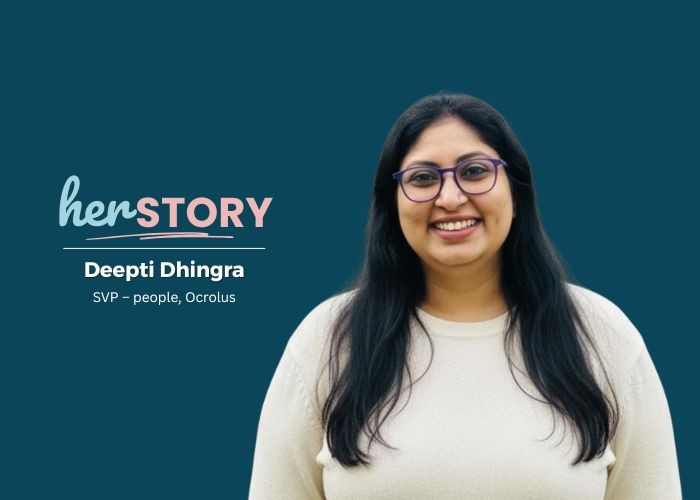
The heart of the business
It has been over two decades since Deepti Dhingra first stepped into the realm of human resources, and even back then, it felt like second nature. Having always been curious about people, she was keen to understand what gets them going, what tires them out, and how work becomes such a big part of who they are.
As a newbie, she was surprised to see how strategic the people function actually is. She realised it wasn’t all about policies and processes alone but about keeping the heart of the business beating. What still amazes her is how long it sometimes takes organisations to see that people aren’t a support function but the business itself.
Today, as senior vice president – people at Ocrolus, Dhingra essays her role with élan. But the path hasn’t been without its moments of pause. While transitioning to a new opportunity some time ago, she was asked about her marital status during background verification. That made her stop and think: “Will being married make me a better leader?” She realised then that stereotypes still exist, and that too, in unexpected places.
She learned to respond not with frustration but with performance, allowing consistency, empathy and results to quietly rewrite those outdated narratives.
The choice between liked and respected
Asked whether there have been times when she has had to choose between being liked and being respected, Dhingra’s answer is immediate: “All the time!”
According to her, it’s part of being a people leader. “You’re constantly balancing empathy with accountability. For me, the compass is integrity—towards who I am, the role I play, and my responsibility to people. You won’t always be liked, but you can always be fair and consistent. And over time, that earns you the kind of respect that lasts longer than popularity.”
“Authenticity and courage are your best accessories.”
It’s a philosophy that has guided her through difficult moments, especially during restructuring phases. These moments have taught her that the only way through is transparency, empathy and listening. “You focus on the larger picture, communicate honestly, and make the transition as humane as possible. When people sense fairness and integrity, even hard decisions are easier to accept,” she observes.
Psychological safety: The non-negotiable
For Dhingra, there’s one thing that matters above all else: psychological safety. It’s most important for people to be able to speak up, make mistakes, or be themselves, because everything else is cosmetic. Authenticity and integrity matter just as much. When people can be honest, and leaders respond with transparency instead of defensiveness, that’s when real trust—and magic—happens.
At Ocrolus, Dhingra and her team have collectively set the tone that AI has to be core, not optional. Their philosophy is simple: let AI handle the low-empathy, repetitive stuff so that people can focus on high-empathy work—listening, problem-solving and building culture. The role of HR has been to make that shift real, creating a workplace where technology amplifies humanity instead of replacing it.
Where inspiration lives
Inspiration is everywhere for those curious enough to notice it, says Dhingra. Not surprisingly, the very people she works with every day inspire her with their creativity, humour and resilience. She loves to learn from other companies too, reading about wild ideas, and watching those slightly crazy, tongue-in-cheek practices that somehow end up working brilliantly.
“Empathy and strength aren’t opposites—they’re a unique superpower.”


Her advice to budding young women in HR is refreshingly direct: simply be who you are, and stay true to the work you do. “Don’t shrink to fit into someone else’s version of HR. Be limitless—challenge the status quo, ask better questions, and don’t wait for permission to make change happen.”
And if the day gets particularly difficult? She has a ritual for that too. Before the boardroom battles begin, Dhingra laces up her boxing gloves. There’s something about boxing—the rhythm, focus, and release—that gets her head and heart in sync for the day. It’s a fitting metaphor for her approach to leadership: precise, powerful, and always ready for the next round.
________________________________________
Quick Fire Round
A book that changed your perspective on leadership?
Leaders Eat Last by Simon Sinek—it reinforced my belief that leadership is really about creating safety, trust, and belonging. I’m currently reading No Rules Rules by Reed Hastings, and it’s already pushing me to think differently about freedom and accountability at work.
Your mantra for difficult days?
Breathe. Pause. And breathe some more. Everything passes—especially the hard days—if you stay true and in your power. Humour helps too. If it won’t matter in a few months or years, learn the lesson, laugh at the chaos, and move on.
The best career advice you’ve ever received?
“Why settle for being a star when you can be a supernova?” A little over the top, yes, but a fun reminder to never play small.
One thing you wish people understood about being a woman in HR leadership
That empathy and strength aren’t opposites—they’re a unique superpower.
Morning ritual that sets you up for success?
My boxing class. I love other workouts too, but there’s something about boxing—the rhythm, focus, and release—that gets my head and heart in sync for the day.