


What does ‘grey beard’ mean?
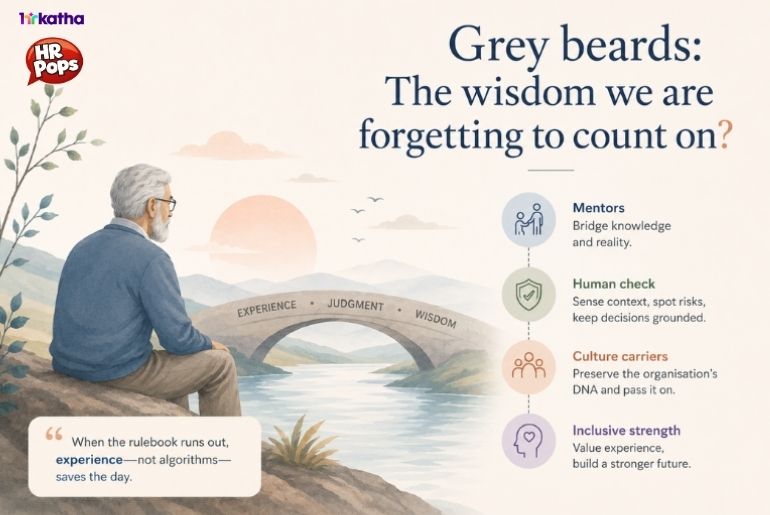
In HR, a ‘grey beard’ is more than an experienced employee approaching retirement. The term refers to professionals whose greatest value lies not in what they know but in what they have seen.
They have lived through recessions, failed transformations, product recalls, leadership crises and market disruptions. They recognise patterns long before they appear in dashboards because they have encountered similar situations before.
That judgement cannot be downloaded or taught in a training programme. It is built over decades of decisions, mistakes and consequences. Experience, in this sense, is not simply accumulated knowledge. It is accumulated judgement.
Where did the idea come from?
The expression originated in military and engineering circles, where the “grey beard” was the veteran people consulted when manuals offered no clear answer. The title carried respect rather than age.
Corporate organisations later adopted the phrase for senior professionals who possessed deep institutional memory and practical wisdom that newer employees lacked.
The idea gained renewed relevance during the pandemic. When uncertainty overwhelmed organisations, it was often experienced leaders who steadied operations. Their memory of earlier crises, their ability to improvise under pressure, and their instinct for separating genuine risks from temporary panic became invaluable.
Today, the rise of AI has given the concept fresh significance. As knowledge becomes increasingly accessible, judgement is becoming the scarce resource.
Why is it relevant for HR?
Most organisations invest heavily in acquiring knowledge and surprisingly little in preserving experience.
When experienced employees retire, they leave with far more than technical expertise. They take with them organisational memory, informal networks, historical context, and the ability to recognise problems before they become visible to everyone else.
The business case is becoming increasingly clear. One of the most discussed examples comes from Ford. After accelerating automation and reducing its reliance on veteran engineers, the company reportedly found that technology alone could not compensate for the practical judgement accumulated over decades. Experienced engineers were brought back to mentor younger teams and recalibrate processes. The lesson was simple. Technology can process information. Experience provides context.
That lesson extends well beyond manufacturing.
In healthcare, experienced clinicians often identify complications before monitoring systems do. In aviation, veteran professionals recognise warning signs that manuals cannot always capture. In consulting, experienced advisers know when data tells only part of the story.
For HR, succession planning is no longer simply about replacing people. It is about transferring judgement before it walks out of the organisation.
The uncomfortable reality
Despite recognising the value of experience, many organisations continue treating senior employees primarily as a cost.
Older professionals are frequently assumed to be less adaptable, less digitally capable, or resistant to change. These assumptions often influence workforce decisions more than evidence does.
The consequence is a gradual erosion of institutional memory. Organisations spend heavily on knowledge management platforms, AI tools, and digital transformation while allowing decades of practical wisdom to disappear without any structured transfer.
Ironically, many companies are becoming better at storing information while becoming worse at retaining judgement.
The AI paradox
Artificial intelligence has made grey beards more valuable, not less.
AI excels at analysing data, identifying patterns, and generating recommendations. What it cannot do is understand context shaped by lived experience. It cannot recognise organisational history, weigh competing priorities, anticipate political consequences, or sense when something feels wrong despite what the data suggests.
Those capabilities remain deeply human.
As organisations automate more routine work, experienced professionals become the people who validate AI’s conclusions, question its assumptions, and recognise when technology is confidently producing the wrong answer.
In the AI era, experience is no longer competing with technology.
It is becoming technology’s most important safeguard.
The takeaway
For years, organisations believed competitive advantage came from information.
Today, information is abundant. Judgement is becoming scarce.
That makes grey beards far more than experienced employees nearing retirement. They are repositories of organisational wisdom that cannot be replicated through documentation, software, or AI.
For HR, the challenge is no longer simply managing retirement. It is ensuring that decades of judgement leave behind more than an empty desk.
Because organisations rarely fail through lack of information.
They fail when no one remembers what experience was trying to teach them.