



For years, organisations treated purpose as branding exercise. By 2026, employees will expect evidence.
Younger workers, in particular, are becoming highly adept at distinguishing between stated values and operational reality.

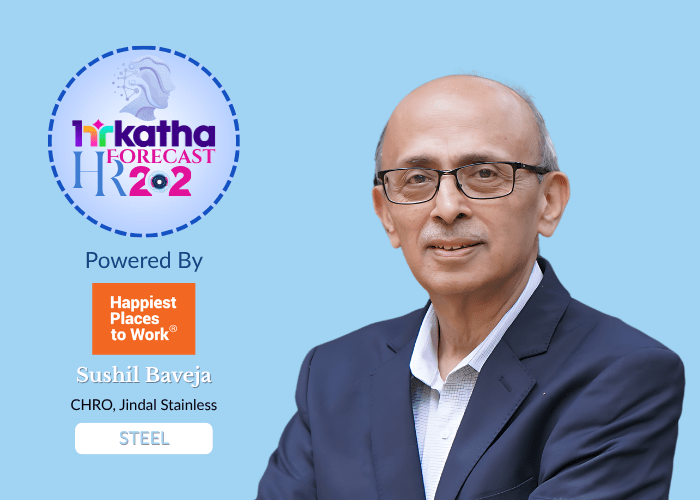
Sushil Baveja believes 2026 will intensify this scrutiny.
“Purpose must increasingly show up in everyday decisions of organisations, from how companies hire and who they choose to partner with, to how leaders act under pressure and whether social and environmental commitments are upheld consistently.”
Several signals suggest how organisations may respond.
Signal 1: Purpose will be tested through decisions, not declarations
Purpose statements are everywhere. But their credibility depends entirely on whether they shape actual behaviour.
“The younger employees not only value purpose-driven work but are also highly perceptive in distinguishing between performative intent and lived values,” Baveja notes.
This places pressure on organisations to demonstrate purpose through action, particularly in moments that matter.
How do leaders behave under pressure? Are environmental commitments upheld when they conflict with short-term profit? Do hiring and partnership decisions reflect stated values?
These everyday choices reveal whether purpose is real or performative.
“Authenticity lies in allowing purpose to be shaped by, and remain relevant to, the organisation’s core business.”
For a manufacturing company such as Jindal Stainless, this translates into powering the nation’s growth, strengthening sustainable supply chains and investing meaningfully in workforce skilling.
“To be most effective, it’s imperative that purpose is specific and anchored in real, measurable action.”
The shift is from aspirational language to embedded practice. Purpose must appear in performance metrics, leadership accountability and the overall employee experience, not just external communications.
“Organisations that embed purpose into performance metrics, leadership accountability and the overall employee experience will build trust organically. Those that fail to bridge the gap between intent and action will struggle to connect with a workforce that values transparency, credibility and authenticity over mere aspiration.”
“By 2026, employees will judge organisations not by purpose statements, but by the decisions leaders make under pressure.”
Signal 2: Leadership pipelines will be built through early identification and 60–70 per cent readiness
As experienced leaders retire and business contexts evolve rapidly, leadership gaps are widening across industries.
The traditional approach, waiting for perfect external candidates or fully ready internal successors, is becoming increasingly untenable.
“Talent crunch across industries ensures that succession planning and building a leadership pipeline will remain a key focus for organisations,” Baveja observes.
Progressive organisations are shifting strategy. Instead of waiting for perfect fit, they are increasingly willing to back internal candidates who show strong potential, even if they are only 60–70 per cent ready.
“Several progressive organisations are increasingly willing to back internal candidates who show strong potential, even if they are only 60–70 per cent ready, and bridge the remaining gaps through focused mentoring, coaching and development planning.”
This requires proactive identification of high-potential talent early and providing holistic exposure through cross-functional roles, job rotations, cross-functional projects and action-based learning.
At the same time, leadership readiness itself is evolving.
“Leadership readiness has evolved beyond functional capabilities. Today, digital literacy, data-driven decision-making and the ability to lead diverse, multi-generational teams are becoming essential leadership capabilities.”
Succession planning that does not account for these shifts risks becoming outdated and ineffective.
“Organisations that succeed in the years ahead will be those that treat leadership succession readiness as an ongoing process, not a one-off exercise.”
External hiring will continue to have its place, particularly where specialised expertise or new business capabilities are required. But the core leadership pipeline increasingly needs to be built internally.
Signal 3: Skills visibility will shift from static inventories to dynamic systems
Skills inventories and talent marketplaces are becoming essential tools for organisations. But their success depends on treating skill visibility as a strategic priority rather than compliance exercise.
“Skills inventories and talent marketplaces are progressively becoming essential tools for organisations, and their success depends on treating skill visibility as a strategic priority rather than a mere compliance exercise.”
The shift underway is from static skill inventories focused only on formal qualifications to dynamic, real-time assessments that include project experience, cross-functional knowledge, problem-solving ability and emerging capabilities.
This gives organisations visibility into existing workforce capabilities, helps identify gaps, enables faster redeployment and matches employees to opportunities that benefit both business and individual growth.
“IJPs today have become an institutionalised mechanism of internal talent sourcing and deployment.”
However, visibility alone is insufficient.
“The onus is also on employees to trust the system, engage actively and see clear pathways for development and growth.”
This requires transparent communication about how skills are assessed, how opportunities are matched and how mobility affects career progression.
“Organisations that combine technology with transparent communication, coaching and incentives for mobility are the ones that unlock true value.”
By 2026, organisations with mature skills visibility systems will be able to redeploy talent far faster than those still dependent on manager knowledge and informal networks.
“The organisations that succeed will back 60–70% ready talent early and build leadership continuously, not reactively.”
The authenticity divide
These signals, purpose tested through decisions, leadership built through 60–70 per cent readiness and dynamic skills systems, point to a common theme.
The gap between intent and execution is narrowing.
Employees, particularly younger cohorts, are evaluating organisations not by what they aspire to be, but by what they demonstrably are.
This applies equally to purpose, leadership development and internal mobility. Statements mean little. Systems and behaviours mean everything.
“Organisations that embed purpose into performance metrics, leadership accountability and the overall employee experience will build trust organically.”
“Organisations that treat leadership succession readiness as an ongoing process will succeed in their growth journey.”
“Organisations that combine technology with transparent communication unlock true value from skills systems.”
The divide in 2026 will not be between organisations with purpose statements and those without, or between those with succession plans and those without.
It will be between organisations where these commitments shape actual decisions and those where they remain aspirational.
Three Strategic Imperatives
Embed purpose operationally: Move beyond statements and embed purpose in performance metrics, leadership accountability and everyday decisions, ensuring commitments are specific, measurable and consistently upheld.
Build leadership through early backing: Identify high-potential talent early and invest in 60–70 per cent ready candidates through mentoring, coaching and cross-functional exposure rather than waiting for perfect readiness.
Create dynamic skills visibility: Shift from static inventories to real-time assessment systems that include project experience and emerging capabilities, combining technology with transparent communication and mobility incentives.
The lived values test
The question for 2026 is not whether organisations have purpose, succession plans or skills systems.
It is whether those commitments show up in decisions that matter.
Because younger employees are highly perceptive in distinguishing between performative intent and lived values.
They evaluate organisations by what happens when purpose conflicts with profit. By whether internal candidates actually get backed when they are 70 per cent ready. By whether skills visibility leads to real opportunities or just better dashboards.
The organisations that succeed will be those where purpose shapes how leaders behave under pressure, leadership pipelines are built continuously rather than reactively, and skills systems enable actual mobility instead of simply creating visibility.
Because in the end, authenticity is not what organisations say.
It is what they consistently do, especially when it is difficult.
And that is what will separate the organisations people trust from those they leave.