


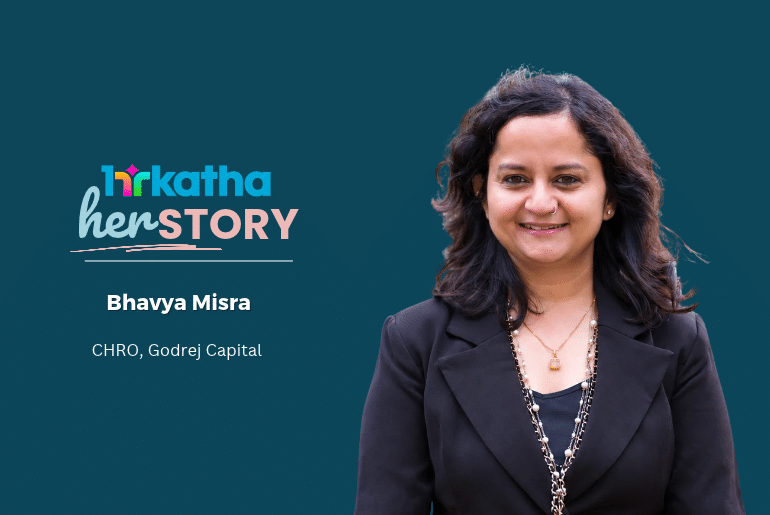
The pull of HR
For Bhavya Misra, chief human resources officer, Godrej Capital, a career in HR was not part of the original plan. She began her professional journey outside the function, but gradually found herself drawn towards it.
What interested her was understanding people: what motivates them, why some teams succeed while others struggle, and how organisations can create environments where individuals do their best work.
Over time, that curiosity developed into a deliberate career choice. Misra began to appreciate how HR could influence not just employee experience, but organisational culture, leadership and business performance.
Today, one of the most rewarding aspects of her work is watching people grow into roles and opportunities they once believed were beyond their reach.
It also explains why she considers adaptability among the most important qualities future HR leaders will need. Organisations and expectations will continue to change, and the ability to learn and adjust will matter as much as existing expertise.
For Misra, the misconception that HR is primarily about hiring misses the larger purpose of the function.
At its best, she believes, HR enables people and businesses to succeed together.
Beyond HR
Early in her career, Misra noticed that HR leaders, particularly women in the function, were sometimes viewed as support professionals rather than strategic business partners.
That surprised her because she saw people and business outcomes as closely connected.
Rather than allowing the perception to limit her, she invested time in understanding the business beyond HR. She learnt about growth strategies, financial performance, customer priorities and organisational transformation.
That understanding gradually allowed her to contribute to broader business conversations and demonstrate how people decisions could influence commercial outcomes.
For Misra, strategic HR means looking beyond immediate hiring requirements, performance reviews and employee concerns to consider what the organisation will need in the years ahead.
What capabilities will the business require three to five years from now? What kind of leaders must it develop? And how can it create a culture that supports innovation, growth and adaptability?
These are business questions as much as people questions.
Her advice to young HR professionals follows naturally from that experience: stay curious, understand the business deeply and recognise how talent, culture, technology and strategy influence one another.
“At its best, HR is about enabling people and business to succeed together.”
Fairness, respect and trust
Some of the most difficult decisions Misra has encountered are those that directly affect people.
Organisational change, restructuring, difficult talent decisions and competing business and employee expectations rarely offer straightforward choices.
In such situations, she returns to two principles: fairness and respect.
Business realities may require difficult decisions, but she believes the people affected should always be treated with empathy. The responsibility of an HR leader is to balance organisational priorities with their human consequences.
That conviction extends to the kind of culture she wants to build.
For Misra, trust is the foundation of a high-performing organisation. When employees trust their leaders, one another and the organisation’s intentions, they are better placed to collaborate, innovate and navigate uncertainty.
She also believes people should feel respected, included and empowered to be themselves at work.
For her, these are not simply cultural aspirations. They influence how people experience the organisation and how effectively they contribute to it.
“Creating an environment where people feel respected, included and empowered to bring their authentic selves to work is non-negotiable.”
The lessons that shaped her
Misra credits several people with influencing her understanding of leadership.
Former managers helped shape how she approaches resilience, decision-making and responsibility. Her family has been equally important in broadening her perspective.
Her husband, who works in the not-for-profit sector, has particularly influenced how she thinks about purpose and impact.
His work has encouraged her to look beyond immediate outcomes and consider whether her decisions contribute to meaningful, lasting change.
The most valuable lesson she has taken from these influences is that leadership does not require having all the answers.
It requires listening carefully, bringing people together and creating an environment in which individuals can contribute, develop and succeed.
That understanding has also shaped how she measures her own effectiveness as a leader.
The satisfaction comes not simply from solving a problem herself, but from enabling others to discover what they are capable of achieving.
Quick fire round
The one workplace ritual that can’t be given up, even on a busy day?
Taking time to connect with people and listen. The best insights often come from simple conversations.
If your leadership style were a movie genre, what would it be: drama, comedy or action?
A blend of all three, every day in HR is pretty interesting. Decisive when needed, but always centred on people.
If you could swap roles with any employee for a day, which job would you pick and why?
A frontline sales role. There is no better way to understand customers, market realities and what truly drives business growth.
Coffee, tea, or something else entirely–what fuels your mornings?
Getting my daughter up and ready for school, then a slow breakfast with my husband.
One word that describes your leadership philosophy?
Empowerment.
Ambition and conscious choices
“Don’t wait until you feel completely ready,” is the advice Misra would give her younger self.
She believes many professionals, particularly women, underestimate their capabilities and hesitate to pursue opportunities until they feel fully prepared.
Yet some of the most important growth experiences come from accepting responsibilities that stretch existing skills and confidence.
Her perspective on ambition has also evolved with motherhood.
As her career progressed and she became a mother, Misra realised that balance was not about doing everything perfectly every day. It was about making conscious choices and being present for what mattered most at a particular moment.
She does not believe women should feel pressured to choose between professional ambition and personal fulfilment.
Careers move through different phases, and success need not look the same at every stage.
“Don’t feel pressured to choose between ambition and personal fulfilment,” she advises.
Her suggestion is to keep learning, build meaningful relationships and create an impact wherever one happens to be.
Building workplaces for the next generation
Being the mother of an eight-year-old daughter has added another dimension to Misra’s thinking about leadership.
She often reflects on “the kind of workplaces we are building for future generations”.
The question is no longer only about the organisation she leads today, but also about the environment in which the next generation will eventually begin its professional journey.
For Misra, creating workplaces where people feel respected, included and empowered is therefore a responsibility that extends beyond immediate business outcomes.
It brings together several of the beliefs that have shaped her career: fairness in difficult decisions, trust in relationships, opportunities for growth and the importance of recognising individual potential.
Her hope is that future generations will enter workplaces where ambition and personal fulfilment can coexist, and where people have the opportunity to grow without feeling they must compromise who they are.
