


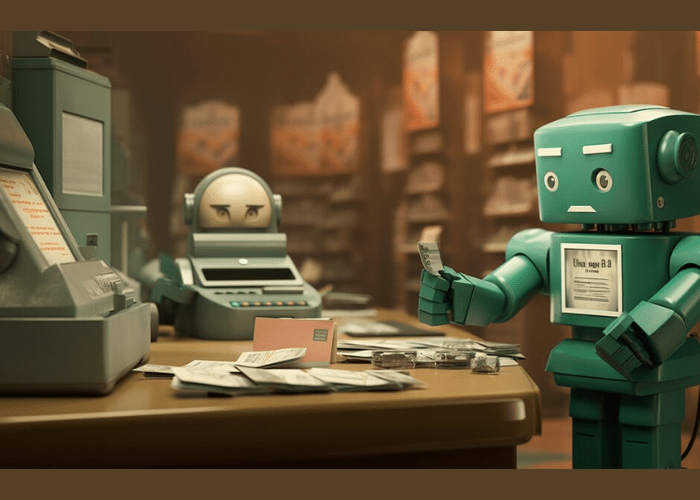
In an era where artificial intelligence promises to revolutionise everything from chat to computer code, job seekers are increasingly turning to AI to craft their applications. LinkedIn, the professional networking behemoth, now offers AI-powered tools to polish résumés and compose cover letters. Yet this technological aid may be doing candidates more harm than good—creating a paradox where tools designed to give applicants an edge are actually blunting their competitive advantage.
The contradiction is striking: tools designed to personalise applications are making them more generic. Hiring managers, battle-hardened by floods of applications, can spot AI-generated prose at fifty paces. “While this saves time,” notes Emmanuel David, an independent director & board member, “it doesn’t translate into success.” The telltale signs of machine-written text—perfect grammar, standardised phrasing, and a peculiar absence of genuine enthusiasm—have become red flags for recruiters.
The fundamental problem lies in AI’s inability to capture what recruiters crave most: authenticity. As Sharad Verma, CHRO, Iris Software, observes, “AI-generated content typically lacks the quirkiness or trademark individuality—mainly expressed through opinions, passionate views, human foibles and errors.” Even when prompted cleverly, the output tends towards the formulaic, particularly for creative roles where originality is paramount. The result is a curious flattening of individual experience, where unique career journeys are compressed into templated narratives.
“While this saves time, it doesn’t translate into success.”
Emmanuel David, an indepandent director and board member
This shortcoming becomes particularly acute in specialist positions where domain expertise and industry-specific knowledge are crucial. “In niche roles within the food services and facility-management industry—such as a technical Centre of Excellence expert or a chef for innovation kitchen—specific requirements go beyond what generalised AI tools can address,” explains Manika Awasthi, chief people officer, Compass Group India. A job managing industrial chillers, for instance, demands expertise that eludes AI’s generic grasp.
“In niche roles within the food services and facility-management industry—such as a technical Centre of Excellence expert or a chef for innovation kitchen—specific requirements go beyond what generalised AI tools can address.”
Manika Awasthi, chief people officer, Compass Group India
The standardisation trap is particularly insidious in technical fields. “This can easily happen when the algorithm works predictably—matching skills required with those listed on the resume or job applications,” Verma points out. When every candidate uses AI to optimise their application for Applicant Tracking Systems (ATS), the result is a sea of homogeneous applications where truly exceptional candidates become indistinguishable from the merely competent.
Culture fit, increasingly crucial in modern hiring, presents another stumbling block. “These softer, nuanced elements cannot be programmed into AI tools. They are understood through genuine human interaction, cultural sensitivities, and personal experiences,” Awasthi observes. While an algorithm may identify keywords about collaboration or leadership, it cannot convey how a candidate actually embodies these qualities. The result is often a disconnect between the polished persona presented on paper and the actual individual behind the application.
“The standardisation trap is particularly insidious in technical fields. This can easily happen when the algorithm works predictably—matching skills required with those listed on the resume or job applications.”
Sharad Verma, CHRO, Iris Software
The challenge extends beyond technical competency to the realm of soft skills—those crucial but hard-to-quantify attributes that often determine success in a role. As Awasthi further enunciates, “In creative fields, the challenge becomes even more pronounced. Recruiters often look for originality and fresh perspectives, qualities that AI-generated content lacks.” The very qualities that make candidates valuable—their ability to think differently, to bring fresh perspectives, to challenge conventional wisdom—are precisely what AI tends to smooth away in its quest for optimisation.
David advises candidates to “Think of AI as an assistant, not a substitute. Use it to organise your thoughts, but ensure that your voice shines through. Authenticity and alignment with the company’s values are what make an application stand out.” He emphasises that “A genuine narrative will always resonate more than a crafted one. The human story is what makes a candidate memorable.”
A more nuanced approach might be, as Verma suggests, “to be informed by the AI and analytical tools but making the decision based on a combination of data-driven approach, human intuition and judgement.” Sometimes the best candidates may lack direct experience but possess qualities—sincerity, creativity, earnestness—that only human judgment can properly evaluate.
The implications for the future of recruitment are significant. As AI tools become more sophisticated, the temptation to rely on them will only grow. Yet paradoxically, this might make authentic, human-written applications stand out even more. Smart candidates are learning to use AI selectively—perhaps for initial drafts or structural suggestions—while ensuring their genuine voice comes through in the final product.
The rise of AI in recruitment also raises broader questions about the nature of professional identity in a digital age. When algorithms can generate perfect cover letters and optimise CVs, what truly distinguishes one candidate from another? The answer, increasingly, lies in the elements that AI cannot replicate: personal insight, genuine passion, and the ability to connect human-to-human.
As AI’s role in recruitment grows, the challenge for job seekers will be finding the sweet spot between technological efficiency and human authenticity. Awasthi captures this balance perfectly: “Candidates need to strike a balance between using technology for efficiency and refinement, and highlighting their unique talents, aspirations and voice. A personal story is best told by a human, and not an algorithm-based tool.”
The message is clear: while AI might help polish your prose, letting it write your story could leave you waiting by the phone. In the end, the most compelling job applications will come not from machines but from candidates who understand that their unique experiences, perspectives and quirks are their greatest assets. In the age of artificial intelligence, perhaps the most valuable skill is knowing when not to use it.
1 Comment
The other side of the coin is that HR Talent Acquisition teams also need to use ATS’s more effectively for reviewing a larger pool of candidates by defining a wider set of criteria. This can result in candidate profiles other than the ones having the JD key words also being shortlisted for the role.