


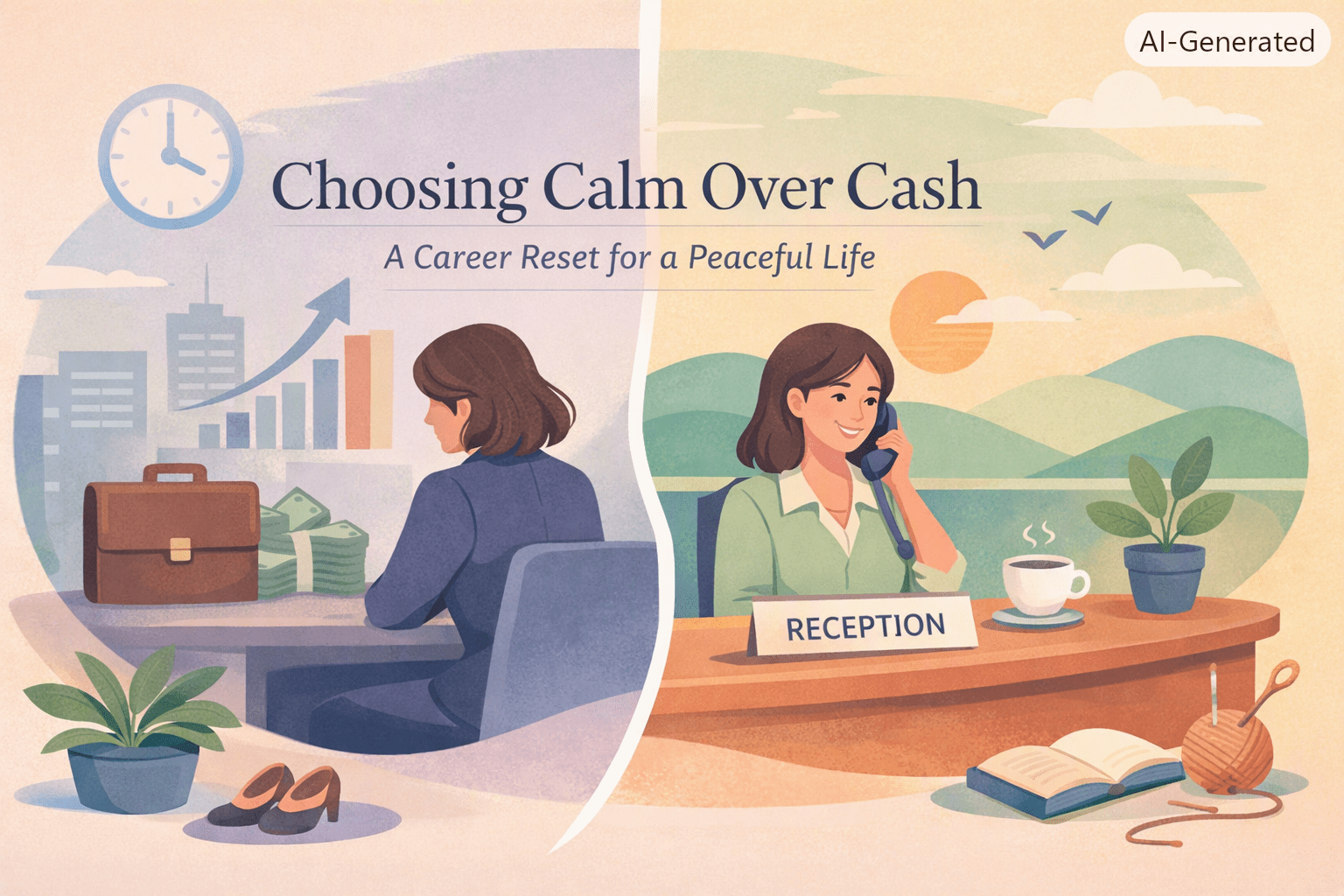
Grace McClelland, a 34-year old from Australia, once earned about Rs 66 lakh annually in a senior retail- management role. Despite the high salary and perks, she struggled with stress, anxiety and burnout. Long commutes, heavy schedules, and constant pressure drained her energy and affected her health. Eventually, she resigned without another job lined up.
She briefly tried an office role and later accepted a position with a luxury retail company that offered bonuses, overseas travel and a strong package. Even though she performed well and earned more than before, she realised she no longer enjoyed the work. The role left her detached and unmotivated, convincing her that another management job was not the solution.
After taking a month off, she applied for junior administrative positions. In July 2024, she joined a company as a receptionist and office manager. The move meant a 40 per cent pay cut compared to her highest salary, but she deliberately chose it to reset her life and reduce stress.
Today, she manages office administration and supports colleagues with daily tasks. She says she no longer feels embarrassed about her role and believes many people envy the relaxed nature of her job. Outside work, she has time for hobbies such as crocheting and creating social-media content, which has become an additional source of income.
Her story highlights how some professionals are willing to trade high salaries for better mental health, balance and personal fulfilment. It reflects a growing trend where career choices are guided less by money and more by quality of life.
