


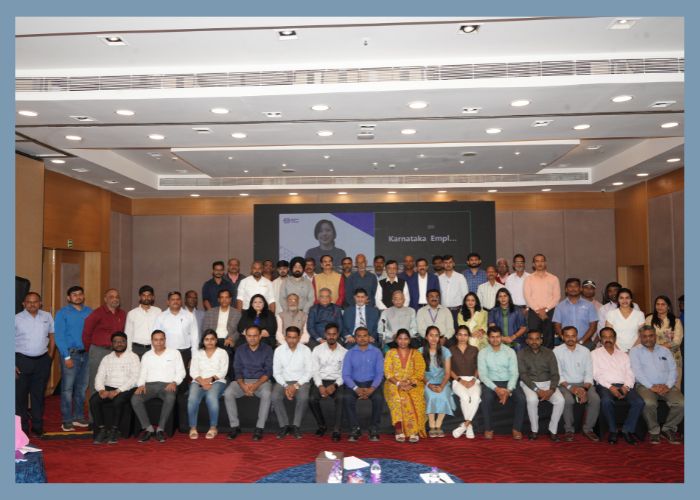
The Karnataka Employers’ Association (KEA), in collaboration with the International Labour Organisation (ILO), with the support of the Government of Japan, organised a two-day capacity-building workshop on responsible business conduct (RBC) and International Labour Standards (ILS) for manufacturing enterprises in Bengaluru, recently.
The programme highlighted Responsible Business Conduct, with a particular focus on the Fundamental Principles and Rights at Work (FPRW), including freedom of association, elimination of forced and child labour, non-discrimination, and ensuring a safe and healthy working environment. Through practical sessions, case discussions, and peer learning, participants explored how to identify, manage, and monitor labour-related risks across operations and supply chains as part of responsible business conduct and human rights due diligence frameworks.
The workshop was aimed at driving home the point that companies should not stop at basic compliance. Instead, they should aim to align themselves with international standards on responsible business conduct. Doing so will not only strengthen their own business but also create wider benefits for employees, society and the Indian economy as a whole.
The workshop was held at a time when global buyers, investors and regulators are paying much closer attention to labour standards and sustainability reporting. For Indian manufacturers, especially small and medium enterprises, this change brings both difficulties and new opportunities. Meeting compliance requirements is becoming a key factor in gaining access to markets, staying competitive in exports, and building investor trust.
At the inauguration of the sessions, Kamal Bali, president and managing director, Volvo Group India, stated that as India works toward the vision of Viksit Bharat @100, the country should concentrate on building a strong and resilient economy with transparency, equity and quality delivery. He emphasised that
Indian manufacturing must adapt to global changes with foresight, where resilience and responsibility are just as important as scale and efficiency. He noted that progress in resources and people should move together, and added that collaboration among industry, government, and society—guided by strong values and inclusive leadership—would be essential for creating manufacturing ecosystems that are both future-ready and responsible.
The event was inaugurated by BC Prabhakar, legal luminary on industrial relations and chairman of BCP Associate and president of KEA. It brought together 65 leaders from the manufacturing industry, ranging from large to small and medium-sized enterprises (SMEs), to strengthen their understanding and operationalisation of responsible business practices aligned with international labour standards and evolving market expectations.
T R Parasuraman, past president and wholetime director, Toyota Industries Engine India, stressed that the country’s strong demographic advantage places a greater responsibility on industry to ensure ethical and inclusive growth. He pointed out that modern manufacturing must strike a balance between efficiency, social responsibility, and compliance, with Responsible Business Conduct and International Labour Standards gaining importance. He further explained that ESG has become a business necessity and highlighted the importance of leadership, people-focused practices, and collaboration in building a sustainable and responsible India.
While in India, frameworks such as the National Guidelines on Responsible Business Conduct (NGRBC) and Business Responsibility and Sustainability Reporting (BRSR/BRSR Core) have further underscored the importance of responsible business practices, many enterprises continue to seek clarity and capacity-building support to effectively implement these requirements on the ground.
Dr G Manjunath, additional labour commissioner for industrial relations in the Government of Karnataka, stated that it was important to question whether human resource systems and due diligence frameworks were keeping pace with change and whether the workforce was prepared for the future. He pointed out that rising inequality and gaps in labour protection across Asia were serious issues that could affect long-term stability. He explained that India needed a clear national action plan on human rights due diligence, aligned with global labour standards. He added that compliance should be viewed as a way to drive sustainable growth rather than just as a mandatory requirement.
