


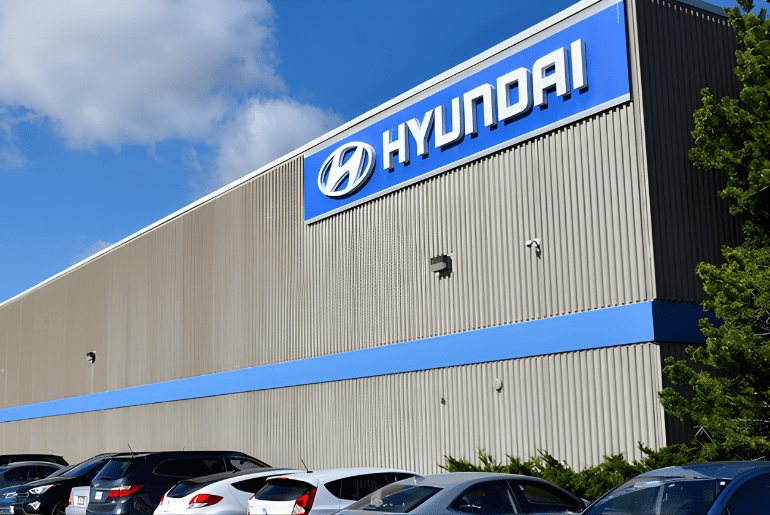
Hyundai Motor’s main car plant in Ulsan, South Korea, has reportedly seen a partial shutdown after thousands of unionised workers began striking. The dispute is not about pay cuts or production targets, but about the company’s plan to introduce humanoid robots into its factories.
The union fears that the deployment of Atlas robots, built by Boston Dynamics, could reduce human work hours and threaten job security. Atlas is a powerful two legged robot capable of lifting heavy loads, and Hyundai aims to roll out more than 25,000 of them across Hyundai and Kia plants worldwide, starting in the US in 2028. Analysts say each robot, costing around $130,000, could pay for itself within two years and eventually become cheaper than employing human workers.
Workers see this as a direct risk to their livelihoods. The Hyundai Motor union, representing over 39,000 employees, has demanded changes such as shifting hourly pay to fixed salaries, raising retirement age from 60 to 65, and securing bigger bonuses to offset automation’s impact. After 15 rounds of failed negotiations, the union staged early shift stoppages from 13 July to 15 July and plans further four hour strikes later in July.
The strike is being described as the first factory stoppage in the car industry directly linked to humanoid robots. Other automakers, including Tesla, BMW, and Chinese EV makers such as BYD, are also experimenting with humanoid robots in their plants.
Clearly, there is a need for technology transitions to be paired with transparent dialogue, fair protections and policies that reassure employees about their future.
