


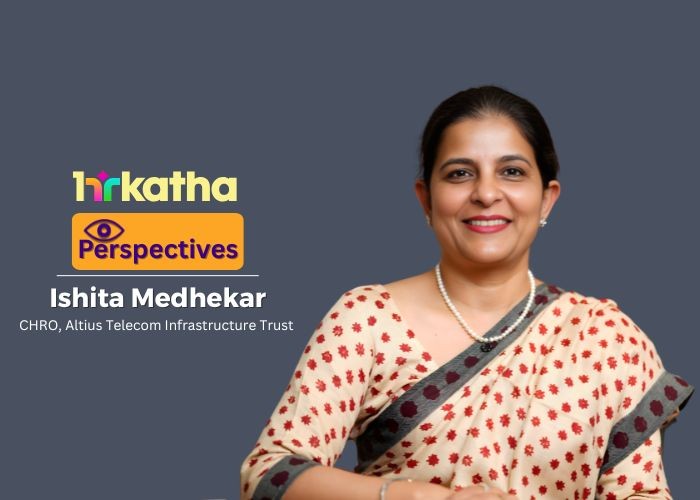
Ishita Medhekar, CHRO at Altius Telecom Infrastructure Trust, on why attrition reflects what has already broken, why AI should inform hiring but never replace human judgement, and why her personal mantra is simple: “go deep.”
Telecommunications infrastructure sits at the intersection of physical assets and rapid digital transformation. Towers and fibre networks last decades. The technologies they carry evolve constantly. That tension creates a unique talent challenge: hiring for capabilities that don’t yet exist, building agility in a capital-intensive environment, and driving digitalisation without compromising operational excellence.
Medhekar navigates these contradictions daily. In conversation, she explains why learning agility matters more than static skills, why disengagement starts long before resignation letters, and why the future of hiring is AI with humans — not AI instead of humans.
Learning agility over technical mastery
Are you hiring for today’s skills or tomorrow’s learning capacity? What does future-ready talent mean?
In a dynamic business environment, talent acquisition is no longer about filling roles. It’s about building long-term agility.
At Altius, we hire with a future lens — people who meet today’s needs but can grow with the business and navigate what comes next.
The talent that thrives here shows learning agility, comfort with ambiguity and collaborative maturity. Technical skills matter. But the real differentiator is a mindset that embraces change and uses digital tools for innovation — not just efficiency.
We also view hiring as the start of a longer journey. Internal mobility and continuous development ensure our people evolve alongside the organisation. A future-ready workforce is built when curiosity, adaptability and relevance become part of everyday work.
“Human oversight in hiring isn’t optional — it’s a responsibility”
Attrition is a lag indicator
Beyond compensation, what are the non-obvious reasons great people leave? What patterns don’t show up in exit interviews?
Attrition is a lag indicator. It reflects what has already happened — not what employees are experiencing today.
Compensation is often cited. But the real drivers usually sit beneath the surface.
What anchors employees is the quality and meaning of their daily work. People want to solve real problems. They want to feel stretched and intellectually engaged. When work becomes repetitive, disconnected from purpose or impact, disengagement begins — often silently.
High performers, in particular, carry silent burnout. Many mistake exhaustion for resilience.
In our experience, attrition rarely stems from the organisation at large. It is shaped at the team level — by culture and manager effectiveness.
The shift organisations must make is from reactive to proactive. That means strengthening managerial capability, investing in stay conversations and building emotionally intelligent workplaces. When people feel seen, valued and able to grow, retention becomes a natural outcome — not a metric to chase.
“Retention improves when employees feel intellectually stretched”
AI with humans, not versus
Should AI ever make final hiring decisions without human intervention? How do you balance automation with accountability?
AI can automate processes, reduce bias and improve speed. But hiring is ultimately about people.
At Altius, we use AI to inform and enable decisions — never to replace human judgement. There is human oversight at every critical stage.
AI helps us manage scale — from screening large applicant pools to forecasting vacancies and profiling probability of success. But final hiring decisions should not be fully automated. Technology can inform and guide. It cannot replace contextual understanding.
Wrong hiring decisions are costly.
We’ve built bias mitigation checks and transparency into our AI tools, and our teams are trained to interpret insights thoughtfully. The candidate experience must remain consistent, respectful and human.
The future of hiring is not AI versus humans. It is AI with humans — where technology drives efficiency and people ensure accountability and connection.
“Future-ready talent isn’t defined by what you know — but how quickly you can learn”
Designing for loyalty
How rigorously do you design employee experiences—from first interview to last day?
Every interaction shapes loyalty — whether with customers or employees.
At Altius, we design employee experiences with intention. Onboarding, once largely administrative, is now structured to build confidence and connection from day one. Exit processes are respectful and reflective, not transactional.
We celebrate milestones and stay connected with alumni. Their referrals and advocacy signal whether we have built enduring relationships.
One area I believe will be a game changer is constructive feedback for candidates post-interview — whether selected or not. Closing the loop builds trust and long-term goodwill.
It’s not enough to attract talent. We must earn talent loyalty.
“If managers don’t create psychological safety, retention strategies won’t work”
Business acumen as differentiator
For young HR professionals aspiring to work in telecommunications, what’s misunderstood about HR in this industry?
Telecom is fast-evolving and technology-driven. HR plays a strategic role in enabling workforce agility and digital transformation.
Business partnering is critical. HR leaders must understand the business deeply to stay ahead of the curve.
Business acumen is the key differentiator — in telecom, and in any industry.
“AI can process data. It cannot interpret culture”
“Go deep”
What was the most important decision or experience that shaped you as a people leader?
Across my career — from employer branding to mergers — I’ve had the opportunity to drive transformation at scale. Becoming a certified assessor for the TATA Business Excellence Model early in my career was a defining milestone.
But the core lesson has been consistent.
My personal mantra is “go deep.”
Go beyond surface understanding. Immerse yourself in the business, the people and the context. Meaningful impact comes from depth — not from operating at the surface.
“Compensation may trigger exits, but lack of purpose sustains them”
Meritocracy through ownership
What’s one unwritten rule at Altius that you wish more people understood earlier in their careers?
Ownership matters.
Individuals are expected to focus on impact and consistently raise the bar. Growth is driven by performance, accountability and measurable contribution.