

Close Menu
    Facebook X (Twitter) Instagram
    • Our Story
    • Partner with us
    • Reach Us
    • Career
    Subscribe Newsletter
    HR KathaHR Katha
    • Exclusive
      • Exclusive Features
      • Perspectives
      • Friday Features
      • herSTORY
      • Rising Stars
      • Case-In-Point
      • Point Of View
      • Research
      • HR Pops
      • Dialogue
      • Movement
      • Profile
      • Beyond Work
      • By Invitation
    • Brief News
      • Global HR News
      • Compensation & Benefits
      • Diversity
      • Events
      • Gen Y
      • Hiring & Firing
      • HR & Labour Laws
      • Learning & Development
      • Merger & Acquisition
      • Performance Management & Productivity
      • Talent Management
      • Tools & Technology
      • Work-Life Balance
    • Special
      • Editorial
      • HR Forecast 2026
      • Cover Story
      • HR Forecast 2024
      • HR Forecast 2023
      • HR Forecast 2022
      • HR Forecast 2021
      • HR Forecast 2020
      • HR Forecast 2019
      • New Age Learning
      • Coaching and Training
      • Learn-Engage-Transform
    • Studio
      • The CHRO Playbook
      • Quick HR Insights
      • The Corner Office
    • Reports
      • Whitepaper
        • HR Forecast 2024 e-mag
        • Future-proofing Manufacturing Through Digital Transformation
        • Employee Healthcare & Wellness Benefits: A Guide for Indian MSMEs
        • Build a Future Ready Organisation For The Road Ahead
        • Employee Experience Strategy
        • HRKatha 2019 Forecast
        • Decoding and Driving Employee Engagement
        • One Platform, Infinite Possibilities
      • Survey Reports
        • Happiness at Work
        • Upskilling for Jobs of the Future
        • The Labour Code 2020
    • Forums
      • HRKatha Inner Circle
      • HRKatha Futurecast
      • Leadership Summit 2025
      • Rising Star Leadership Awards
      • HRKatha Futurecast 2025
      • Automation.NXT
      • The Great HR Debate
    WhatsApp LinkedIn X (Twitter) Facebook Instagram
    HR KathaHR Katha
    Home»Brief News»India’s female workforce doubles, but quality of employment remains a concern
    Brief News

    India’s female workforce doubles, but quality of employment remains a concern

    Much of the growth has been concentrated in employment categories associated with lower earnings and limited security, rather than regular salaried jobs
    HRK News BureauBy HRK News BureauNovember 3, 20264 Mins Read168 Views
    Share LinkedIn Twitter Facebook WhatsApp
    Share
    LinkedIn Twitter Facebook WhatsApp

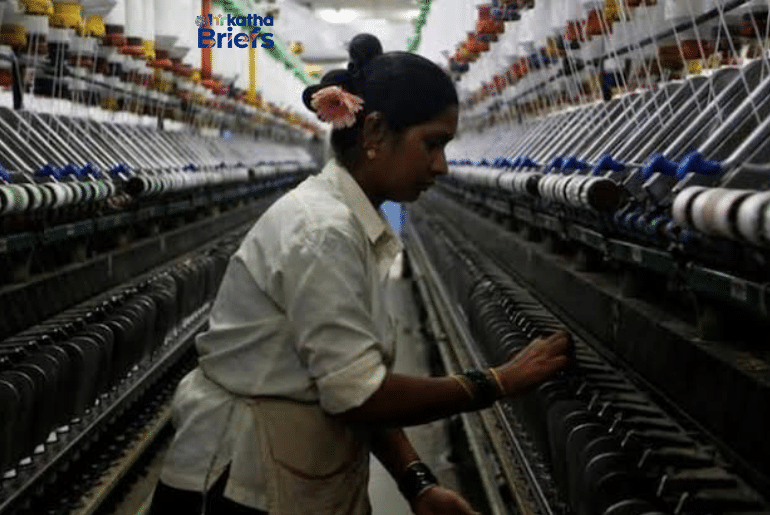
    India’s female workforce has nearly doubled in eight years, reaching 201 million in 2025 from 104 million in 2017-18. However, the increase has not translated into a corresponding rise in secure, well-paid employment, with a significant share of women entering agriculture, self-employment and unpaid family work, according to a new report by the Indian Council for Research on International Economic Relations (ICRIER).

    The report, titled The Participation Paradox: Women’s Work and Time-Use in India, 2017-18 to 2025, finds that while more women are now counted as employed, the nature of their work remains a concern. Much of the growth has been concentrated in employment categories associated with lower earnings and limited security, rather than regular salaried jobs.

    The female worker population ratio, which measures the proportion of working-age women who are employed, increased from 22 per cent in 2017-18 to 38 per cent in 2025. The improvement was largely driven by rural India, where the ratio rose from 23.7 per cent to 44.9 per cent. Urban women’s participation increased more gradually, from 18.2 per cent to 25.9 per cent.

    Agriculture continues to account for a substantial share of rural women’s employment. In 2025, 73.3 per cent of employed rural women worked in the primary sector, compared with 70.7 per cent in 2017-18. The number of women engaged in crop and animal production more than doubled during this period, rising from approximately 54 million to over 100 million.

    The expansion has also been driven by self-employment and unpaid family work. The number of rural women working as own-account workers increased from 13.9 million to 56 million, while unpaid family workers rose from 28.8 million to 49.3 million.

    By comparison, rural women in regular salaried employment increased from 7.9 million to 13.9 million. Their share of total female employment, however, declined from 10.5 per cent to 9.3 per cent. A similar trend was visible in urban areas, where the proportion of women in regular salaried jobs fell from 52.2 per cent to 50.9 per cent.

    The report also highlights the continuing disparity in women’s earnings. Rural women earned an average monthly wage of Rs 6,596 in 2025, against Rs 14,632 for men. This means women earned just 45 per cent of men’s average monthly wages, down from approximately 53 per cent in 2017-18.

    The difference in monthly earnings widened from around Rs 4,200 to more than Rs 8,000 over the period. In urban areas, women earned an average of Rs 15,646 per month, compared with Rs 25,565 for men.

    Working hours have also declined, despite the increase in women’s employment. Average weekly working hours for rural women fell from approximately 40 hours in 2017-18 to 34 hours in 2025. The corresponding decline for rural men was from 50 to 47 hours. The report suggests that the increase in women’s workforce participation has not necessarily resulted in more sustained or better-paid employment.

    Beyond employment opportunities and wages, the report identifies the unequal distribution of domestic and caregiving responsibilities as a major constraint on women’s ability to enter and remain in paid work.
    Around 60 per cent of women outside the labour force in 2025 cited childcare and personal household commitments as their primary reason for not working.

    The proportion was 59 per cent in 2021-22. In comparison, only around one per cent of men cited household responsibilities as the reason for staying out of the workforce.

    The findings say, women spent approximately 320 minutes a day on unpaid domestic activities, including cooking, cleaning and household maintenance, compared with 97 minutes for men. They also spent 144 minutes on unpaid care work involving children, elderly people and other household members, while men spent 81 minutes.

    The findings point to a gap between women’s increasing participation in economic activity and the time available to pursue paid employment. Even as more women enter the workforce, domestic and caregiving responsibilities continue to fall disproportionately on them.

    The ICRIER study draws on Periodic Labour Force Survey data from 2017-18 and 2025, alongside Time Use Survey data from 2019 and 2024.

    The findings underline that India’s female workforce growth cannot be measured by participation numbers alone. The next challenge is to improve access to regular employment, narrow wage disparities and address the unequal burden of unpaid care work.

    Without these changes, a larger female workforce may not necessarily translate into greater economic security or meaningful workplace participation for women.

    Culture diversity Employee Benefits employees employer Employment Engagement female workforce HR Human Resources Productivity Skill Development Workforce Workplace
    Share. LinkedIn Twitter Facebook WhatsApp
    HRK News Bureau

    Leave A Reply Cancel Reply

    Related Posts

    NTT DATA to expand Mangaluru workforce to 2,500 by 2027

    November 3, 2026

    Undue hardship: Drawing the line between care and capacity

    November 3, 2026

    Tusher Majumder to head HR at Saurashtra Cement  

    November 3, 2026

    How Kyndryl’s AIR strategy aims to close the skills gap before it emerges

    November 3, 2026
    zoha
    Editorial

    Hard work built India’s global reputation. Availability cannot define its future

    I must have been in school when I first heard the slogan. I was passing…

    The rift between the corner office and the floor below

    A general manager at a large Indian steel conglomerate recently described an exchange with his…

    EDITOR'S PICKS

    Undue hardship: Drawing the line between care and capacity

    November 3, 2026

    How Kyndryl’s AIR strategy aims to close the skills gap before it emerges

    November 3, 2026

    Hard work built India’s global reputation. Availability cannot define its future

    November 2, 2026

    POV: Is distributed talent becoming the new workforce strategy?

    November 2, 2026
    Latest Post

    NTT DATA to expand Mangaluru workforce to 2,500 by 2027

    Brief News November 3, 2026

    NTT DATA plans to nearly triple its workforce in Mangaluru, increasing its employee strength from…

    India’s female workforce doubles, but quality of employment remains a concern

    Brief News November 3, 2026

    India’s female workforce has nearly doubled in eight years, reaching 201 million in 2025 from…

    Undue hardship: Drawing the line between care and capacity

    HR Pops November 3, 2026

    What does ‘undue hardship’ mean? An employee requests an adjustment to continue working effectively. The…

    Tusher Majumder to head HR at Saurashtra Cement  

    Movement November 3, 2026

    Saurashtra Cement ropes in Tusher Majumder to head human resources. He brings to the table…

    Asia's No.1 HR Platform

    Facebook X (Twitter) Instagram LinkedIn WhatsApp Bluesky
    • Our Story
    • Partner with us
    • Career
    • Reach Us
    • Exclusive Features
    • Cover Story
    • Editorial
    • Dive into the Future of Work: Download HRForecast 2024 Now!
    © 2026 HRKatha.com
    • Disclaimer
    • Refunds & Cancellation Policy
    • Terms of Service

    Type above and press Enter to search. Press Esc to cancel.