



For decades, India’s talent map has been drawn around a handful of metropolitan cities. Mumbai, Delhi, Bengaluru and Hyderabad have traditionally been the preferred destinations for organisations looking to hire skilled professionals, build leadership pipelines and access specialised capabilities. But that map is gradually changing. As digital access improves, educational institutions expand their reach and businesses deepen their presence across the country, the talent conversation is moving beyond familiar urban centres.
Organisations are increasingly recognising that capable professionals are not necessarily concentrated in the cities where corporate offices are located. Tier-II and Tier-III cities are emerging as important talent markets, offering not just access to a wider workforce but also local market understanding, different perspectives and closer connections with customers.
What was once considered an alternative hiring strategy is becoming an important part of workforce planning. Yet expanding the geographical reach of recruitment is only the beginning. Organisations must also rethink how they identify talent in emerging markets, develop capabilities locally and ensure that employees have comparable opportunities for growth regardless of where they work.
So, is distributed talent becoming a strategic necessity rather than simply another recruitment option?
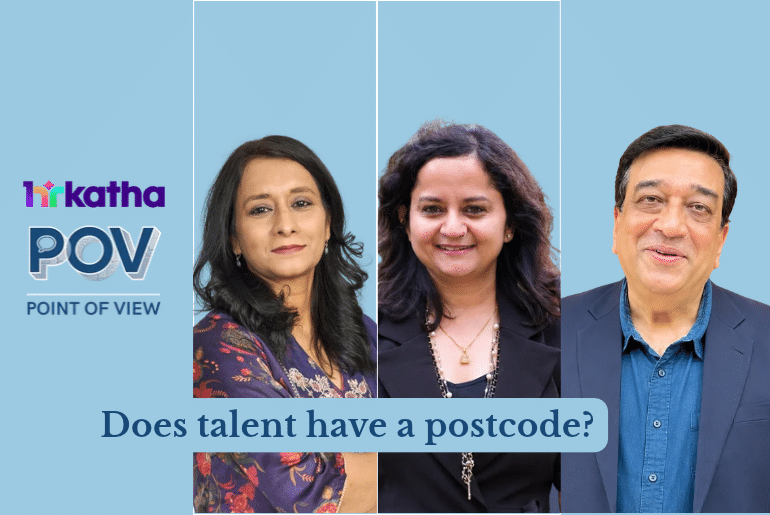
Saba Adil, chief human resources officer, Edelweiss Life
Yes, but only if employees in every location get equal access to growth.
Distributed talent is no longer just a response to hybrid working. It is becoming a strategic advantage for organisations willing to look beyond conventional talent markets. Tier-II and Tier-III cities are emerging as important talent hubs, offering skilled professionals, fresh perspectives and capabilities that extend beyond traditional metropolitan boundaries.

The opportunity lies in shifting from location-led hiring to skills-led workforce planning, where capability and potential matter more than a pin code. Expanding the geographical scope of hiring allows businesses to access a wider pool of professionals while bringing in perspectives that might otherwise remain underrepresented.
However, building a distributed workforce requires more than digital infrastructure. It calls for trust, outcome-based performance management and leadership that can create alignment across geographies. Organisations must move away from measuring productivity through physical presence and focus instead on the value employees deliver.
Equally important is ensuring that employees, irrespective of location, have equal access to leadership, learning, career progression and meaningful assignments. A distributed workforce cannot be sustainable if employees outside metropolitan centres feel disconnected or believe their growth is limited by where they are based. Organisations must also invest in local talent ecosystems through skilling partnerships, continuous learning and closer engagement with educational institutions.
The challenge is to preserve collaboration, culture and the human connections that drive innovation. Technology can enable communication, but leadership and organisational practices must ensure people continue to feel connected. The future of work will not be defined by where people work, but by the talent organisations recognise, the opportunities they create and the value people bring, wherever they are.
Takeaway: Geographical diversity must go beyond hiring from smaller cities. Its real measure is whether employees across locations enjoy equal access to opportunities, visibility and career progression.
Bhavya Mishra, chief human resources officer, Godrej Capital
Yes, because expansion in India means being present where your customers are.
Distributed talent is already central to how organisations must think about expansion in India. If products and services cater to customers across the country, businesses need to go deeper into those geographies. They must be present where their customers are, which makes hiring locally important.

Recognition of the talent available in Tier-II and Tier-III cities has grown considerably. There is substantial talent in these markets and scope to develop it further. The question is not metropolitan versus non-metropolitan talent. As an organisation, we want to expand the talent pool as much as possible and bring in talented, high-potential, driven and agile individuals, wherever they exist.
Reaching people in smaller geographies, however, requires additional effort. We have been hiring from metropolitan cities and established institutions for years and will continue to do so. But going deeper means HR teams and recruiters must visit these locations, recruit locally and understand how institutions in those markets operate. Instead of relying only on the top IIMs, for instance, we should explore other institutions and campuses that may offer equally promising talent.
Technology is making this easier. We are experimenting with AI-led interviewing and shortlisting, which can improve access to talent markets. Candidates in smaller cities have digital access, and organisations now have better tools to identify and assess them remotely. Nevertheless, the responsibility for building capabilities in these markets remains with employers.
People from local geographies also bring considerable value. They understand their markets and contribute diversity of thought shaped by different socioeconomic backgrounds, educational experiences and social environments. Wherever talent exists, organisations must make the effort to reach it, invest in it and help people take on larger responsibilities over time.
Takeaway: Expanding the talent pool requires organisations to broaden their recruitment approach, look beyond established campuses, use technology to improve access and invest in people who can grow with the business.
Atul Mathur, executive vice president – HR, Aditya Birla Capital
Yes, because skills matter more than geography.
Organisations need to focus on skills rather than geographical location. Any company operating across the length and breadth of the country will need a distributed workforce. Whether in FMCG, telecom or BFSI, customers are everywhere, and the workforce needs to reflect that spread.

With the proliferation of the internet and the availability of good academic institutions, organisations can now find strong talent in Tier-III and Tier-IV cities. More talent hubs are emerging in these locations rather than remaining concentrated in metropolitan centres. For businesses looking to serve customers in these markets, it makes sense to employ people who understand the location, its demography and its cultural nuances.
The assumption that the best talent necessarily comes from larger cities also needs to be challenged. Many bright individuals who clear competitive examinations such as the UPSC civil services examinations come from smaller towns, not just cities such as Mumbai or Bengaluru. Talent is widely distributed across the country.
Technology is another consideration. Organisations sometimes wonder whether professionals in smaller locations will be comfortable with digital ways of working, but people across these markets are increasingly tech-savvy and capable of adapting.
Ultimately, the skill component is what matters. Organisations need to assess whether they can find the capabilities they require in these locations rather than make assumptions based on geography. If those capabilities are available, hiring locally makes business sense. It allows companies to access talent closer to their customers while building a stronger and more geographically diverse workforce.
Takeaway: The business case for distributed talent extends beyond recruitment. Hiring locally combines relevant skills with an understanding of the markets organisations serve.