




Company: CyberEdge Technologies (fictitious), one of India’s fastest-growing cybersecurity firms.
Background:

CyberEdge Technologies has hit a wall it did not see coming.
Over the past year, the company has faced multiple high-impact client escalations, exposing cracks in its service delivery engine. Rapid expansion—both geographically and in terms of marquee global clients—has outpaced the maturity of its internal processes. What once felt like a strength—its scrappy, hustle-driven, founder-led culture—has become a liability. Delivery predictability has weakened. Governance varies wildly across regions. Teams operate in a perpetual cycle of firefighting.
The Situation:
Leadership recognises that relying on individual heroics is unsustainable. Client confidence, once built on quick responses and personal rapport, is now at risk. The Board has mandated a complete overhaul of the Global Delivery ecosystem.
At the centre of this transformation lies a defining choice: hiring a Head of Global Delivery who can steer CyberEdge into its next phase. The decision is far more strategic than operational. Choosing this leader will determine the organisation’s identity and operating DNA for the next decade.
The Candidates:
Two finalists remain in contention.
Vikram Negi is the internal delivery anchor who has been with CyberEdge for nine years. He is the person clients call at 11 p.m. when a patch crashes or a threat-hunting SLA drifts off track. His deep account-level knowledge, strong client trust, and people-first leadership style make him indispensable in moments of crisis.
Yet his strengths mirror his constraints. Vikram thrives in chaos but struggles to create the structures required to prevent chaos. He resists documentation, governance templates, and repeatable frameworks, relying instead on instinct, relationships, and hustle. When asked about process improvement, his answer is always the same: “We’ll figure it out when we get there.”
Alex Banerjee is a former delivery leader from a global technology company with global experience running sophisticated, scalable delivery engines. Alex is a systems thinker who builds governance, processes, and data-backed execution models. He represents the mature operational discipline CyberEdge now aspires to embed.
But his biggest strength becomes the source of concern: can someone shaped in a highly structured environment adapt to a fast-moving, ambiguous cybersecurity landscape where decisions shift by the hour? Will he understand that in cybersecurity, the rulebook gets rewritten every week?
The Dilemma:
CyberEdge’s dilemma is not merely a hiring question. It is a choice between continuity and transformation. Choosing Vikram reinforces the organisation’s present strengths—client trust, stability, continuity. Choosing Alex signals a shift towards long-term scalability, process maturity, and global standardisation.
Either choice inherently deprioritises the other, making this a defining strategic decision for the firm.
What’s really at stake:
This decision will define whether CyberEdge remains a founder-driven startup that hustles its way through crises, or evolves into an institution capable of predictable, scalable delivery. The company cannot be both. And the person chosen to lead Global Delivery will embody—and enforce—that choice.
What HR leaders said:
Rishav Dev, Former Head–TA, Century Plywoods
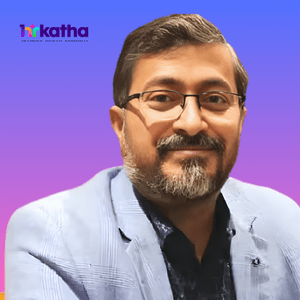
“The real issue isn’t choosing between two candidates—it’s clarifying what the organisation expects from the role. CyberEdge may not even need to hire externally unless expectations are accurately defined and gaps thoroughly analysed. Organisations often misdiagnose talent issues when the real challenge is unclear direction.
I also warn against mistaking loyalty or tenure for leadership ability. Long-serving employees can become overly protective of their turf and resist systemic change. The primary criterion should be leadership capability, not years in the system.
A great leader can organise, mobilise, and elevate the people around them—even if their technical expertise isn’t the strongest. Think of MS Dhoni’s leadership: the ability to put the team first, identify who can win the battle, and lead cohesively matters far more than individual brilliance.
Assess both candidates not just for skills but for leadership depth and softer capabilities. If neither fits the strategic requirement, be open to hiring a third leader from outside.”
Pallavi Poddar, CHRO, Fenesta Windows

“This is a classic inflection point where culture, capability, and scale collide. CyberEdge’s challenge is less about choosing between two individuals and more about acknowledging that the organisation has outgrown its informal ways of working.
Companies that grow rapidly often hit a stage where founder-driven agility must evolve into institution-driven discipline. This transition requires a leader who can carry the organisation and its people through that cultural shift.
Vikram represents the comfort of familiarity—relationships, trust, contextual memory. Yet these strengths often anchor organisations to the past. Crisis management is not a sustainable operating model. Leaders who thrive in chaos may unconsciously perpetuate it because it reinforces their relevance.
Regarding Alex, I recognise the risks of bringing a structured leader into a fast-paced environment. But every organisation seeking scale must eventually embrace process maturity, governance, and systemisation. The cultural friction Alex may face isn’t a disadvantage—it may be essential to disrupt old patterns.
The question isn’t whether Alex fits CyberEdge’s culture today, but whether CyberEdge is ready to evolve into the culture it needs tomorrow. Choose the candidate who aligns with the organisation’s future strategic identity, not who has served it well in the past. This is a cultural pivot point—one that requires courage and a long-term view.”
Manish Majumdar, head–HR, Centum Electronics
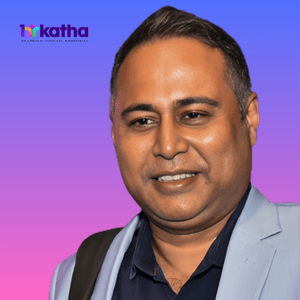
“The organisation must move away from a firefighting-dependent culture. Relying on one individual’s crisis-management skills is unsustainable, risky, and detrimental to long-term scale. Quantum growth requires systems and processes—not individual heroics.
However, there’s an important nuance. Whilst Alex appears the obvious choice, his success depends on whether he can build robust systems whilst the business continues operating in high-pressure mode. Building frameworks takes time, and during this transition, someone must hold the fort. If Vikram feels sidelined or demotivated, current stability may collapse.
Evaluate whether Vikram truly lacks the capability to build processes or has simply been constrained by lack of support. If he can develop this muscle with the right backing, give him a time-bound mandate. If not, onboard Alex with clear timelines, and arrange interim senior support to keep the business running whilst he sets up the delivery architecture.
There’s a third possibility: if neither candidate can both run current operations and build future systems, CyberEdge may need someone entirely new—someone capable of balancing both realities.
The central principle is non-negotiable: the company must shift to a systematic, process-driven operating model.”
Your Turn: What would you do? Share your responses in the comment box or share on LinkedIn with #HRKathaCaseInPoint