



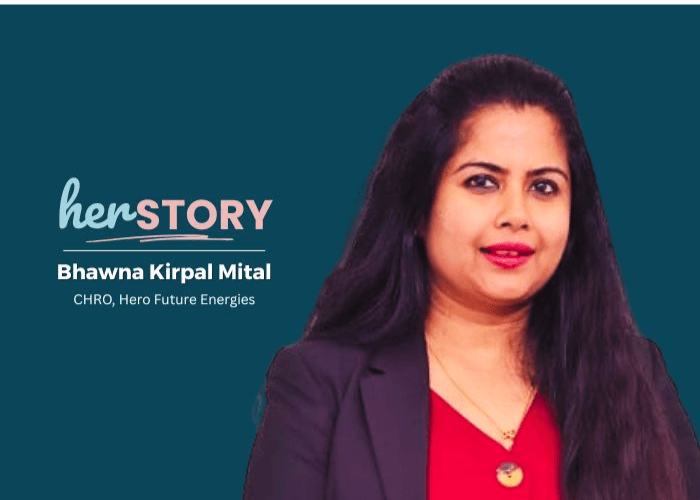
The accidental strategist
Bhawna Kirpal Mital did not set out to become a human resources leader. A science graduate with no obvious path to corporate leadership, she found her calling during an MBA summer internship at an engineering firm renowned for its people practices. Rotating through functions, she observed something that would define her career: HR’s fingerprints were everywhere—on culture, on brand, on business growth itself.
“The exposure to various functions gave me a glimpse into how HR plays an integral role in business growth,” she recalls. “I realised its significance in strengthening the culture of the organisation and creating value and brand.” That summer experience motivated her to choose HR. Two decades later, as chief human resources officer at Hero Future Energies—overseeing not just HR but IT, administration and corporate social responsibility—she has never looked back.

Between roles, Kirpal accumulated credentials that tell their own story: an MBA in HR, a certification in HR strategy from London Business School, an executive programme in business finance from IIM-Ahmedabad. Yet ask her what advice she would offer her younger self, and the answer is disarmingly simple: patience.
“What you get isn’t as important as who you become while waiting”
“It is important to be patient because patience pays,” she explains. “It shapes you as a human and as a professional.” Getting into the weeds early on, learning the details—these may lack glamour, but they compound over time. Steady persistence, she insists, brings the most meaningful outcomes.
The question that should never be asked
Gender bias announced itself early in Kirpal’s career, during an interview that would become a turning point. The interviewer asked about her family planning—a question, she notes, that her male counterparts neither faced then nor face now.
“While I don’t exactly recall how I responded at that moment, it definitely was a turning point,” she says. “It reinforced my conviction that, as an HR professional, I would never allow such questions to be asked in interviews.”
That moment crystallised a philosophy that would inform her approach to leadership. Her team calls her a taskmaster; she prefers to think of herself as someone who creates learning opportunities. “I personally believe leadership is not a constant state,” she observes. “It evolves with context, time and people.”
“For me, adaptability is the key to effective leadership”
It is an adaptability born of necessity and honed through experience. Kirpal credits much of her growth to a mentor who constantly pushed her beyond comfort zones, challenged her thinking, and encouraged her to build diverse skills. “I cannot thank my mentor enough,” she says simply.
Quick Fire Round
One thing you wish people understood about being a woman in HR leadership?
It’s not just about empathy but about balancing empathy with business impact.
Morning ritual that sets you up for success?
Time for myself and a good workout.
What energises you most about your work?
The new challenges it offers every day.
One skill you’re currently working on developing?
Deepening my involvement in social impact and CSR initiatives.
Best investment you’ve made in yourself?
Dedicating time to continuous learning and personal growth. On a personal level, raising my two daughters has been the most rewarding investment of all.
What must go, what must stay
If Bhawna Kirpal Mital had her way, one HR practice would be consigned to history: conventional and inflexible performance. “It is time for performance appraisals, in their rigid, traditional form, to retire,” she argues. What deserves elevation instead? “Employee well-being and holistic development, as they directly drive engagement and productivity.”
It is a perspective that reflects a broader shift in how progressive organisations think about human capital. In an economy where talent determines competitive advantage, leaders such as Bhawna Kirpal represent a quiet revolution—one that recognises HR not as an administrative function but as a strategic imperative.
When asked what she wishes people understood about being a woman in HR leadership, her answer cuts through stereotypes: it is not just about empathy but about balancing empathy with business impact. The caricature of the empathetic HR leader elides the harder truth—that effective people strategy requires commercial acumen as much as emotional intelligence.
“It’s not just about empathy but about balancing empathy with business impact”
Outside the office, Mital is a marathon runner and mother of two daughters. Her mornings begin with time for herself and a workout—a ritual that sets her up for the day’s challenges. Asked about her best investment, she offers two answers. Professionally: dedicating time to continuous learning and personal growth. Personally: raising her daughters. “It has been the most rewarding investment of all.”
What energises her most about her work? “The new challenges it offers every day,” says Mital. Currently, she is deepening her involvement in social impact and CSR initiatives, expanding her remit beyond traditional HR boundaries.
In a corporate landscape where human capital increasingly determines success, Bhawna Kirpal Mital’s trajectory—from that summer internship to the C-suite—offers a blueprint for strategic opportunism married to patient persistence. One summer, one difficult question, one marathon at a time.