



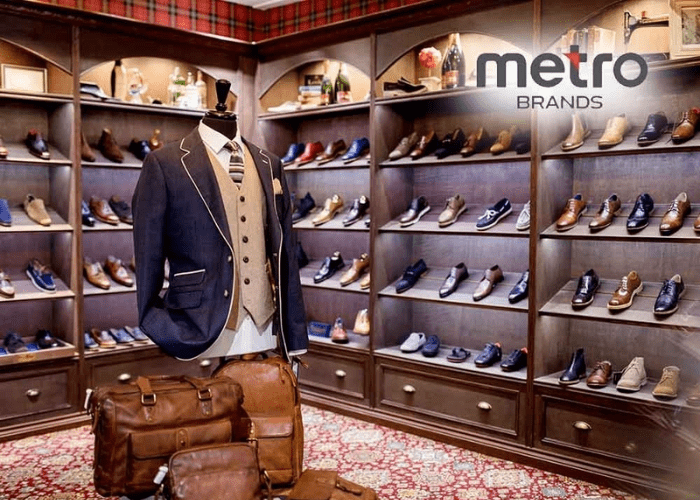
On a weekday afternoon in a Metro Shoes outlet on a busy Mumbai high street, a sales associate kneels to slip a leather brogue onto a customer’s foot. He has been on his feet since morning, will remain so until closing, and earns most of his income from what he sells that day. For Metro Brands, this routine interaction sits at the centre of an increasingly difficult problem.
The company plans to open 200 to 250 stores each year, adding to a network that has already crossed 1,000 outlets across more than 200 Indian cities. The arithmetic is straightforward: more stores require more frontline staff. The execution is not.

“We have the number of employees per store mapped to business volumes,” says Nandini Mehta, the company’s chief human resources officer. Workforce planning, in other words, is not the constraint. Hiring people willing to take up those roles is.
A job few want
India’s organised footwear market is growing steadily. Metro Brands, which operates labels such as Metro Shoes, Mochi, and Walkway, reported revenues of Rs 2,636 crore in the financial year ending March 2025. Expansion looks justified. The constraint lies on the shop floor.
“In retail, scale is easy to measure in stores—but true scale is when your people grow at the same pace as your business. Our focus is not just hiring for today, but creating a pipeline that is ready for the stores we haven’t even opened yet.”
Nandini Mehta, CHRO, Metro Brands
“Not too many people want to work in the front end,” Mehta says. The reasons are familiar to retail, but sharper in footwear. Shifts stretch nine to ten hours, mostly standing, often in tight high-street stores with limited back-of-house support. The work is physically demanding and socially undervalued.
There is also a cultural layer. Selling shoes often involves kneeling to assist customers. “People don’t want to touch the feet of customers,” Mehta says. In a society where such gestures carry meaning, the stigma is hard to erase.
Incentives that cut both ways
Metro Brands relies on a commission-heavy pay structure. “The more you sell, the more you earn,” Mehta says. For experienced staff, the model works. For new hires, it can misfire.
“If candidates join during lean months, they don’t earn what they expected,” she admits. Early disappointment leads to early exits, feeding a cycle of churn.
The structure also shapes behaviour inside stores. “Tenured employees make new employees do a lot of work, so they earn lesser commission,” Mehta says. Informal hierarchies emerge, with experienced staff capturing higher-value sales while newer recruits handle support tasks.
Commission systems reward performance. They can also widen gaps on the shop floor. The company says it is introducing mentoring frameworks to nudge experienced staff towards coaching rather than gatekeeping.
Attrition as a constant
Frontline attrition stands at roughly 50 per cent. The figure is not unusual for Indian retail, but it carries a cost. Recruitment and training cycles repeat continuously, draining managerial attention.
The problem is compounded by variety. Metro operates ten brands with different formats and customer segments. In legacy stores, omnichannel integration has increased workloads without a matching rise in staffing. In newer locations, the issue is simpler: finding people willing to join.
Building a broader funnel
To widen its hiring base, Metro Brands has turned to the government’s apprenticeship programme. “We hire students for 18 months and treat them as trainees,” Mehta says. The aim is to let recruits experience the realities of the job before committing long term.
The company says conversion rates from apprentices are higher than from direct hires, though it does not disclose figures. The logic is straightforward: familiarity reduces the expectation gap that drives early exits.
Alongside this, the company has introduced weekend part-time roles and partnered with NGOs and colleges to widen its pipeline. Mehta describes this as a “multi-layered hiring ecosystem”. It is also a recognition that no single channel can meet the demands of rapid expansion.
Retention beyond pay
Efforts to retain staff extend beyond compensation. Stores celebrate festivals, and recognition programmes span annual and quarterly awards, with an instant-recognition scheme in the works.
Such measures may improve engagement at the margins. A churn rate of 50 per cent suggests deeper constraints: long hours, limited flexibility, and the social perception of frontline work. Mehta points to ongoing efforts to improve working conditions and smooth income volatility during lean periods.
Betting on internal supply
On leadership, Metro Brands is building from within. The company recruited 18 management trainees last year and plans to add 150 this year. Combined with an internal pool of 200 to 300 potential leaders, this creates a pipeline for future expansion.
The approach reverses the usual sequence. “We train first and then assess,” Mehta says. At the frontline, career pathways are being formalised so roles such as stock handlers can move into sales.
The intent is to reduce dependence on external hiring. Whether this internal pipeline keeps pace with store expansion remains an open question.
Listening, and its limits
Maintaining culture across more than 1,000 stores is difficult. Metro Brands relies on leadership visits, internal communication, and quarterly town halls where, Mehta says, “our CEO himself answers” employee questions.
Yet large-scale employee surveys at store level are not in place. Without systematic feedback, it is harder to gauge whether the company is hearing its frontline or mainly speaking to it.
The constraint ahead
Mehta speaks of making the organisation “AI ready,” though details remain limited. A more immediate issue may be generational. “Gen Z is very different and they’re being managed by baby boomers,” she notes.
Metro Brands has built structured hiring channels, internal pipelines, and engagement mechanisms that are more developed than most in Indian retail. But the underlying tension remains. Retail jobs are demanding and difficult to make aspirational.
The company can open 250 stores a year. The harder question is whether it can keep finding people willing to stand behind the counter and sell the shoes.