


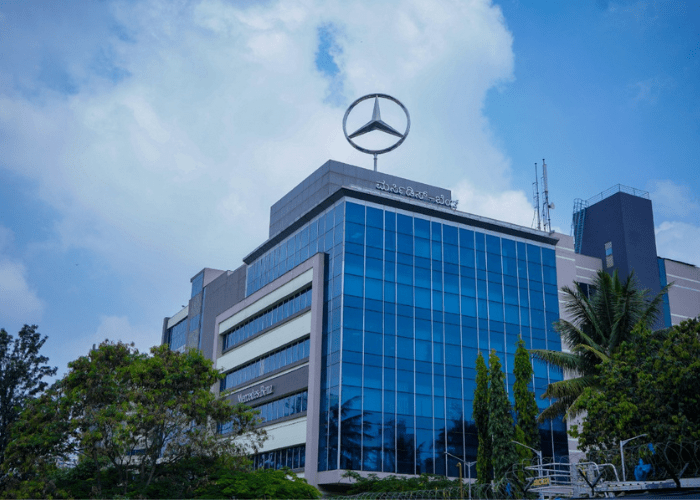
The email announcing the departmental name change landed in inboxes at Mercedes-Benz Research and Development India (MBRDI) without fanfare. Human resources would henceforth be called ‘human relations’. To most employees, it probably seemed like another piece of corporate rebranding—the sort of linguistic tinkering that consultants love and workers ignore.
But Mahesh Medhekar, vice-president, human relations, MBRDI, insists the change runs deeper than wordplay. “We believe that culture begins with the relationships we build,” he explains. In Bangalore’s competitive technology landscape, where engineers designing autonomous vehicles and electric mobility systems can choose between dozens of employers, MBRDI is betting that this semantic shift signals something more substantial: a move away from treating people as resources to be optimised towards building genuine human connections.
What’s in a name?
The terminology matters because it reflects a broader tension in how technology companies manage talent. Traditional HR departments focus on processes: recruitment pipelines, performance metrics, compliance frameworks. They treat employees as assets to be deployed efficiently. ‘Human relations’, by contrast, suggests something messier and more personal—the idea that workplace success depends on emotional intelligence as much as technical competence.
“We believe that culture begins with the relationships we build.”
Mahesh Medhekar, vice-president-human relations, MBRDI

This philosophy shapes everything at MBRDI, from how new hires are onboarded to how senior leaders are evaluated. The company has essentially rebuilt its people management around three principles that sound almost revolutionary in today’s metrics-obsessed corporate world: unconditional autonomy, proactive inclusion, and holistic balance.
The trust experiment
Take autonomy. Most organisations treat it as something employees must earn through demonstrated reliability. MBRDI flips this logic: trust comes first, accountability follows. Employees don’t need approval for time off—they simply inform colleagues and manage their responsibilities. Attendance isn’t monitored; managers inspire presence rather than mandate it.
The approach extends to learning and development. Whilst central curricula exist, departments can tailor technical training to their specific needs. The hybrid work model operates without enforcement mechanisms, relying on what the company calls “self-regulation.” Such radical trust might seem naive in a precision engineering environment where small errors can cascade into major problems.
Yet MBRDI claims this approach builds stronger accountability than traditional oversight. The company points to improved employee engagement, though it hasn’t published comparative data against more conventional management methods. The real test may come when economic pressures intensify—will unconditional trust survive market downturns?
Beyond diversity metrics
The “relations” philosophy becomes more complex when applied to inclusion. Rather than focusing solely on demographic diversity, MBRDI claims to address what Medhekar calls ‘cognitive diversity’—the idea that people think differently regardless of their background. Managers receive training in “inclusive behaviours,” whilst the company’s ‘Leader as a Coach’ programme encourages supervisors to facilitate dialogue rather than issue commands.
Employee Resource Groups give voice to different communities, whilst programmes such as ‘Women in Innovation’ provide targeted support at various career stages. More unusually, MBRDI practices reverse mentoring, where senior executives learn from younger colleagues about generative AI and analytics. The company argues this closes generational gaps, though sceptics might question whether such role reversals undermine necessary hierarchies.
The inclusion agenda extends to parents, with crèche facilities and policies designed to ensure that “parenting doesn’t come at the cost of ambition,” as Medhekar puts it. Whether such benefits translate into genuine career advancement remains unclear, given persistent challenges faced by working mothers in demanding technical roles.
The measurement problem
The challenge with any relations-based approach is quantification. How do you measure trust or emotional intelligence? MBRDI conducts regular ‘pulse checks’ and focus groups to gauge sentiment, using what it calls the ‘Impulse feedback mechanism’ for 360-degree leadership insights. The company emphasises Individual Development Plans that integrate learning with real-world applications, moving beyond what Medhekar describes as ‘ticking off learning modules’.
But concrete metrics remain elusive. MBRDI points to retention rates and engagement scores without publishing detailed industry comparisons. The company’s emphasis on preparing for the automotive sector’s shift from combustion engines to electric mobility suggests practical urgency behind the relationship-building rhetoric, though whether empathy translates into innovation capability remains unproven.
The generational calculation
The naming change also reflects demographic realities. As Generation Z becomes the largest workforce segment, MBRDI’s strategy appears calibrated for employees who prioritise flexibility, meaningful work, and sense of purpose over traditional corporate structures. The company’s ‘speak-up culture’ and emphasis on relationship-building align with younger workers’ expectations for transparency and authentic leadership.
This generational shift may explain why MBRDI believes the ‘human relations’ approach will prove sustainable. Younger engineers, particularly in India’s competitive technology sector, have multiple employment options. They can afford to be selective about workplace culture, making relationship-quality a differentiating factor for employers.
Yet the approach faces inevitable tests. Can radical trust survive economic downturns? Will shareholders continue supporting empathy-driven management if quarterly results disappoint? The automotive industry’s transition to electric vehicles creates pressure for rapid skill development—will relationship-building deliver the technical capabilities needed to compete with Tesla and Chinese manufacturers?
Beyond the rebrand
MBRDI’s experiment in semantic transformation reflects a broader question facing technology companies: as automation handles routine tasks, what role remains for human management? The company’s answer—that relationships matter more than processes—represents a deliberate counter-narrative to Silicon Valley’s efficiency obsession.
Whether this philosophy delivers competitive advantage remains unclear. The approach may work in India’s talent-scarce technology sector, where skilled engineers command premium treatment. Its effectiveness in different markets or economic conditions is untested. The real validation will come not from employee satisfaction surveys but from business results: can human relations deliver the innovation and productivity that shareholders demand?
What’s certain is that MBRDI has committed fully to its linguistic transformation. By renaming human resources as human relations, the company has created accountability for a different kind of management—one that treats workplace culture with the same precision that Mercedes-Benz applies to engineering vehicles.
The semantic shift may seem small, but in corporate environments where language shapes behaviour, words matter. Whether ‘human relations’ proves more than clever branding will depend on MBRDI’s ability to demonstrate that empathy and trust can deliver measurable business value in an industry built on precision and performance.
3 Comments
Great move by Mercedes-Benz India R&D! Renaming the HR department to ‘Human Relations’ reflects a forward-thinking approach, emphasizing people-centric connections over traditional processes. This innovative shift fosters a culture of empathy and collaboration, aligning perfectly with modern workplace values. Kudos for leading the way! On my personal capacity – I would like to congratulate the think tank behind this innovation ?
At the outset I would like to congratulate the MBRDI leadership team for this revolutionary cultural change. Human resources have not been given due recognition in the corporate world and outside. When you label something as a resource it’s deemed to be exploited. Having redefined the human resources function is a paradigm shift which will keep away the thought of exploitation largely.
There will be challenges faced in the process of embedding this concept in your organization and, with your leadership and culture, it should not be very difficult.
All the best.
Lived every word of this thought leadership in MBRDI while my 4 yeras of journey. One of the best HR leadership country has in Mahesh.