


Close Menu
    Facebook X (Twitter) Instagram
    • Our Story
    • Partner with us
    • Reach Us
    • Career
    Subscribe Newsletter
    HR KathaHR Katha
    • Exclusive
      • Exclusive Features
      • Perspectives
      • Friday Features
      • herSTORY
      • Rising Stars
      • Case-In-Point
      • Point Of View
      • Research
      • HR Pops
      • Dialogue
      • Movement
      • Profile
      • Beyond Work
      • By Invitation
    • Brief News
      • Global HR News
      • Compensation & Benefits
      • Diversity
      • Events
      • Gen Y
      • Hiring & Firing
      • HR & Labour Laws
      • Learning & Development
      • Merger & Acquisition
      • Performance Management & Productivity
      • Talent Management
      • Tools & Technology
      • Work-Life Balance
    • Special
      • Editorial
      • HR Forecast 2026
      • Cover Story
      • HR Forecast 2024
      • HR Forecast 2023
      • HR Forecast 2022
      • HR Forecast 2021
      • HR Forecast 2020
      • HR Forecast 2019
      • New Age Learning
      • Coaching and Training
      • Learn-Engage-Transform
    • Studio
      • The CHRO Playbook
      • Quick HR Insights
      • The Corner Office
    • Reports
      • Whitepaper
        • HR Forecast 2024 e-mag
        • Future-proofing Manufacturing Through Digital Transformation
        • Employee Healthcare & Wellness Benefits: A Guide for Indian MSMEs
        • Build a Future Ready Organisation For The Road Ahead
        • Employee Experience Strategy
        • HRKatha 2019 Forecast
        • Decoding and Driving Employee Engagement
        • One Platform, Infinite Possibilities
      • Survey Reports
        • Happiness at Work
        • Upskilling for Jobs of the Future
        • The Labour Code 2020
    • Forums
      • HRKatha Inner Circle
      • HRKatha Futurecast
      • Leadership Summit 2025
      • Rising Star Leadership Awards
      • HRKatha Futurecast 2025
      • Automation.NXT
      • The Great HR Debate
    WhatsApp LinkedIn X (Twitter) Facebook Instagram
    HR KathaHR Katha
    Home»Exclusive Features»The quiet signals that shape workplace culture
    Exclusive Features

    The quiet signals that shape workplace culture

    How the smallest workplace interactions determine who feels heard—and who doesn’t
    mmBy Radhika Sharma | HRKathaAugust 29, 20255 Mins Read60747 Views
    Share LinkedIn Twitter Facebook WhatsApp
    Micro moments
    Share
    LinkedIn Twitter Facebook WhatsApp

    Corporate leaders often talk about culture as if it were written in stone—etched into mission statements, reinforced in glossy handbooks, and proclaimed in annual town halls. In truth, culture is more fragile and more intimate. It forms in the smallest, barely noticed moments: a pause that allows someone to finish a thought, a nod that signals acknowledgment, or an interruption that silences a promising idea. These fleeting cues decide whether people walk out of a meeting feeling valued or diminished.

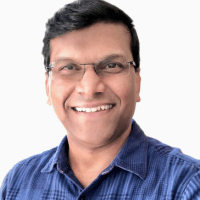
    Ravi Kumar, CHRO, Puravankara, calls them “small cues” that define interactions. “It could be a pause, it could be a word somewhere,” he explains. Yet, not everyone is skilled at decoding them. Emotional intelligence is unevenly spread; many professionals focus on the task, ignoring the undercurrents of feeling that shape how people respond. 

    When interruptions mean more than words

    Interruptions illustrate the dilemma. In many Western workplaces, to interrupt is to undermine. In India, Kumar observes, it can signal passion: “When we are emotional, we tend to cut off somebody and start talking because we are keen on putting our point forward.” The problem is not the act itself but its intent and timing. An interruption that sparks fresh energy may lift a discussion; one that derails someone’s train of thought can crush it.

    “It could be a pause, it could be a word somewhere. Yet, not everyone is skilled at decoding them. Emotional intelligence is unevenly spread; many professionals focus on the task, ignoring the undercurrents of feeling that shape how people respond.” 

    Ravi Kumar, CHRO, Puravankara
    This is where the chairperson’s role becomes decisive. The quietest employees often carry the sharpest insights, but they must be coaxed in. A simple intervention—”Let’s hear from her first”—creates space for inclusion. Kumar argues that such nudges are best delivered in the moment rather than later, before a discussion is lost to dominance. Hybrid meetings may even make this easier: features like muting or digital hand-raising allow moderators to restore balance.

    The louder, the better? A cultural detour

    If Kumar is focused on the present, Emmanuel David, a veteran HR leader, places today’s problems in a longer arc. For decades, workplaces were built on hierarchy: capital sat at the top, authority decided, listening was optional. Liberalisation and the information age began to flatten that pyramid. Knowledge now resides across the organisation, and decisions often rely on the insights of those closest to the customer or the problem.

    “For decades, workplaces were built on hierarchy: capital sat at the top, authority decided, listening was optional. Liberalisation and the information age began to flatten that pyramid. Knowledge now resides across the organisation, and decisions often rely on the insights of those closest to the customer or the problem.” 

    Emmanuel David, senior HR leader

    But even as work changed, listening habits lagged behind. David recalls the 1970s and 1980s, when group discussions became the rage in recruitment. What was rewarded was not depth but decibels: “How loudly you could speak, how sarcastic you could be, how well you could put someone else down.” Television debates only hardened the pattern. Noise came to be mistaken for influence; dominance for credibility. The skill of listening—pausing, absorbing, and letting another finish—became undervalued.
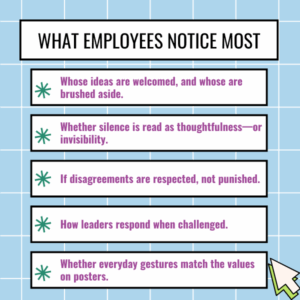
    The costs of this neglect showed up later in engagement surveys and exit interviews. Employees described being dismissed or unheard, often citing subtle behaviours in meetings that compounded into deeper frustrations. In one firm David advised, post-resignation interviews—conducted six months after employees had left—uncovered toxicity and corruption that standard processes had missed. Listening, it turned out, was not a soft skill but a diagnostic tool.

    Turning conflict into civility

    David also points to examples where structure made listening possible. In the 1980s, tense union negotiations were spiralling into shouting matches. The fix was deceptively simple: both sides agreed to rules—no yelling, no personal abuse, no interruptions—with token fines of one rupee for breaches. The small penalty created accountability, and over time the culture of civility filtered into management meetings too.

    Elsewhere, leadership finesse achieved the same effect. David recalls a CXO interrupted by a deputy during a meeting. Instead of reacting defensively, the leader replied: “That’s fantastic, I never thought of it. Thanks so much. We will come to that later.” The disagreement was neither ignored nor allowed to derail the agenda. Respect was preserved, and the discussion moved forward.
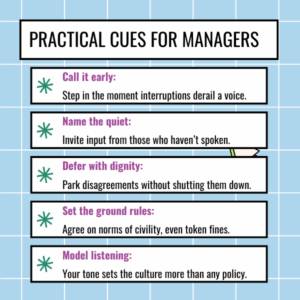
    Such moments reveal that listening is not passive. It requires active norms, subtle choreography and, above all, grace.

    The real power lies in the margins

    Technology, with its hand-raising and chat features, offers tools to distribute airtime. Yet even in virtual rooms, the responsibility lies with managers to notice who has spoken, who has been cut off, and who is still waiting. Micro-moments accumulate: each nod of acknowledgment, each redirection of airtime, each respectful deferral. Together, they form the lived culture of an organisation.

    The lesson is straightforward but often ignored. Culture is not enshrined in policies; it is enacted in practice. It is not the rousing speeches but the pauses between words that tell employees whether they belong. As Kumar puts it, inclusivity is not created by strategy documents but by the simple act of saying, “Let us hear that person first.”

    The future of work will belong not to the loudest voices, but to those organisations able to draw wisdom from the quietest ones. In those fleeting, everyday moments—the nods, the pauses, the small courtesies—lies the real architecture of trust.

    Culture diversity Employee Employee Benefits Employee Engagement employer Employment Engagement Human Resources LEAD Micro moments Recruitment Skill Development Training Workforce Workplace
    Share. LinkedIn Twitter Facebook WhatsApp
    mm
    Radhika Sharma | HRKatha

    Radhika is a commerce graduate with a curious mind and an adaptable spirit. A quick learner by nature, she thrives on exploring new ideas and embracing challenges. When she’s not chasing the latest news or trends, you’ll likely find her lost in a book or discovering a new favourite at her go-to Asian eatery. She also have a soft spot for Asian dramas—they’re her perfect escape after a busy day.

    Leave A Reply Cancel Reply

    Related Posts

    Apple cuts hardware Programme manager roles amid management restructuring

    October 28, 2026

    Škoda Auto’s LGBTQ+ employee network marks 5 years amid wider inclusion efforts

    October 28, 2026

    HSBC Cuts 4,500 roles in six months as workforce falls to 2,04,330

    October 28, 2026

    Tamara Leisure Experiences trains next generation of hoteliers through immersive learning programmes

    October 28, 2026
    zoha
    Editorial

    The rift between the corner office and the floor below

    A general manager at a large Indian steel conglomerate recently described an exchange with his…

    Can India become a skills-first economy while remaining a collar-conscious society?

    Consider two employees beginning their careers. One joins a technology company as a junior analyst.…

    EDITOR'S PICKS

    HR Perspectives by Arindam Chakraborty: “Succession planning must begin two to three levels below the target role”

    October 28, 2026

    26% frontline employees report negative transformation experiences, nearly 3x the senior management rate

    October 28, 2026

    Microaffirmations: The small gestures that build big trust

    October 27, 2026

    For TELUS Digital, the diversity question is no longer how many but where

    October 27, 2026
    Latest Post

    Apple cuts hardware Programme manager roles amid management restructuring

    Brief News October 28, 2026

    Apple has reportedly laid off some hardware programme managers as it moves to reduce management…

    Škoda Auto’s LGBTQ+ employee network marks 5 years amid wider inclusion efforts

    Brief News October 28, 2026

    Škoda Auto’s LGBTQ+ employee network, Škoda Proud, has completed five years, with the automaker receiving…

    HSBC Cuts 4,500 roles in six months as workforce falls to 2,04,330

    Brief News October 28, 2026

    HSBC’s global workforce declined by around 4,500 full-time equivalent employees over the six months to…

    Tamara Leisure Experiences trains next generation of hoteliers through immersive learning programmes

    Brief News October 28, 2026

    Tamara Leisure Experiences (TLE) has concluded the fourth cohort of its Responsible Hoteliers of Tomorrow…

    Asia's No.1 HR Platform

    Facebook X (Twitter) Instagram LinkedIn WhatsApp Bluesky
    • Our Story
    • Partner with us
    • Career
    • Reach Us
    • Exclusive Features
    • Cover Story
    • Editorial
    • Dive into the Future of Work: Download HRForecast 2024 Now!
    © 2026 HRKatha.com
    • Disclaimer
    • Refunds & Cancellation Policy
    • Terms of Service

    Type above and press Enter to search. Press Esc to cancel.