

Close Menu
    Facebook X (Twitter) Instagram
    • Our Story
    • Partner with us
    • Reach Us
    • Career
    Subscribe Newsletter
    HR KathaHR Katha
    • Exclusive
      • Exclusive Features
      • Perspectives
      • Friday Features
      • herSTORY
      • Case-In-Point
      • Point Of View
      • Research
      • HR Pops
      • Dialogue
      • Movement
      • Profile
      • Beyond Work
      • Rising Star
      • By Invitation
    • News
      • Global HR News
      • Compensation & Benefits
      • Diversity
      • Events
      • Gen Y
      • Hiring & Firing
      • HR & Labour Laws
      • Learning & Development
      • Merger & Acquisition
      • Performance Management & Productivity
      • Talent Management
      • Tools & Technology
      • Work-Life Balance
    • Special
      • HR Forecast 2026
      • Cover Story
      • Editorial
      • HR Forecast 2024
      • HR Forecast 2023
      • HR Forecast 2022
      • HR Forecast 2021
      • HR Forecast 2020
      • HR Forecast 2019
      • New Age Learning
      • Coaching and Training
      • Learn-Engage-Transform
    • Magazine
    • Reports
      • Whitepaper
        • HR Forecast 2024 e-mag
        • Future-proofing Manufacturing Through Digital Transformation
        • Employee Healthcare & Wellness Benefits: A Guide for Indian MSMEs
        • Build a Future Ready Organisation For The Road Ahead
        • Employee Experience Strategy
        • HRKatha 2019 Forecast
        • Decoding and Driving Employee Engagement
        • One Platform, Infinite Possibilities
      • Survey Reports
        • Happiness at Work
        • Upskilling for Jobs of the Future
        • The Labour Code 2020
    • Conferences
      • Leadership Summit 2025
      • Rising Star Leadership Awards
      • HRKatha Futurecast
      • Automation.NXT
      • The Great HR Debate
    • HR Jobs
    WhatsApp LinkedIn X (Twitter) Facebook Instagram
    HR KathaHR Katha
    Home»Exclusive Features»Point Of View»POV: Is the “open door policy” actually effective—or just symbolic?
    Point Of View

    POV: Is the “open door policy” actually effective—or just symbolic?

    If employees don’t feel safe enough to walk in, does an open door really mean anything?
    mmBy Radhika Sharma | HRKathaMarch 23, 2026Updated:March 23, 20264 Mins Read768 Views
    Share LinkedIn Twitter Facebook WhatsApp
    open door
    Share
    LinkedIn Twitter Facebook WhatsApp

    There’s a moment most employees have experienced at least once—the hesitation outside a cabin door. You pause, replay what you want to say, wonder if this is the right time, or even the right issue to raise.

    The door may be open. Walking in is the harder part.

    zoha

    In many organisations, the open door policy exists as a quiet reassurance—an unspoken promise that conversations are welcome, hierarchies are softer and voices will be heard. Yet whether that promise translates into action depends on something far less visible than the door itself.

    It depends on what employees believe will happen once they step inside.


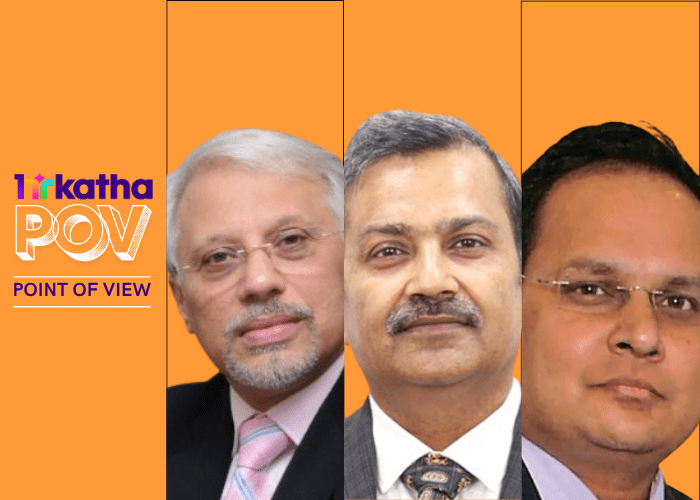
    Adil Malia, CEO, The Firm

    It’s symbolic—unless leaders embody openness in spirit.

    Policies don’t create engagement—leaders do.

    You can design the most thoughtfully worded handbook, include every clause about transparency and accessibility, and still fail to build trust. The open door policy is a classic example. On paper, it signals inclusivity. In practice, its effectiveness depends entirely on the mindset of the leader behind that door.

    zoha

    If I am resistant to feedback, uncomfortable with dissent or dismissive of ideas, the open door becomes symbolic. Employees are perceptive—they quickly sense whether the invitation is genuine or performative. When authenticity is missing, the policy starts to feel hollow.

    From an HR lens, engagement is deeply relational. It is built in everyday moments—how I respond when challenged, how I acknowledge contributions and how willing I am to listen without defensiveness.

    I’ve seen organisations claim openness while engagement surveys reflect the opposite—disengagement and lack of trust. That’s because psychological safety cannot be written into policy; it has to be lived.

    If leaders bring humility, empathy and openness to dialogue, they create far stronger connections than any policy can.

    Takeaway: Policies signal intent; leaders determine whether that intent feels real.


    Venkattesh R, former president, DCB Bank

    It works—but only when reinforced through consistent behaviour.

    Culture is shaped by the tone from the top. An open door policy is no exception—it is only as effective as the behaviour that supports it.

    Venkattesh R

    In some organisations, doors are technically open, yet employees hesitate. That hesitation reveals a gap between stated values and lived experience.

    In others, leaders may not literally keep doors open, but they make themselves available when it matters. That creates far more trust.

    During a scaling project I was part of, senior leaders stayed accessible—even at odd hours. That accessibility created a sense of shared purpose. What could have been a routine execution exercise became a collective effort because people felt supported.

    I’ve also seen leaders actively seek feedback from employees on the ground. That openness improves decision-making by bringing in unfiltered perspectives.

    One initiative I introduced—a platform where employees could ask uncensored questions to leadership—became highly effective. It signalled that every question mattered.

    An open door policy has value, but it is only one part of a larger system of transparency built through consistent action.

    Takeaway: Access matters, but consistency is what builds trust.


    Rajesh Jain, chief human resources officer, Welspun

    It’s a right—not a privilege—and leaders must demonstrate intent.

    Access to leadership is not a privilege—it is an employee’s right.

    But simply declaring an open door policy does not make people comfortable. Comfort comes from visible intent—and from how leaders respond when someone actually reaches out.

    In my case, I try to make that intent obvious. Sometimes it’s as simple as literally keeping the door open. But more importantly, it’s about responsiveness. If someone reaches out and I’m busy, I make it a point to follow up. Even doing this a few times builds trust.

    Let’s be honest—most people are not naturally comfortable walking into a senior leader’s office. There is hesitation, insecurity and sometimes fear. That’s why the onus is on leaders to reduce that barrier.

    For HR leaders especially, this is non-negotiable. These conversations are how we understand what’s really happening on the ground—whether processes work, whether policies are followed and whether people are treated fairly.

    Ultimately, an open door policy is not just about access. It is about assurance.

    Takeaway: Openness becomes real only when leaders consistently act on it.

    Culture diversity Employee Employee Benefits Employee Engagement employees employer Employment Engagement Human Resources LEAD open door Productivity Recruitment Skill Development Training Workforce Workplace
    Share. LinkedIn Twitter Facebook WhatsApp
    mm
    Radhika Sharma | HRKatha

    Radhika is a commerce graduate with a curious mind and an adaptable spirit. A quick learner by nature, she thrives on exploring new ideas and embracing challenges. When she’s not chasing the latest news or trends, you’ll likely find her lost in a book or discovering a new favourite at her go-to Asian eatery. She also have a soft spot for Asian dramas—they’re her perfect escape after a busy day.

    Leave A Reply Cancel Reply

    Related Posts

    HDFC Bank stock slides as mis-selling probe triggers firings

    March 23, 2026

    Meta faces lawsuit alleging age bias in layoffs; senior leader claims losses

    March 23, 2026

    BlackRock appoints Dipeeka Walvatkar Pendurkar as VP–HR, employee relations (APAC)

    March 23, 2026

    Flipkart rewards staff with bonus

    March 23, 2026
    Editorial

    Companies say retention matters. Their budgets say otherwise

    Every company declares that retaining talent is a strategic priority. Annual reports emphasise culture and…

    The permanent contractor: Why we should stop pretending full-time jobs are stable

    Everyone is becoming a contractor, even with “full-time” titles. The modern employment system offers the…

    EDITOR'S PICKS

    POV: Is the “open door policy” actually effective—or just symbolic?

    March 23, 2026

    Companies say retention matters. Their budgets say otherwise

    March 22, 2026

    The small work habits that quietly hold your day together

    March 20, 2026

    HRForecast 2026: Why agility is killing the five-year plan – Indrani Chatterjee, Group CHRO, Allcargo Group

    March 19, 2026
    Latest Post

    HDFC Bank stock slides as mis-selling probe triggers firings

    News March 23, 2026

    Shares of HDFC Bank dropped sharply on Monday, 23 March, 2026, falling nearly 3 per…

    Meta faces lawsuit alleging age bias in layoffs; senior leader claims losses

    News March 23, 2026

    Meta Platforms is facing a legal challenge over its 2025 layoffs, with allegations that older…

    BlackRock appoints Dipeeka Walvatkar Pendurkar as VP–HR, employee relations (APAC)

    Movement March 23, 2026

    BlackRock has appointed Dipeeka Walvatkar Pendurkar as vice president – human resources, employee relations for…

    Flipkart rewards staff with bonus

    News March 23, 2026

    Flipkart has declared a company performance bonus multiplier of 105 per cent for 2025, rewarding…

    Asia's No.1 HR Platform

    Facebook X (Twitter) Instagram LinkedIn WhatsApp Bluesky
    • Our Story
    • Partner with us
    • Career
    • Reach Us
    • Exclusive Features
    • Cover Story
    • Editorial
    • Dive into the Future of Work: Download HRForecast 2024 Now!
    © 2026 HRKatha.com
    • Disclaimer
    • Refunds & Cancellation Policy
    • Terms of Service

    Type above and press Enter to search. Press Esc to cancel.