



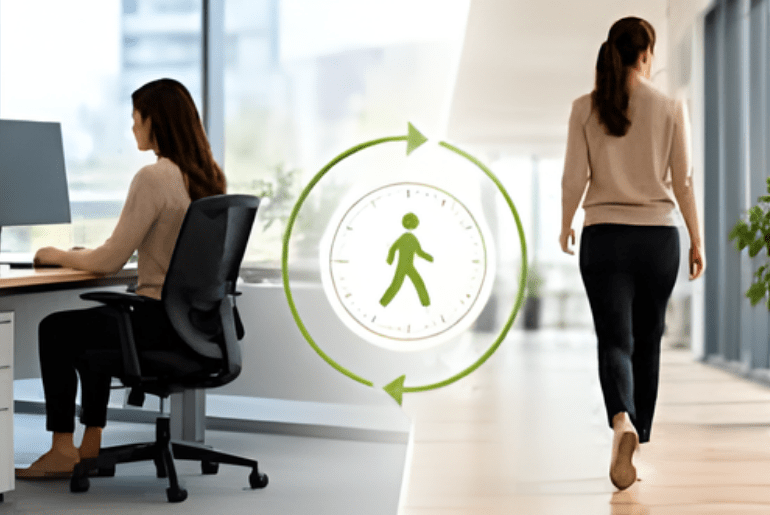
A new study has reinforced the growing concern over prolonged sitting in workplaces, suggesting that short, regular movement breaks can significantly improve employee health without affecting productivity. Published in the British Journal of Sports Medicine (BJSM), the research identified a five-minute walk every hour as the most practical and effective way to reduce the adverse effects of sitting for extended periods.
The study found that employees who took five-minute walking breaks every hour experienced better physical health outcomes while maintaining, and in some cases improving, their work performance. Researchers also observed lower levels of cognitive fatigue and higher daily engagement among participants, indicating that regular movement may benefit both physical wellbeing and workplace performance.

The findings come at a time when sedentary work habits are emerging as a major workplace health challenge. In India, nearly 70 per cent of employees are estimated to be at risk of developing one or more chronic health conditions. Long hours at desks, excessive screen exposure, poor sleep, irregular eating habits and chronic fatigue have contributed to rising cases of obesity, diabetes, hypertension and other lifestyle-related illnesses among the workforce.
Furthermore, many employees fail to recognise the early signs of deteriorating health. Persistent tiredness, difficulty concentrating, irritability, headaches, poor sleep, unexplained weight gain and elevated blood pressure often develop gradually, making them easy to dismiss as a normal part of demanding jobs.
While many organisations have expanded their employee-wellness offerings through gym memberships, mental health support, healthy meal options and other benefits, experts believe these initiatives have had limited impact. Workplace culture continues to reward long working hours, leaving many employees reluctant to take breaks or utilise wellbeing programmes for fear of being perceived as less committed.
The latest findings suggest that simple interventions, such as encouraging employees to take brief walking breaks every hour, could play a meaningful role in improving workforce health while supporting sustained productivity.
