


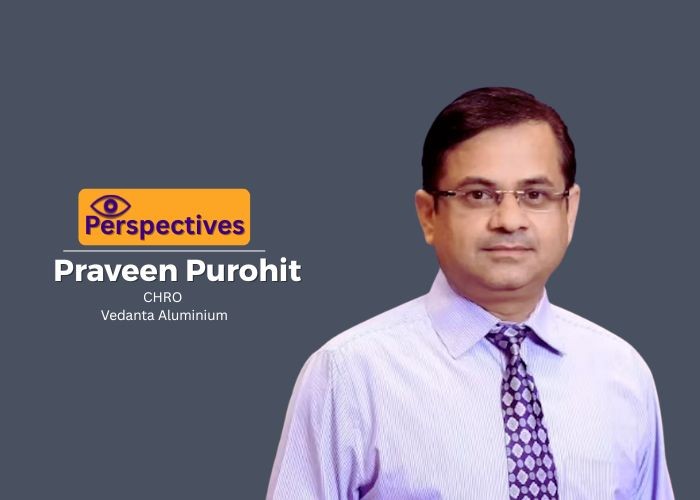
Natural resources companies rarely lead conversations about progressive workplace practices. Mining and metals remain male-dominated, hierarchical, and operationally focused. Yet Vedanta Aluminium operates potlines and locomotive operations staffed entirely by women, employs over 70 transgender professionals in core functions, and recruits from 40 to 50 nationalities annually.
Praveen Purohit, CHRO, Vedanta Aluminium, argues that diversity isn’t a standalone initiative but embedded business strategy. In conversation, he explains why organisational culture must remain singular whilst management approaches differ by generation, why purpose-driven vision determines sustainability, and why the path to CHRO has compressed from 15 years to under a decade for those with the right capabilities.
One culture, multiple approaches
Can a single organisational culture genuinely serve baby boomers and Gen Z simultaneously, or is fragmentation inevitable?
One thing is very clear—today, there’s no “one size fits all”approach. When it comes to culture and managing different cohorts, each requires a very distinct approach. Culture, of course, is a deep subject—it’s about the organisation and its ecosystem as a whole. It’s not specific to one group.
Culture can and should be one—built on shared values, respect, camaraderie and a common vision. That’s the umbrella under which everyone operates. But the way you lead, the way you drive things—that definitely needs to adapt across generations.
Organisations today have employees across age groups—from twenties to sixties—and the maturity, expectations and needs differ at every stage. Understanding these needs is critical. Our senior colleagues derive motivation from very different things than the younger generation.
The younger ones—Gen Z and Gen Alpha—want flexibility, projects that are AI-driven, technology-oriented and digitally engaging. Experienced professionals, on the other hand, look for structure, value creation and contribution to business strategy.
So my take is simple—different strokes for different folks. Culture, DNA, philosophy—those don’t change; they’re rooted in the organisation’s values. But the approach to managing and engaging each cohort must evolve.
“When you take risks, you grow. When you’re fearless, you lead”
Purpose beyond marketing
How do you ensure purpose isn’t just a poster slogan but actually influences decisions?
Only organisations with a genuine purpose and a clear strategy to run the business can truly survive. Without a purpose-driven long-term vision, teams lose direction; they can’t sustain momentum.
This applies across all kinds of organisations—small, mid-sized, large, even startups. Without a strong, purpose-built vision, sustainability becomes impossible.
Progressive organisations today are very deliberate about this. They define their Employee Value Proposition clearly, and one of its strongest pillars is purpose. A purpose-driven organisation is one that can truly progress.
Unless purpose is clearly articulated and embedded into the EVP and the overall culture, you won’t attract or retain talent, nor will you effectively engage stakeholders. And stakeholders are many—people, profit and planet.
At Vedanta, we believe in this balance: people, planet and profit. These three elements thrive only when an organisation is genuinely purpose-driven. That’s the litmus test—if decisions align with purpose, it’s real.
“Our potlines and locomotives are run entirely by women. That’s inclusion in action.”
Meritocracy with discretion
How do you balance the need for differentiation and meritocracy with the reality that performance is contextual and often team-based?
There’s no compromise on meritocracy. At the end of the day, merit must prevail. Without meritocracy, fairness in culture cannot exist.
Performance—whether individual or team-based—remains the key, and it must be recognised and rewarded based on merit. Many organisations have moved away from traditional methods such as bell curves and forced rankings. But if you ask me, large organisations still need structure and systems. Without them, complex setups simply can’t function.
So yes, the bell curve or a similar structured performance management process still exists. But progressive companies are being more flexible—they’re introducing discretion and disruption wherever necessary.
During appraisals, for instance, you’ll see many organisations offering extra merit increments to high performers, additional recognition for key leaders, or specific initiatives to promote women. These go beyond the set system.
In large organisations, systems are essential for fairness and order—but the ability to exercise discretion when needed is equally important. That’s the balance we maintain, and it’s working well.
“Purpose isn’t a poster. It’s a compass for business decisions”
Diversity as operational strategy
How do you make D&I a business strategy, not just an HR programme? What’s your most compelling business case for diversity?
We’ve truly proven to the world that Vedanta—though a natural resources company—is equally an energy and technology company. Historically, metal and mining were male-dominated sectors, but today Vedanta is leading by example.
There are hundreds of stories and awards that testify to our commitment. Promoting women isn’t a standalone initiative—it’s part of our business strategy and culture.
Take our aluminium business, for instance—one of Vedanta’s largest. Entire potlines in our operations are managed by women. Even our locomotive operations—train operations—are handled completely by women. These are powerful examples of business value being driven by diversity.
And it’s not limited to gender. We have over 70 to 80 transgender colleagues working across the group, contributing meaningfully in core operations. To me, that’s what true inclusion means. It’s not about symbolic programmes—it’s about embedding diversity into the business framework itself.
And beyond gender or orientation, diversity for us also means hiring people from all geographies, institutions and nationalities. We recruit 1,500 to 2,000 people annually—from premier institutes, from the Northeast, from across the interiors of India—and globally, we have professionals from 40 to 50 nationalities.
So diversity for us is multidimensional. It’s not a policy—it’s a value proposition. It’s who we are as a business.
“Without meritocracy, fairness in culture cannot exist”
The compressed path to CHRO
If someone is entering HR today and wants to be a CHRO in 15 years, what should they be learning that isn’t in traditional HR curriculums?
I’d say two things here. First—why wait 15 years? The world has changed. You can become a CHRO much faster today—eight to ten years is enough if you have the right spark, performance orientation and maturity. I’ve seen CHROs with even four years of experience in smaller setups.
That said, one thing remains constant: your appreciation for business acumen. You must understand the business you’re in. I always say this—I’m a Marwari; I naturally think business first. If you’re in HR, you must know your role in the business context. You don’t need to master finance, marketing or operations—but you must understand how they all connect.
So beyond traditional HR learning, focus on understanding business fundamentals, financials, commercial logic and operational priorities. Add to that—AI, digital and technology awareness. These are non-negotiable now.
“Structure ensures fairness; discretion ensures humanity”
The unwritten rule
What’s one unwritten rule at Vedanta that you wish more people understood earlier in their careers?
I’ll give full credit here to our chairman. He always says three things.
First—take risks. If you don’t take risks, you won’t grow.
Second—raise your hand. Ask for more. Volunteer. Seek opportunities and take them.
Third—be fearless.
But fearlessness only comes when you’re doing the right things—with ethics, integrity and governance. When you’re grounded in these, you become fearless. When you’re fearless, you stop being afraid. When you stop being afraid, you start taking risks.
And when you take risks, you raise your hand for new roles, new challenges and new opportunities. That’s how growth happens and that’s the philosophy we live by.