



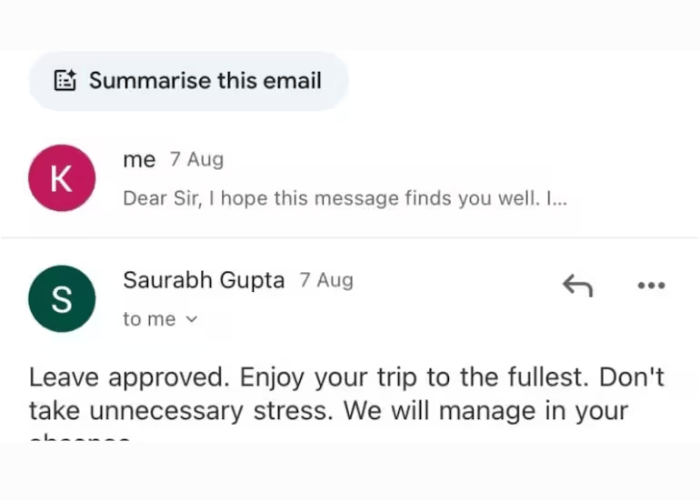
An employee’s unusual leave request has gone viral after his manager approved a day off to let him spend time with his girlfriend before she left town. The light-hearted exchange has struck a chord online, triggering wider conversations about empathy, flexibility and evolving workplace norms.
The employee reportedly asked for a day’s leave explaining that his girlfriend was moving away and he wanted to be with her before her departure. Instead of rejecting the request or asking for formal justification, the manager responded with humour and warmth, approving the leave and remarking that love was a reason hard to deny. Screenshots of the interaction soon began circulating on social media, drawing widespread attention.

The incident has resonated strongly with employees and HR professionals, many of whom see it as an example of how small, human gestures from managers can significantly boost morale and trust. While the leave did not fall under any formal category such as sick leave or bereavement leave, the discretionary approval reflected a people-first mindset rather than a rule-bound approach.
The episode also highlights a broader shift in workplace culture. Organisations are increasingly moving away from rigid, one-size-fits-all leave policies towards more flexible and context-driven decision-making. This trend is particularly visible among younger workforces, who value authenticity, psychological safety and supportive leadership.
Though “love leave” is far from being a formal policy, the story has reinforced the idea that empathy and common sense can coexist with productivity. As companies continue to experiment with mental health days, caregiving leave and flexible time-off practices, such moments underline how trust and understanding often shape stronger employee-manager relationships than policy alone.
