


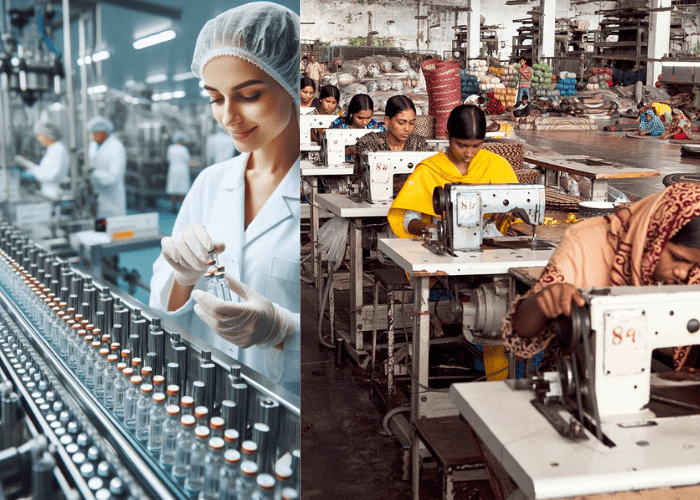
India is witnessing a notable surge in the participation of women in the formal workforce. Recent data shows the Labour Force Participation Rate (LFPR) for women aged 15 and above has climbed from 23.3 per cent in 2019–20 to 41.7 per cent in 2023–24. There is a significant increase of over 18 percentage points within just four years.
The Employees’ Provident Fund Organisation (EPFO) payroll data for the current financial year further confirms this positive trend. In 2024–25 alone, over 26.9 lakh women have joined the formal employment sector as net subscribers under EPFO, reflecting both the growing awareness of social security and a shift toward formalised work.
To sustain and accelerate this momentum, the government has been pushing a host of initiatives. These include skill development and entrepreneurship schemes such as the Pradhan Mantri Mudra Yojana, Pradhan Mantri Kaushal Vikas Yojana, and the Prime Minister’s Employment Generation Programme. Specialised efforts such as Stand-Up India, Startup India, and Women in Science and Engineering (WISE-KIRAN) aim to empower women in traditionally- underrepresented sectors.
Schemes such as Mission Shakti, Namo Drone Didi, and Lakhpati Didi are also playing a role in building self-reliance through targeted skilling and livelihood generation.
The newly-approved Employment Linked Incentive (ELI) Scheme also intends to support job creation, particularly in manufacturing, while expanding the social security net for female workers.
Labour reforms such as the Code on Social Security, 2020, have introduced crucial protections. These include extended paid maternity leave, mandatory crèche facilities, and safeguards for women working night shifts.
Additionally, free childcare services under the ‘Palna’ component of Mission Shakti are helping mothers stay in the workforce by offering daycare support through Anganwadi-cum-Crèches across India.
