
Close Menu
    Facebook X (Twitter) Instagram
    • Our Story
    • Partner with us
    • Reach Us
    • Career
    Subscribe Newsletter
    HR KathaHR Katha
    • Exclusive
      • Exclusive Features
      • HR Pops
      • herSTORY
      • Perspectives
      • Point Of View
      • Case-In-Point
      • Research
      • Dialogue
      • Movement
      • Profile
      • Beyond Work
      • Rising Star
      • By Invitation
    • News
      • Global HR News
      • Compensation & Benefits
      • Diversity
      • Events
      • Gen Y
      • Hiring & Firing
      • HR & Labour Laws
      • Learning & Development
      • Merger & Acquisition
      • Performance Management & Productivity
      • Talent Management
      • Tools & Technology
      • Work-Life Balance
    • Special
      • Cover Story
      • Editorial
      • HR Forecast 2024
      • HR Forecast 2023
      • HR Forecast 2022
      • HR Forecast 2021
      • HR Forecast 2020
      • HR Forecast 2019
      • New Age Learning
      • Coaching and Training
      • Learn-Engage-Transform
    • Magazine
    • Reports
      • Whitepaper
        • HR Forecast 2024 e-mag
        • Future-proofing Manufacturing Through Digital Transformation
        • Employee Healthcare & Wellness Benefits: A Guide for Indian MSMEs
        • Build a Future Ready Organisation For The Road Ahead
        • Employee Experience Strategy
        • HRKatha 2019 Forecast
        • Decoding and Driving Employee Engagement
        • One Platform, Infinite Possibilities
      • Survey Reports
        • Happiness at Work
        • Upskilling for Jobs of the Future
        • The Labour Code 2020
    • Conferences
      • Leadership Summit 2025
      • Rising Star Leadership Awards
      • HRKatha Futurecast
      • Automation.NXT
      • The Great HR Debate
    • HR Jobs
    WhatsApp LinkedIn X (Twitter) Facebook Instagram
    HR KathaHR Katha
    Home»Exclusive Features»Point Of View»POV: Should AI be allowed to make final hiring decisions without human intervention?
    Point Of View

    POV: Should AI be allowed to make final hiring decisions without human intervention?

    AI is changing hiring—and it should. It brings speed, consistency and insight. But across these perspectives, one thing is clear: AI supports the hiring process; humans own the decision
    mmBy Radhika Sharma | HRKathaDecember 15, 2025Updated:December 16, 20254 Mins Read13200 Views
    Share LinkedIn Twitter Facebook
    AI in hiring
    Share
    LinkedIn Twitter Facebook

    Artificial intelligence has quietly but decisively entered the hiring room. From screening resumes and scheduling interviews to predicting role fit and reducing hiring timelines, AI is already reshaping how organisations find talent. What was once a recruiter’s instinct-led process is now increasingly data-informed, faster and more structured.

    Yet as AI becomes more capable, a critical question confronts HR leaders: Should AI be allowed to make the final hiring decision—without human intervention?

    For Indian HR leaders, the answer is not a simple yes or no. It lies in nuance—between efficiency and empathy, speed and sensibility, data and discernment. Their views reflect a shared conviction: AI is powerful, but people decisions demand human accountability.


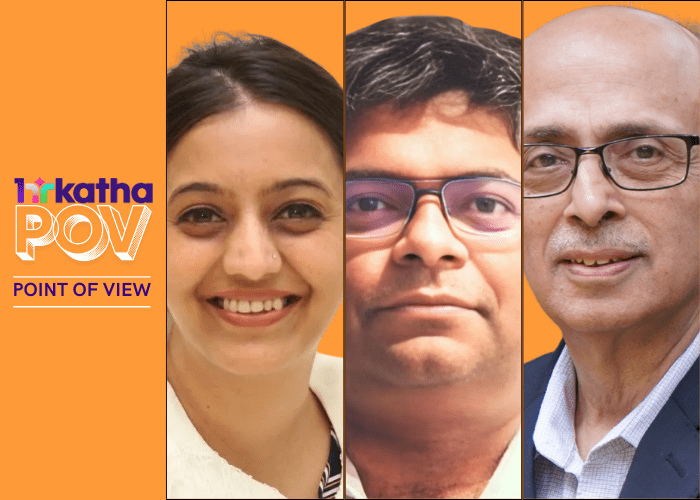
    Preemita Singh, president & CHRO, Havells India

    At Havells, AI is an enabler. We’ve adopted advanced tools to bring efficiency and sharper insights into our hiring process. AI helps us analyse patterns and provides objective information that allows us to probe better and discover strengths in candidates.

    That said, final decisions are always based on human interactions. Culture fit is extremely important to us. AI can help reduce time to hire, especially when we’re hiring in large numbers. It helps shorten cycle times—whether scheduling interviews or forecasting job-role matches.

    However, when it comes to what we truly look for, those aspects emerge through interaction. We look for openness, humility and an aspirational mindset. As the saying goes, ‘You hire for attitude; skills can be trained.’ The keenness to learn and the motivation to make a difference are things you sense over repeated conversations.

    Managers play a vital role at Havells—not just in hiring but in nurturing people and sustaining motivation. While AI supports the process, people decisions remain human-led.

    Takeaway: AI accelerates hiring and surfaces insights, but culture fit and attitude require human judgment that emerges through authentic conversation


    Subhashish Chakrabarty, CPO, CaratLane

    Every technological change creates an opportunity to rethink how we work.

    Before the printing press, people wrote everything by hand. When the press arrived, writing didn’t stop—production, scale and the nature of jobs changed. The same will happen with AI.

    It will make us more productive. It will create agents, assistants and applications that otherwise wouldn’t exist. Today, I may depend on someone else for a task. With AI, I can design my own app to help me.

    In interviewing, AI agents will help me take sharper, faster decisions. One thing is certain—AI will bring speed. People who embrace it will enjoy working with it. This AI-driven speed will soon become the new normal in organisations.

    AI will support decision-making. It will make us faster and more informed. But the decision is still taken by people—just with better tools.

    Takeaway: AI is not replacing hiring decisions—it’s creating new capabilities that make human decision-makers faster, sharper and more productive


    Sushil Baveja, CHRO, Jindal Stainless

    AI should augment human decision-making—not replace it.

    Hiring decisions directly impact people’s lives, careers and aspirations. Because of that, they cannot be treated as purely transactional or automated outcomes. While AI can improve efficiency, consistency and data-based insights in recruitment, it must be applied with caution and responsibility.

    AI systems need thorough testing before deployment at scale. They must be transparent, explainable and aligned with the expectations of all stakeholders—candidates, employees, leadership and society at large. If we cannot explain why a decision was made, we should question whether that decision ought to be made by a machine alone.

    Human oversight is not optional; it’s essential. It ensures accountability. When a hiring decision is questioned, it cannot be attributed to an algorithm. AI can analyse data, identify patterns and reduce manual effort. But values, ethics, intent and long-term cultural fit require human judgment.

    For AI to be trusted in hiring, it must operate within a clear governance framework, with humans firmly in the loop. The role of HR is not to surrender decision-making to technology, but to use technology responsibly to make better decisions.

    Takeaway: AI can inform hiring, but accountability, ethics and cultural fit demand human oversight—technology must serve judgment, not replace it


    AI AI in hiring Culture diversity Employee Employee Benefits Employee Engagement employees employer Employment Engagement Hiring Decisions Human Resources LEAD Productivity Recruitment Skill Development Training Workforce Workplace
    Share. LinkedIn Twitter Facebook
    mm
    Radhika Sharma | HRKatha

    Radhika is a commerce graduate with a curious mind and an adaptable spirit. A quick learner by nature, she thrives on exploring new ideas and embracing challenges. When she’s not chasing the latest news or trends, you’ll likely find her lost in a book or discovering a new favourite at her go-to Asian eatery. She also have a soft spot for Asian dramas—they’re her perfect escape after a busy day.

    Leave A Reply Cancel Reply

    Related Posts

    Karnataka HC allows salary payments for Winzo staff

    February 6, 2026

    The Sleep Company gets Udhaya Shankar M as CHRO

    February 6, 2026

    The meeting that should have been an email (and vice versa)

    February 6, 2026

    As AI transforms work, happiness quietly becomes a business metric

    February 6, 2026
    Editorial

    Why “Remove HR” goes viral every few years, and why it never happens

    Last week, workforce strategist Amanda Goodall reignited the cycle by calling to “remove 90 per…

    What Davos revealed about work: Five uncomfortable truths

    Harvard economist Gita Gopinath delivered Davos’s most uncomfortable statistic: since the 1980s, only 30 per…

    EDITOR'S PICKS

    Union Budget 2026-27: 15 key takeaways for HR, workplaces & employees

    February 6, 2026

    The meeting that should have been an email (and vice versa)

    February 6, 2026

    herSTORY: Babita Basak, HR leader

    February 5, 2026

    Case-in-Point: Personal expression vs professional loyalty

    February 5, 2026
    Latest Post

    Karnataka HC allows salary payments for Winzo staff

    IR & Labour Laws February 6, 2026

    The Karnataka High Court has given relief to employees of online gaming platform Winzo by…

    The Sleep Company gets Udhaya Shankar M as CHRO

    Movement February 6, 2026

    The Sleep Company, the mattress brand, has roped in Udhaya Shankar M as its new…

    Union Budget 2026-27: 15 key takeaways for HR, workplaces & employees

    Exclusive Features February 6, 2026

    On 1 February , 2026, Finance Minister Nirmala Sitharaman presented the Yuva Shakti Budget—Rs 32,666…

    The meeting that should have been an email (and vice versa)

    Friday Features February 6, 2026

    If aliens ever study corporate life, they’ll be baffled by one thing above all: our…

    Asia's No.1 HR Platform

    Facebook X (Twitter) Instagram LinkedIn WhatsApp Bluesky
    • Our Story
    • Partner with us
    • Career
    • Reach Us
    • Exclusive Features
    • Cover Story
    • Editorial
    • Dive into the Future of Work: Download HRForecast 2024 Now!
    © 2026 HRKatha.com
    • Disclaimer
    • Refunds & Cancellation Policy
    • Terms of Service

    Type above and press Enter to search. Press Esc to cancel.