

Close Menu
    Facebook X (Twitter) Instagram
    • Our Story
    • Partner with us
    • Reach Us
    • Career
    Subscribe Newsletter
    HR KathaHR Katha
    • Exclusive
      • Exclusive Features
      • Perspectives
      • Friday Features
      • herSTORY
      • Case-In-Point
      • Point Of View
      • Research
      • HR Pops
      • Dialogue
      • Movement
      • Profile
      • Beyond Work
      • Rising Star
      • By Invitation
    • News
      • Global HR News
      • Compensation & Benefits
      • Diversity
      • Events
      • Gen Y
      • Hiring & Firing
      • HR & Labour Laws
      • Learning & Development
      • Merger & Acquisition
      • Performance Management & Productivity
      • Talent Management
      • Tools & Technology
      • Work-Life Balance
    • Special
      • HR Forecast 2026
      • Cover Story
      • Editorial
      • HR Forecast 2024
      • HR Forecast 2023
      • HR Forecast 2022
      • HR Forecast 2021
      • HR Forecast 2020
      • HR Forecast 2019
      • New Age Learning
      • Coaching and Training
      • Learn-Engage-Transform
    • Magazine
    • Reports
      • Whitepaper
        • HR Forecast 2024 e-mag
        • Future-proofing Manufacturing Through Digital Transformation
        • Employee Healthcare & Wellness Benefits: A Guide for Indian MSMEs
        • Build a Future Ready Organisation For The Road Ahead
        • Employee Experience Strategy
        • HRKatha 2019 Forecast
        • Decoding and Driving Employee Engagement
        • One Platform, Infinite Possibilities
      • Survey Reports
        • Happiness at Work
        • Upskilling for Jobs of the Future
        • The Labour Code 2020
    • Conferences
      • Leadership Summit 2025
      • Rising Star Leadership Awards
      • HRKatha Futurecast
      • Automation.NXT
      • The Great HR Debate
    • HR Jobs
    WhatsApp LinkedIn X (Twitter) Facebook Instagram
    HR KathaHR Katha
    zoha
    Home»Exclusive Features»Point Of View»POV: Is it cheaper to upskill or hire new talent?
    Point Of View

    POV: Is it cheaper to upskill or hire new talent?

      The debate between upskilling existing employees and hiring ready-made talent is no longer a simple cost equation. It sits at the intersection of speed, capability gaps, culture, and long-term strategy. Most organisations today are not choosing one over the other—they are learning when to build and when to buy
    mmBy Radhika Sharma | HRKathaMay 25, 20264 Mins Read267 Views
    Share LinkedIn Twitter Facebook WhatsApp
    new talent
    Share
    LinkedIn Twitter Facebook WhatsApp

    The race between technology and talent has become one of the defining workplace tensions of this decade. Skills are becoming obsolete faster than annual hiring plans are approved, and organisations are under pressure to stay relevant while controlling costs.

    On the surface, the question appears straightforward: should companies invest in developing existing employees or bring in ready-made talent from the market?

    zoha

    But in reality, it is far more complex.

    The decision today is shaped not just by cost, but also by urgency, capability gaps, cultural continuity and business context. While upskilling often appears more economical, HR leaders increasingly argue that the real answer is not either-or, but when and where each approach delivers the most value.


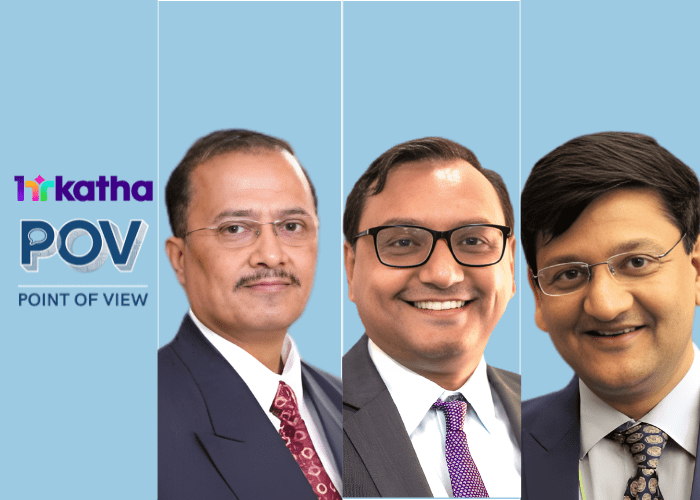
    Shailesh Singh, Chief People Officer, Axis Max Life

    From a cost and effectiveness standpoint, upskilling wins in most cases.

    In nearly 80 to 90 per cent of situations, developing existing employees is more economical than hiring externally. But organisations must remain flexible and avoid a rigid mindset.

    External hiring becomes necessary when niche capabilities are required or when speed is critical. For example, emerging skills such as AI or specialised expertise may not exist internally. Similarly, when businesses expand rapidly or enter new markets, waiting for internal capability to build may not be feasible

    zoha

    However, internal development brings advantages that external hiring often cannot match.

    Employees who are invested in feel valued, which strengthens engagement and retention.  External hires, on the other hand, may carry higher attrition risk in the early phase.

    Internal talent also adapts faster because they already understand the organisation’s culture, systems and ways of working. This reduces onboarding time and improves execution speed.

    There is also a clear cost advantage. When factoring in hiring premiums, agency costs and onboarding expenses, upskilling can be significantly more economical.

    The principle is simple: build internally wherever possible, but stay flexible enough to hire when business demands it.

    Takeaway: Upskill by default, hire by exception; organisations should invest internally first but remain open to external hiring when speed or specialised skills are critical.


    Sharad Verma, Chief Human Resources Officer, Iris Software

    This is not just a cost equation; it is a strategic one.

    Over time, developing internal talent tends to be more cost-effective when viewed holistically. External hiring brings onboarding delays, cultural integration challenges and premium compensation costs for scarce skills.

    Sharad Verma

    The bigger advantage of upskilling lies in compounding capability. Employees who continuously learn become more adaptable with each change cycle. This creates organisations that evolve rather than repeatedly react.

    However, the real question is not upskill versus hire, but where each approach is most relevant.

    There will always be cases where specialised or emerging skills are needed urgently. In such situations, external hiring becomes necessary.

    But over-reliance on hiring creates a fragile system – expensive, competitive and difficult to sustain.

    The most effective organisations build strong internal capability foundations and selectively hire niche expertise or leadership talent where required.

    A common concern is whether employees will leave after being trained. But a bigger risk is not training them and having them stay.

    The strongest learning systems are those embedded into business priorities and supported by managers, not treated as standalone programmes.

    Takeaway: Upskilling should not be viewed as training but as a continuous capability system that strengthens organisational adaptability over time.


    Pankaj Lochan, Senior HR Leader 

    It depends on industry maturity and business urgency.

    This is not a universal equation because industries evolve at different speeds.

    In manufacturing and process-driven sectors, change is relatively steady. In such environments, upskilling existing employees is both cost-effective and sustainable.

    Employees already understand systems, customers and organisational context, which shortens the learning curve.

    There is also the value of institutional memory, which cannot be easily replaced.

    However, in fast-moving domains such as AI, machine learning and advanced analytics, the equation shifts.

    Organisations often require immediate capability. In such cases, external hiring becomes essential to bring in expertise quickly and accelerate transformation.

    A balanced approach is increasingly common. Some organisations clearly define where they will build internally and where they will hire from the market.

    This dual approach ensures that culture and continuity are preserved in some areas, while speed and innovation are enabled in others.

    Ultimately, the right choice depends on urgency, skill gaps and business context.

    Takeaway: Talent strategy must be shaped by industry speed and business urgency; the most effective organisations combine internal development with selective external hiring

    AI Upskilling constant upskilling Culture diversity Employee Employee Benefits Employee Engagement employees employer Employment Engagement Human Resources new talent Productivity Recruitment Skill Development Training upskilling Workforce Workplace
    Share. LinkedIn Twitter Facebook WhatsApp
    mm
    Radhika Sharma | HRKatha

    Radhika is a commerce graduate with a curious mind and an adaptable spirit. A quick learner by nature, she thrives on exploring new ideas and embracing challenges. When she’s not chasing the latest news or trends, you’ll likely find her lost in a book or discovering a new favourite at her go-to Asian eatery. She also have a soft spot for Asian dramas—they’re her perfect escape after a busy day.

    Leave A Reply Cancel Reply

    Related Posts

    KPMG India elevates Debasmita Sarkar to associate director-TA

    May 25, 2026

    SBI staff strike deferred after progress in talks

    May 25, 2026

    Syngenta Group gets Prabhakar Pandey as global lead-HR data architecture & governance

    May 25, 2026

    Amazon highlights employee stories around parenthood, career growth & personal challenges

    May 22, 2026
    Editorial

    The new power map inside HR

    The org chart did not predict this shift. Business urgency did. Corporate HR structures still…

    Why HR cannot serve both employees and employers equally

    Happy HR Day. Across LinkedIn today, companies will celebrate HR as the “voice of employees,”…

    EDITOR'S PICKS

    POV: Is it cheaper to upskill or hire new talent?

    May 25, 2026

    The new power map inside HR

    May 25, 2026

    The surprisingly universal feeling of outgrowing a job

    May 22, 2026

    HRForecast 2026: Capability will define employability, credentials will provide context – Sudakshina Bhattacharya, President & CHRO, HDFC ERGO General Insurance

    May 22, 2026
    Latest Post

    KPMG India elevates Debasmita Sarkar to associate director-TA

    Movement May 25, 2026

    After almost four years of handling recruitment delivery and transformation at KPMG India, Debasmita Sarkar…

    SBI staff strike deferred after progress in talks

    News May 25, 2026

    The proposed two day nationwide strike by State Bank of India (SBI) staff, scheduled for…

    POV: Is it cheaper to upskill or hire new talent?

    Point Of View May 25, 2026

    The race between technology and talent has become one of the defining workplace tensions of…

    The new power map inside HR

    Editorial May 25, 2026

    The org chart did not predict this shift. Business urgency did. Corporate HR structures still…

    Asia's No.1 HR Platform

    Facebook X (Twitter) Instagram LinkedIn WhatsApp Bluesky
    • Our Story
    • Partner with us
    • Career
    • Reach Us
    • Exclusive Features
    • Cover Story
    • Editorial
    • Dive into the Future of Work: Download HRForecast 2024 Now!
    © 2026 HRKatha.com
    • Disclaimer
    • Refunds & Cancellation Policy
    • Terms of Service

    Type above and press Enter to search. Press Esc to cancel.