



Almost everyone remembers at least one sentence from a manager that stayed with them longer than any appraisal, promotion, or training session.
It rarely sounds like a grand leadership principle at the time. Often, it’s said casually—in a corridor conversation, during a difficult project, or after a mistake. Yet those words tend to linger. Years later, professionals realise that a single piece of advice quietly shaped how they work, handle pressure, or lead others.

That’s the interesting thing about workplace wisdom—it travels. What someone hears early in their career often becomes the advice they pass on to their own teams. In that way, leadership lessons quietly move from one generation of professionals to another.
And for many leaders, the most valuable advice wasn’t complicated. It was simple, practical, and rooted in real work situations—something people could apply the very next day.
The patience to learn deeply
Praveen Purohit, CHRO, Vedanta (Aluminium, Port, Power & Mines)
Early in his career, a mentor told Purohit something that might sound counterintuitive in today’s fast-moving job market: stay put long enough to truly learn.
The advice was simple—avoid switching jobs too quickly in the first few years of your career.

Young professionals, his mentor warned, are often tempted by every attractive offer—better salary, better location, a new title. But constantly chasing the next opportunity can fragment learning. Staying in one role long enough helps build deeper understanding, stronger fundamentals, and a 360-degree view of how work really happens.
Purohit remembers how timely that advice was. Within months of starting his career as a trainee, he had already begun attracting attention for his potential. Without guidance, it would have been easy to chase early offers. Instead, he stayed, focused on learning, and built a stronger foundation.
Today, when he interacts with young campus hires, he often passes on the same advice. In a world where job changes happen quickly, he encourages young professionals to slow down just enough to master the basics first.
Another lesson that stayed with him came later, when he moved into leadership roles: always stay focused on outcomes.
No matter how exciting an initiative may sound—a new programme, a hiring drive, or a talent project—the first question should always be: What outcome are we trying to achieve?
Without that clarity, even well-intentioned work can become busy work.
Why appreciation changes performance
Vinod Rai, Group Head—HR, Shahi Exports
Sometimes the most powerful advice arrives after a mistake.
That was the case for Vinod Rai, whose leadership lesson came during his first stint as a manager.
At just 27, Rai was given responsibility for leading a team of five people—some younger than him, some older. Eager to prove himself, he focused intensely on results. He pushed the team hard, monitored tasks closely, and expected quick outcomes.

But the harder he pushed, the worse things seemed to get.
The team struggled, results remained poor, and by the time performance reviews arrived, Rai received a mediocre rating. Frustrated, he approached his senior leadership with what seemed like a logical solution—replace a few team members who weren’t performing.
Instead of agreeing, his boss offered advice that changed his approach to leadership completely.
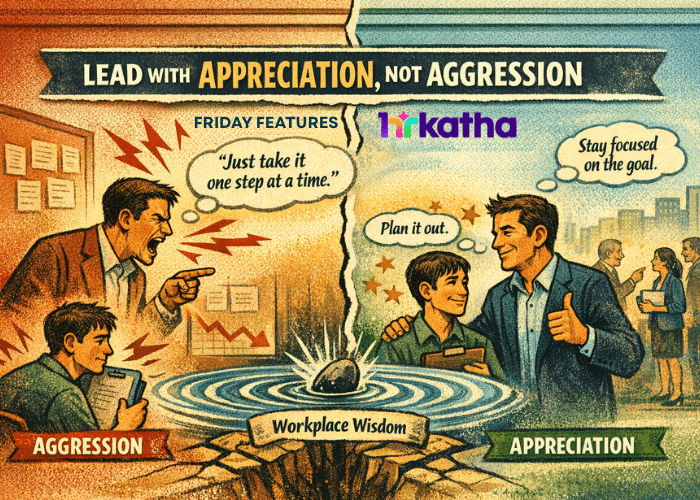
“You can’t get the best work from people if you show aggression all the time,” he told Rai. “Start appreciating them for the good work they do. Build their confidence. The results will follow.”
It sounded simple, but the shift was profound.
Rai began consciously recognising small wins within the team. Instead of focusing only on what was missing, he started acknowledging what was working. Gradually, the team’s energy changed. People became more motivated, problems were solved faster, and performance improved.
For Rai, the lesson was clear: pressure rarely unlocks potential—but appreciation often does.
Even today, he continues to apply that principle, focusing on trust, encouragement, and the belief that people perform best when they feel valued.
The leadership habit of listening first
Rajeev Singh, G-CHRO, Epic Group
Some career advice is even simpler—less about strategy and more about how we approach everyday situations.
For Rajeev Singh, the most useful guidance he received early in his career was about listening more than reacting.

A senior leader once told him that in difficult situations—whether dealing with employee concerns, organisational change, or workplace conflict—the instinct to respond immediately can often make things worse.
The better approach, the leader suggested, is to pause, listen fully, and understand the context before offering a solution.
Over time, Singh realised how powerful that habit can be. In HR roles especially, situations are rarely black and white. People bring emotions, expectations, and different perspectives.
Listening patiently often reveals insights that quick reactions miss.
It also builds trust. When employees feel heard, they are far more open to dialogue and resolution.
Today, Singh often shares the same advice with younger HR professionals: resist the urge to jump to conclusions. Sometimes the first responsibility of a leader is simply to understand.
The advice that travels
Taken together, these lessons reveal something interesting about leadership wisdom—it rarely comes packaged as complex frameworks.
More often, it shows up as small behavioural shifts.
Stay long enough to learn the basics.
Appreciate people before pushing them.
Listen before reacting.
None of these ideas sound revolutionary. Yet each one has quietly shaped how leaders approach work, teams, and decisions.
Perhaps that’s why such advice travels so far. A manager shares it once. A young professional remembers it years later. And one day, without even realising it, they pass the same lesson on to someone else starting their journey.
Because the most powerful leadership advice rarely arrives in a training room.
It arrives in passing—and sometimes, a single sentence stays long enough to shape an entire career.
What’s the best advice a manager ever gave you?
The kind that stayed with you long after the conversation ended? Share it in the comments—because chances are, someone else needs to hear it today.