


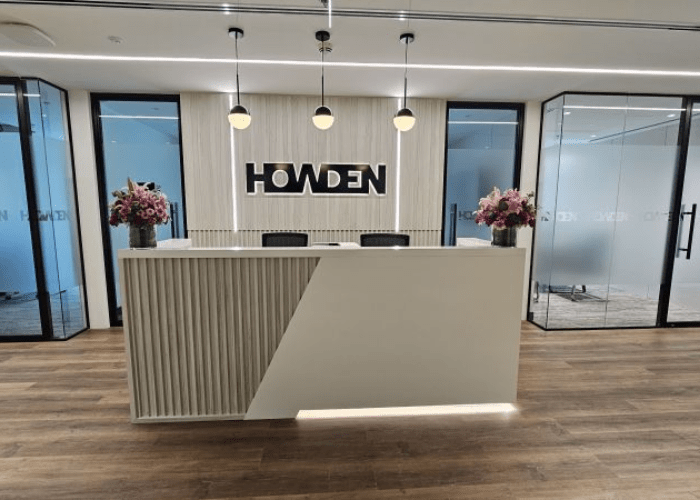
When 70 per cent of a company’s hires come through employee referrals, it signals one of two things: either the firm has built genuine workplace satisfaction, or it operates in such a narrow niche that external recruitment proves difficult. For Howden India, a subsidiary of a global engineering group employing over 1,000 people across energy and infrastructure sectors, the company insists it’s the former.
“Our workforce planning philosophy focuses on timely hiring, role-candidate fit and cultural alignment,” says Nirmala Venkateswaran, associate president and chief human resources officer at Howden India. The referral rate, she argues, reflects employees who are “proud of their workplace” and actively recruit former colleagues and friends.
This people-centric approach—emphasising engagement, transparency, and career mobility—has reportedly driven engagement scores from 7.0 to 8.0 over three years. Whether such scores translate into genuine cultural strength or simply reflect survey design and response bias is difficult to verify externally. But Howden’s heavy reliance on referrals suggests employees are willing to stake their reputations on the company.
The talent challenge in Indian engineering
Howden India faces competitive pressures common to technical firms operating in India’s tight labour market. Engineering talent, particularly specialists in energy systems and industrial equipment, commands premium salaries. Competitors range from multinational corporations offering global mobility to domestic firms promising rapid advancement.
“Our workforce planning philosophy focuses on timely hiring, role-candidate fit and cultural alignment.”
Nirmala Venkateswaran, associate president & CHRO, Howden India

The company’s response has been to position itself around what Venkateswaran calls “people-first” principles—though such language risks sounding like standard corporate rhetoric. More concretely, Howden claims to have built systems around transparent recruitment, structured leadership development, and digital HR tools that free managers from administrative tasks.
The challenge lies in execution. Many firms espouse similar values but struggle to translate them into daily practice. Howden’s test comes in whether its initiatives genuinely differentiate it from competitors or simply represent competent execution of known practices.
Recruitment through honesty
Howden’s recruitment philosophy centres on transparency rather than salesmanship. Recruiters are instructed to provide “a complete, honest picture” of working conditions, growth prospects, and organisational challenges. “We provide transparency regarding the role and responsibilities—our ways of working, future plans, and what’s in it for them,” Venkateswaran explains.
This approach aims to reduce post-hiring disappointment and early attrition. By setting realistic expectations during recruitment, the company hopes candidates self-select based on genuine fit rather than inflated promises.
The strategy sounds sensible, though sceptics might question whether recruiters facing hiring targets can maintain such rigorous honesty, particularly for difficult-to-fill positions.
Venkateswaran insists there are “no false commitments—only honesty and clarity,” though she acknowledges this sometimes means losing candidates to competitors offering rosier pictures.
The 70 per cent referral rate provides circumstantial evidence that employees believe recruitment promises match reality. If new hires regularly felt misled, referring friends and colleagues would become socially risky.
Structured leadership development
Howden has built three leadership programmes targeting different career stages. H Leadership focuses on strategic and team-management skills for senior managers. Ignite and Spark cater to emerging managers and high performers respectively.
The programmes include feedback mechanisms, developmental discussions, and transition support for managers assuming expanded roles. “We’re trying to help all our new leaders unlearn habits that may have served them in the past but could hinder progress in expanded roles,” Venkateswaran notes.
This recognition that promotion often requires behavioural change—not just skill accumulation—reflects sophisticated thinking about leadership development. Many organisations promote based on technical competence, then wonder why new managers struggle.
Whether Howden’s programmes actually accelerate leadership readiness versus simply formalising what happens naturally through experience is difficult to assess. The company points to “behavioural shifts—greater collaboration, better decision-making and enhanced ownership”—as evidence of impact, though such qualities prove notoriously difficult to measure objectively.
Digital transformation as HR strategy
Perhaps more tangible is Howden’s investment in digital HR infrastructure. The company has moved to paperless workflows and deployed Power BI dashboards tracking headcount, attrition, performance, and training outcomes in real time. An AI-powered applicant tracking system builds candidate databases and accelerates recruitment.
“Digitalisation has helped us go paperless and focus on more creative and strategic activities,” Venkateswaran says. The company has also deployed Co-Pilot, an AI tool providing employees with productivity support.
This digital emphasis reflects broader trends in Indian corporate HR, where manual processes have traditionally consumed disproportionate time. By automating routine tasks, Howden claims to free HR professionals for strategic work—talent planning, culture-building, and organisational development.
The challenge with such digital transformation lies in avoiding technology for its own sake. Dashboards tracking metrics don’t necessarily improve outcomes unless paired with thoughtful interpretation and action. Howden’s engagement score improvements suggest the digital infrastructure supports rather than substitutes for genuine people management, though proving causation remains difficult.
Diversity as competitive advantage
Howden emphasises diversity and inclusion, participating in Dive-In, a global initiative across insurance and risk-management industries. The company claims “skills-based hiring, free from biases” has increased hires from non-traditional backgrounds and differently-abled professionals.
This focus on diversity may provide competitive advantages beyond ethics or compliance. India’s engineering talent pool, whilst large, becomes constrained when firms limit themselves to traditional recruitment sources and candidate profiles. By widening the aperture, Howden potentially accesses capable professionals overlooked by competitors.
Venkateswaran points to education initiatives for hiring managers on “allyship and empathy” as shifting the focus from representation to inclusion. Whether such training genuinely changes behaviour or simply creates common vocabulary is debatable, though the reported increase in diverse hires suggests some practical impact.
The mobility question
Howden encourages internal mobility, with employees transitioning between departments and, occasionally, international locations. Venkateswaran highlights one employee who moved to a London role and “successfully settled for over a year,” framing this as evidence that “growth knows no boundaries.”
Such international mobility opportunities provide powerful retention tools, particularly for ambitious professionals who might otherwise leave for multinational competitors. However, the extent to which Howden can offer such opportunities remains unclear. One successful case doesn’t establish a pattern, and scaling international transfers involves visa complexities, cost considerations, and finding suitable roles.
More substantively, the company’s emphasis on job rotation and inter-departmental movement addresses a common retention challenge: talented employees leaving not because they dislike the company but because they’ve outgrown their current roles.
Validation through retention
Ultimately, Howden India’s people-first approach faces validation through retention and hiring metrics. The 70 per cent referral rate and rising engagement scores provide positive indicators, though neither proves causation between HR practices and business outcomes.
The real test comes during economic downturns or industry disruption, when financial pressures tempt companies to abandon expensive people practices. Whether Howden’s commitment to transparency, development, and digital investment survives such pressures will determine if this represents genuine cultural priority or simply good-times generosity.
For now, Howden demonstrates that in India’s competitive engineering labour market, employee satisfaction—genuine or perceived—can become a recruitment engine. Whether this translates into sustainable competitive advantage depends on execution consistency over years, not engagement scores over quarters.
The company’s approach offers a straightforward lesson: when employees willingly recruit friends and colleagues, something is working—even if isolating exactly what proves difficult.