


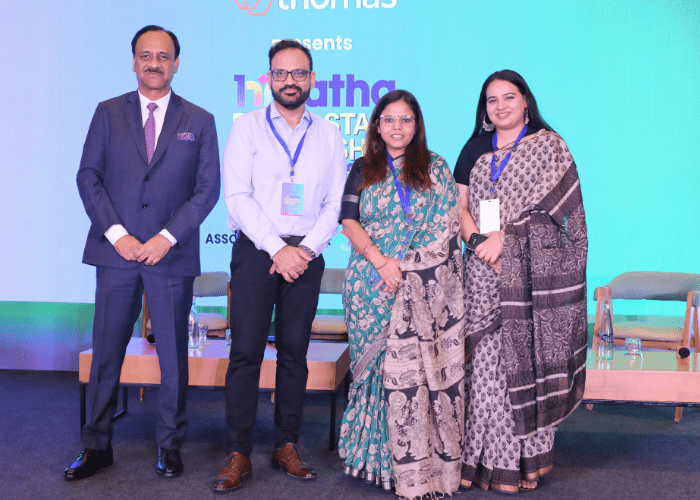
Leadership that embraces tough conversations, measures success by how well it listens, and drives innovation through difference, not uniformity.
At HRKatha’s Rising Star Leadership Awards 2025, the session titled “Building diverse leadership that drives innovation and performance” wasn’t about checking diversity boxes or chasing inclusion metrics. It was about peeling back the layers to ask a question that makes most executives uncomfortable: what really happens after the targets are met?
Because while numbers can measure representation, they cannot create inclusion. Real inclusion, as the discussion revealed, lives in the everyday choices leaders make—the small gestures, the willingness to listen, the courage to unlearn biases, and the ability to make people feel safe, valued, and heard.
Moderated by Radhika Sharma, senior correspondent at HRKatha, the panel brought together voices from across industries: Sanjay Bose, EVP, HR & L&D, ITC Hotels; Rajesh Rai, SVP – people (APAC), GlobalLogic; and Pallavi Poddar, CHRO, Fenesta Windows.
Each came with a unique perspective shaped by their industry—hospitality, technology, and manufacturing. And together, they painted a layered picture of how diversity, inclusion, and psychological safety are transforming leadership.
From HR agenda to business strategy
“Fundamentally,” began Sanjay Bose, “the discussion on diversity and inclusion often gets reduced on HR, as if it’s their responsibility alone. But it’s not.”
Representing the hospitality sector, Bose was quick to reframe D&I as a business strategy rather than a feel-good corporate initiative. “Our business is all about delivering exceptional experiences to our customers. If nearly half of them are women and around 20 per cent live with some form of disability — as global statistics indicate — then it makes perfect business sense for my workforce to mirror that diversity.”
“It’s not about how many women sit at the table—but how many women’s voices are actually being heard.”
Sanjay Bose, EVP, HR & L&D, ITC Hotels
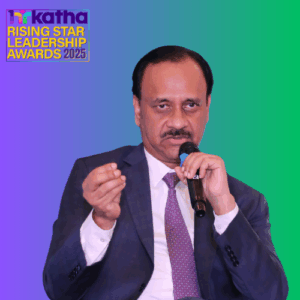
His point was simple yet powerful: you cannot deliver exceptional customer experiences without a workforce that mirrors the people you serve.
But translating that logic into action is where complexity sets in. “That’s where HR comes in,” Bose said. “Once you accept diversity as a business necessity, you need systems that identify and address the biases and legacy issues that hold you back.”
He described how ITC approaches bias at a granular level—by tracking promotion data, pay equity, and leadership representation over time to uncover invisible skews. “It’s not just about how many women are sitting at the table,” he noted, “but how many women’s voices are actually being heard.”
The panchayat that changed everything
To illustrate how inclusion extends beyond corporate walls, Bose shared a striking example from rural South India. In one of ITC’s smaller properties, cultural resistance prevented women from stepping out of their homes to work.
“Instead of conducting sensitisation sessions for women,” he recalled, “we invited the village panchayats and the men to our premises. Once they saw the safety and dignity of the environment, they began allowing women to join. That’s how real impact happens—when you meet people where they are.”
It’s a story that captures something essential about inclusion work. It’s not about diversity training modules or policy documents. It’s about opening your doors—literally—and showing communities what’s possible. It’s about earning trust through action, not announcements.
The numbers that lie
Rajesh Rai brought a technology lens to the conversation, and with it, a healthy skepticism about metrics.
“We can measure representation easily,” he said. “But representation doesn’t equal inclusion. You can have women in leadership roles and still have a culture where their voices aren’t valued. The question is: are we creating environments where diverse talent can actually thrive?”
“Representation doesn’t equal inclusion. You can have diversity on paper and still silence diverse voices in practice.”
Rajesh Rai, SVP – people (APAC), GlobalLogic

GlobalLogic, like many tech companies, operates in a sector notorious for its homogeneity. Rai acknowledged the challenge but insisted the solution isn’t just hiring more diversely—it’s fundamentally changing how teams work, how decisions get made, and whose perspectives shape product development.
“In technology, diversity isn’t just a moral imperative—it’s an innovation imperative,” he explained. “Diverse teams build better products because they understand diverse users. If everyone in the room has the same background and the same blind spots, you’re going to miss huge market opportunities.”
he was candid about the difficulty. “Creating psychological safety—where people feel comfortable challenging the status quo, disagreeing with senior leaders, bringing their whole selves to work—that’s the hard part. And you can’t measure that with a dashboard.”
Manufacturing inclusion from the ground up
Pallavi Poddar, representing the manufacturing sector through Fenesta Windows, brought yet another dimension to the conversation.
“In manufacturing, inclusion isn’t a metric—it’s a mindset you design into every process.”
Pallavi Poddar, CHRO, Fenesta Windows
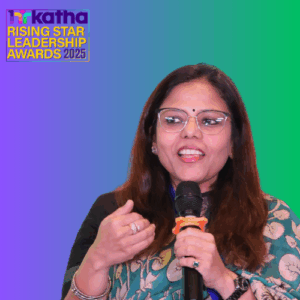
Manufacturing, traditionally male-dominated, presents unique challenges and opportunities for diversity. “When we talk about inclusion in manufacturing,” Poddar said, “we’re not just talking about representation at leadership levels. We’re talking about the factory floor. We’re talking about safety, about physical accessibility, about creating environments where everyone—regardless of gender, physical ability, or background—can do their jobs with dignity.”
She described initiatives at Fenesta that went beyond policy to practice: redesigning workstations for accessibility, creating flexible shift patterns that accommodate different family structures, building support systems that help workers navigate both professional and personal challenges.
“Inclusion in manufacturing means asking: can a woman operate this machine as safely and effectively as a man? Can someone with limited mobility access this workspace? Are we creating pathways for people from rural areas or underprivileged backgrounds to build real careers, not just take jobs?”
The answers to those questions, Poddar emphasised, require listening—really listening—to the people doing the work. “The best insights about what needs to change don’t come from consultants or HR departments. They come from the front lines.”
The listening problem
A theme emerged across all three perspectives: the willingness to listen is what separates performative diversity from transformative inclusion.
Bose’s story about inviting the panchayat wasn’t just about accommodation—it was about respect. About recognising that communities have legitimate concerns and that companies have a responsibility to address them.
Rai’s emphasis on psychological safety wasn’t just about making people comfortable—it was about creating conditions where the best ideas, regardless of where they come from, can surface and be heard.
Poddar’s focus on front-line feedback wasn’t just about operational efficiency—it was about acknowledging that expertise exists at every level of an organisation, and that inclusive leadership means valuing that expertise.
What happens after the targets are met
The panel returned, repeatedly, to the question Sharma had posed at the beginning: what really happens after the targets are met?
The honest answer? For too many organisations, nothing. The diversity dashboard turns green. The annual report showcases impressive percentages. Leadership congratulates itself on progress.
But representation without inclusion is just optics. It’s having diverse faces in the room but only hearing the same voices. It’s hitting hiring targets while watching diverse talent leave faster than you can replace them. It’s celebrating progress while the lived experience of underrepresented groups remains unchanged.
“Diversity is being invited to the party,” goes the famous saying. “Inclusion is being asked to dance.”
But as this panel made clear, even that metaphor doesn’t go far enough. Real inclusion is when you stop dictating what music gets played and start letting everyone contribute to the playlist. It’s when leadership decisions reflect genuinely diverse perspectives, not just diverse faces around a table that operates exactly as it did before.
The innovation dividend
What made this discussion particularly compelling was how all three panelists connected diversity and inclusion directly to business outcomes—not as separate goals but as inextricably linked.
Bose’s hospitality business creates better customer experiences because his workforce reflects his customers.
Rai’s technology teams build better products because diverse perspectives catch blind spots and identify opportunities that homogeneous teams miss. Poddar’s manufacturing operations run more efficiently and safely because they’ve been designed to work for everyone, not just the traditional workforce.
This isn’t altruism. It’s strategy. And it’s the difference between diversity as compliance and diversity as competitive advantage.
The courage to unlearn
Perhaps the most uncomfortable truth from the panel: building diverse, inclusive leadership requires existing leaders to unlearn much of what got them to the top.
The biases and legacy issues Bose mentioned aren’t just systemic—they’re personal. They live in hiring decisions, promotion patterns, performance evaluations, meeting dynamics, and countless other everyday moments where leaders make choices based on comfort, familiarity, and unconscious assumptions about who “fits.”
Creating psychological safety, as Rai noted, means leaders must become comfortable with being uncomfortable. It means inviting dissent, amplifying quieter voices, checking your own assumptions, and accepting that the way you’ve always done things might not be the way things should be done.
Listening to the front lines, as Poddar emphasised, means leaders must genuinely believe that they don’t have all the answers—and that people at every level of the organisation have valuable insights to contribute. That’s hard. It threatens hierarchy. It challenges ego. It demands humility.
But as the panel demonstrated, it’s also what drives innovation and performance.
Beyond the numbers
As Sharma concluded the session, the message was clear: diversity and inclusion can’t be reduced to targets and dashboards. The real work happens in the small moments. The hiring decision. The promotion conversation. The meeting dynamic. The willingness to invite the village panchayat to your premises and actually listen to what they have to say.
Numbers matter. Representation matters. But they’re the beginning, not the end.
What happens after the targets are met? For organisations serious about building diverse leadership that drives innovation and performance, everything. The real work is just beginning. And it starts with listening.
The HRKatha Leadership Summit and Rising Star Awards ceremony took place on October 31, 2025, at Holiday Inn Aerocity, New Delhi. Nominations were open for two months, with jury evaluation conducted over two weeks by an eleven-member panel. Around 20 CHROs and CEOs participated in discussions on leadership transformation, with support from Thomas Assessments (Presenting Partner) and Ripplehire (Associate Partner).