



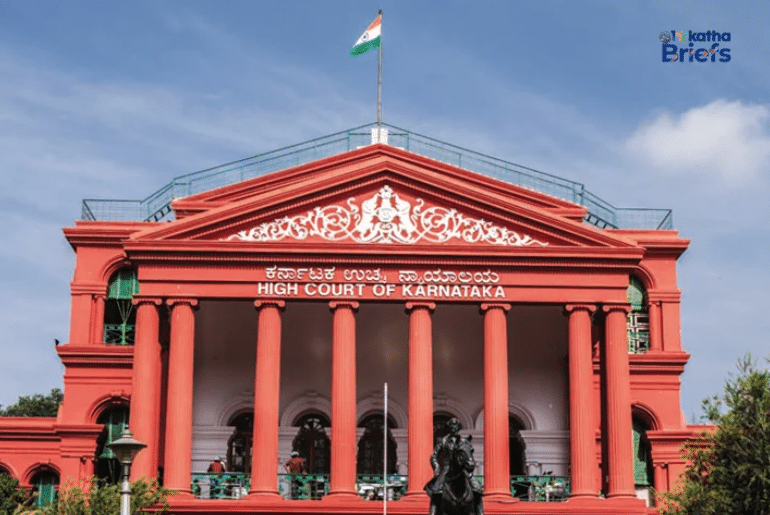
The Karnataka High Court has observed that requiring an employee to perform duties without receiving salary could amount to ‘begar’, or forced labour, prohibited under Article 23 of the Constitution.
The observation came while hearing a university professor’s petition over withheld salary during a period when he was placed on compulsory leave.
Justice M Nagaprasanna was hearing a petition filed by Dr Mohandas K, an assistant professor of political science at Vijayanagara Sri Krishnadevaraya University in Ballari. He challenged the university’s decision to send him on compulsory leave following the registration of a criminal case against him.
The university had issued the compulsory leave order on 16 January, 2025, after allegations that Mohandas had instigated a university laboratory attendant to die by suicide over money borrowed from him. The police subsequently filed a ‘B’ report, which was accepted by the jurisdictional court, closing the proceedings. The university withdrew the leave order before the police report was filed, and Mohandas resumed duty on 17 June, 2026.
The professor told the court that his salary had been withheld from January 2025 until his return to duty. His counsel also alleged that payments had not been made after he resumed work. The university disputed the latter claim and asked him to submit a representation for the earlier period.
The High Court said that if Mohandas had continued performing his duties during the compulsory leave period without receiving remuneration, the arrangement could amount to ‘begar’ under Article 23. It directed him to submit documents establishing that he had worked during the period, if he had not already done so.
The court also observed that merely registering an FIR did not justify placing the professor on compulsory leave. It said the university could, at most, have considered suspension pending a departmental inquiry.
The court noted that Mohandas had submitted a representation on 28 July, 2026, seeking withheld salary, arrears and consideration for promotion under the Career Advancement Scheme.
Disposing of the petition, it directed the university to consider the representation in accordance with law, including the question of whether he had worked without pay. The university has been given eight weeks to take a decision after receiving a copy of the order.
