


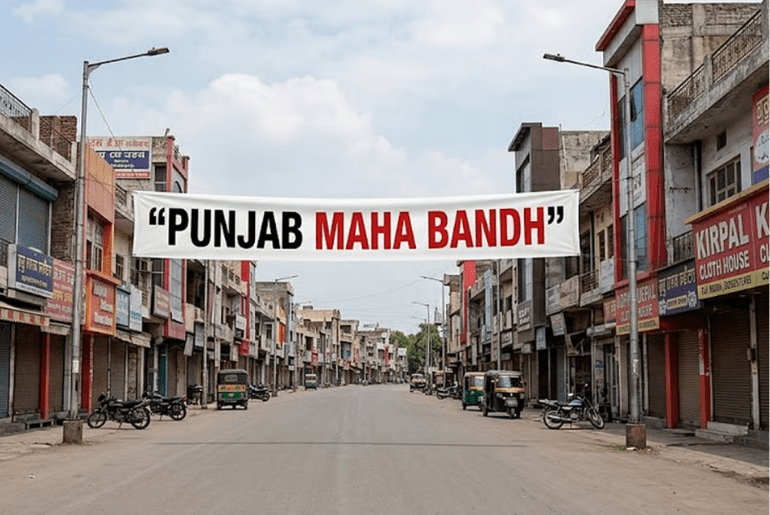
Government employees across Punjab have launched a statewide strike, affecting public services including outpatient departments (OPDs) at government hospitals. The protest is centred on several long-pending demands, including regularisation of contractual staff and payment of pending dearness allowance (DA) instalments.
Employees from multiple government departments are participating in the 27 August strike. The protest is being held at block, district and state headquarters levels, with workers from healthcare, education, electricity, agriculture and animal husbandry departments among those joining the action.
At Guru Nanak Dev Hospital and Government Medical College in Amritsar, OPD services and general operation theatres have been affected. Emergency services, however, continue to operate. Patients had reportedly been advised in advance to visit the facility only for emergencies.
According to employee representatives, the unions have been raising their concerns with the Punjab government for around four and a half years. Their demands include regularisation of contractual employees and pension benefits for employees appointed under different categories.
Workers are also seeking payment of outstanding DA instalments. Other demands include regularisation of Anganwadi workers and helpers, mid-day meal workers and other categories of government staff.
Employee representatives said a large rally was held in Chandigarh on 7 August, with more than three lakh employees participating. They also claimed that over 250 organisations and federations are backing the current protest.
The unions have alleged that meetings promised by the government have repeatedly been postponed. They are seeking direct engagement with the state leadership to address their demands.
The escalating dispute could also have wider political implications, with employee representatives warning of an electoral backlash if their concerns remain unresolved.
The strike has brought renewed attention to long-standing issues around contractual employment, pension coverage and delayed DA payments in the state government workforce.
