


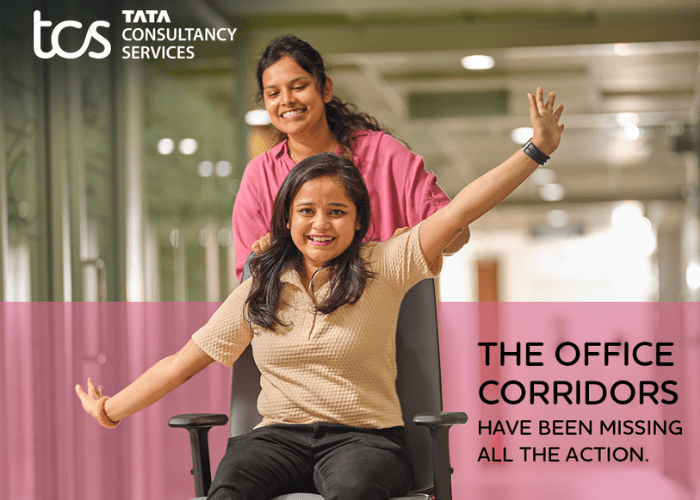
When Tata Consultancy Services launched its return-to-office campaign, the messaging was telling. Rather than emphasising productivity targets or management directives, TCS’s social media posts evoked something far more personal: the nostalgia of office corridors, coffee break conversations, and spontaneous collaborations. The campaign’s emotional appeal preceded the company’s eventual mandate requiring employees to work from the office at least three days per week—and revealed something crucial about what actually draws people back to physical workspaces.
The great return-to-office debate has focused largely on productivity metrics, management control, and real estate costs. Yet TCS’s initial approach suggested that the most compelling force drawing employees back may be the simplest: each other. As corporate India grapples with hybrid work arrangements, friendship—not policy—might hold the key to solving the workplace puzzle.
The loneliness paradox
The pandemic’s remote work revolution solved immediate health concerns but created an unforeseen social void. For younger professionals who entered the workforce amid lockdowns and screen fatigue, the absence of spontaneous corridor conversations and cafeteria encounters has proved unexpectedly devastating. What psychologists term the “loneliness epidemic” has found fertile ground in corporate culture.
Varadarajan S (Raja), a seasoned HR leader and a Tata Veteran, observes this shift keenly: “In an era of the loneliness epidemic and fraying community ties, the office is quietly rebranding—from a place of productivity to a hub of human connection.”
“In an era of the loneliness epidemic and fraying community ties, the office is quietly rebranding—from a place of productivity to a hub of human connection.”
Varadarajan S (Raja), seasoned HR leader & a Tata Veteran

The statistics support this cultural transformation. According to a 2023 Gallup survey, 72 per cent of Generation Z and millennial workers identify workplace friendships as their primary driver of job satisfaction—ranking higher than any other factor. For 42 per cent of them, these relationships even outweigh financial compensation in importance.
This represents a fundamental recalibration of workplace values, particularly among digital natives who discovered that virtual collaboration, whilst efficient, cannot replicate the emotional sustenance of physical proximity.
The campaign for connection
Corporate India has begun acknowledging this shift, moving beyond traditional productivity arguments to embrace the social dimension of workplace attendance. The most successful return-to-office initiatives frame physical presence around social experience rather than managerial oversight. When imposed through mandates alone, office attendance often yields silent resistance or performative presence. When anchored in genuine relationships, it becomes organic and sustainable.
“It’s the people in the office that create the work environment.”
Ravi Kumar, CHRO, Puravankara

Smart organisations are learning to design for serendipity rather than surveillance. This involves creating ‘friendship zones’ for casual interaction, establishing anchor days for team synchronisation, and instituting no-email hours to encourage spontaneous conversations.
The architecture of belonging
Ravi Kumar, CHRO, Puravankara, emphasises that infrastructure alone cannot create meaningful workplace culture: “It’s the people in the office that create the work environment.” This insight cuts through considerable noise about workplace design trends and expensive amenities.
Kumar’s observation reflects a deeper anthropological truth: humans are fundamentally social beings. Strip away workplace camaraderie, and even the most sophisticated productivity tools cannot compensate for the resulting emotional sterility. “You need an environment to work,” he explains, “and this set of people, the so-called office friends, are the ones who create that environment for you and give you a support system.”
The relationships Kumar describes needn’t extend beyond office hours to prove meaningful. Even surface-level bonds—sharing professional advice, navigating workplace conflicts, or simply offering encouragement—can profoundly impact performance, motivation, and well-being.
The design response
Physical workspaces are evolving accordingly, moving beyond open-plan aesthetics toward purposeful social architecture. Modern office layouts increasingly prioritise flexibility and spontaneous interaction over rigid hierarchical arrangements. Open floor plans enable employees to overhear conversations, contribute insights, or simply acknowledge colleagues with friendly gestures—small moments that collectively create belonging.
According to a 2024 Gensler survey, 55 per cent of hybrid employees cite socialisation as their primary motivation for office attendance. This figure represents more than statistical curiosity; it signals that team cohesion depends on relational rather than transactional foundations.
The generational divide
The friendship imperative proves particularly acute among younger workers. Generation Z employees, having entered professional life during an era of enforced digital interaction, demonstrate urgent desire to encounter colleagues as complete human beings rather than Slack usernames or Zoom squares. Millennials, now occupying mid-career positions, retain institutional memory of pre-pandemic workplace culture and its social benefits.
Together, these generations are rejecting the notion of work as solitary activity, instead embracing it as interconnected, shared experience. They understand intuitively what research confirms: that Raja’s “work besties” serve as emotional lifejackets in potentially isolating hybrid environments.
The turning point
This social revolution is reshaping corporate strategy in fundamental ways. Rather than asking “How do we get them back?” HR leaders increasingly wonder “How do we make attendance worthwhile?” The answer lies not in policies but in people—specifically, in the relationships that make workplace attendance emotionally rewarding rather than merely professionally necessary.
The most successful return-to-office initiatives frame physical presence around social experience rather than managerial oversight. When imposed through mandates, office attendance often yields silent resistance or performative presence. When anchored in genuine relationships, it becomes organic and sustainable.
The human solution
The pandemic taught organisations that most knowledge work can be performed remotely. The post-pandemic era is revealing what cannot be digitised: the spontaneous moments of connection, mentorship, and collaborative creativity that emerge from shared physical space.
As Raja observes, “People will tolerate a commute for a community.” This simple truth is becoming the north star for workplace design, leadership strategy, and employee engagement. In a world where everything from groceries to gossip can happen online, offices are rediscovering their unique value proposition: meaningful, face-to-face human connection.
The companies that understand this shift—that recognise friendship as infrastructure rather than accident—will likely prove most successful in attracting and retaining talent. Those that continue treating office attendance as compliance exercise may find themselves managing empty buildings filled only with the ghosts of genuine workplace culture.